
Beginner Guide to Water Sports Safety: 2026 Essentials
Table of Contents
- What Is Water Sports Safety and Why It Matters for Beginners
- The 5 Basic Rules of Water Safety Every Beginner Must Know
- US Coast Guard Life Jacket Requirements Explained
- How to Choose a Personal Flotation Device That Fits Your Activity
- Your Water Sports Safety Gear Checklist: Beyond the PFD
- Reading Water Conditions, Weather, and Your Own Limits
- Emergency Protocols: Self-Rescue and Signaling for Help
- Building Your Personal Water Safety Plan
- Frequently Asked Questions
Last Updated: September 8, 2026
What Is Water Sports Safety and Why It Matters for Beginners
Water sports safety is the set of practices, equipment standards, and judgment calls that keep you alive and injury-free while paddling, sailing, skiing, or swimming in open water. For beginners, it matters most because inexperience, not equipment failure, drives the majority of incidents. This AdventureTrailhead guide breaks down the fundamentals into a practical beginner guide to water sports safety, covering specific gear checks, condition assessments, and emergency steps.
Water conditions change faster than your skill level will for the first several seasons. Understanding the risks before you launch separates a memorable trip from a preventable accident.
The 5 Basic Rules of Water Safety Every Beginner Must Know
The foundation of water sports safety rests on five non-negotiable rules.
Rule 1: Always Wear a US Coast Guard Approved Life Jacket
A US Coast Guard approved life jacket is the single most important piece of water sports safety gear you will own. It must fit snugly, be rated for your weight, and stay fastened the entire time you are on the water.
Rules 2-5: The Buddy System, Alcohol, Conditions, and Skills
The remaining four rules are just as critical:
- Never go out alone. The buddy system means someone on shore or in another vessel knows your route and expected return time.
- Skip the alcohol. Boating under the influence is illegal and impairs judgment, balance, and reaction time. Save the drinks for after you are back on land.
- Check conditions before you launch. Wind speed, water temperature, and forecast all dictate whether your trip is safe.
- Know your limits. Swim proficiency and experience matter. If you cannot confidently self-rescue in your chosen conditions, stay closer to shore.
US Coast Guard Life Jacket Requirements Explained
The [US Coast Guard(/products/universal-windsurfing-adult-life-jacket-vest-kayak-buoyancy-boat-ski-water-n4w2) recreational boating safety guidelines | uscgboating.org] state that all vessels must carry a wearable life jacket for each person on board, and children under 13 must wear one while underway on most recreational boats. The requirements come down to approval labels, condition, and accessibility.
Understanding PFD Types and Approval Labels
A PFD must display a US Coast Guard approval label stitched inside, listing its type, intended use, and weight rating. Type I devices are offshore life jackets for open rough water, Type II are near-shore vests, Type III are flotation aids for calm inland waters and most water sports, and Type V are special-use devices that must be worn to count toward the carriage requirement.
Your life jacket must also be in good condition. Faded fabric, torn straps, or compressed foam that no longer floats properly means the device fails its job. Replace any jacket showing wear.
How to Choose a Personal Flotation Device That Fits Your Activity
Choosing the right personal flotation device comes down to matching the PFD type to your specific water sport, then confirming the fit is snug enough that it cannot ride up over your head if you enter the water.
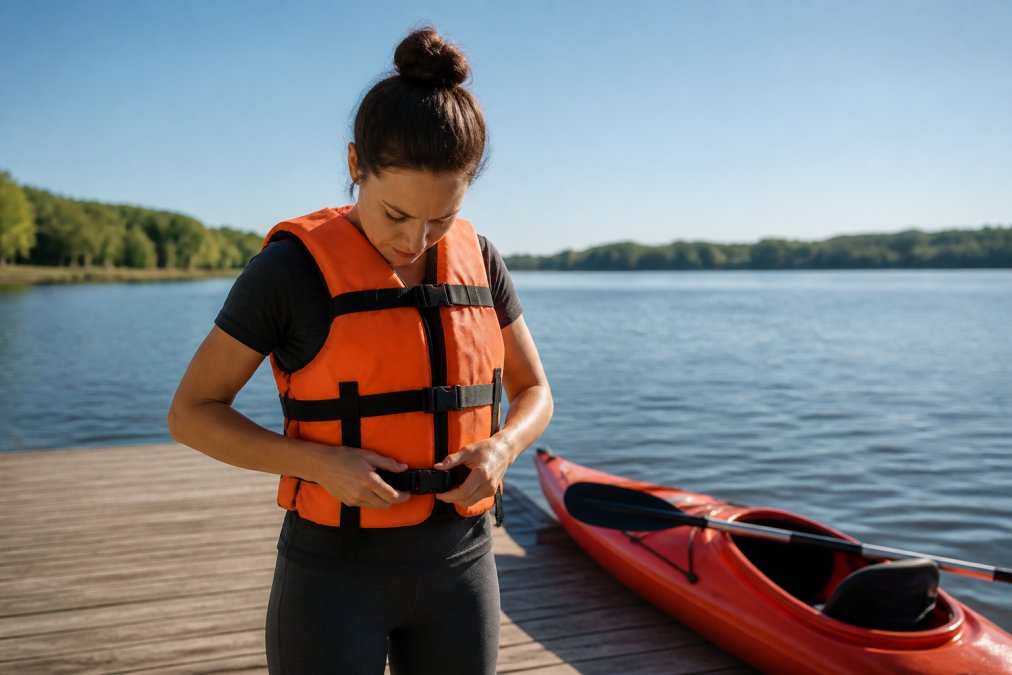
Fit is the most overlooked factor. The jacket should feel snug but not restrictive. Lift your arms overhead; the jacket should not slide up past your chin. For adults, the [US Coast Guard(/products/outdoor-sport-fishing-life-vest-men-breathable-swimming-life-jacket-safety-waistcoat-survival-utility-vest) life jacket fit and selection guidance | uscgboating.org] recommends testing buoyancy in shallow water before relying on it in open conditions.
Fit, Buoyancy, and Activity-Specific Features
Your Water Sports Safety Gear Checklist: Beyond the PFD
A thorough water sports safety gear checklist covers much more than flotation. Before every trip, pack these essentials and understand why each item is on the list.
The Physical Essentials: What to Pack and Why
- Signaling Devices: A whistle attached to your PFD is your primary distress signal. The universal signal is three short blasts. A waterproof flashlight or strobe is for low-light visibility, and a mirror can be used to flash the sun toward a distant vessel or shore.
- Communication: A waterproof phone case is a good start, but cell coverage is often spotty on the water. A VHF marine radio is the standard for coastal and large inland waters, allowing you to call the US Coast Guard directly on Channel 16. For paddlers in remote areas, a Personal Locator Beacon (PLB) or a satellite messenger like a Garmin inReach transmits your GPS coordinates to rescue authorities.
- Self-Rescue Tools: For kayakers, a paddle float and a bilge pump are non-negotiable. The paddle float allows you to perform a self-rescue after a capsize, and the pump clears water from your cockpit. A spare paddle is also essential.
- Tow Ropes: A tow rope is for assisting another paddler or vessel in distress. A floating tow line, typically 50 to 75 feet long, is standard for kayak touring. It should have a quick-release mechanism on your end so you can detach if the situation becomes dangerous.
- Sun and Weather Protection: Sunscreen, polarized sunglasses with a strap, and a wide-brim hat are crucial. Polarized lenses cut glare, allowing you to see subsurface hazards like rocks or logs. Also pack a lightweight waterproof jacket, as conditions can change quickly.
- Hydration and Warmth: Dehydration and hypothermia are silent threats. Pack more water than you think you need, high-energy snacks, and a dry change of clothes in a waterproof dry bag. The '1-2-3 rule' is a good guide: 1 liter of water for every 2 hours of activity, and 3 layers of clothing (base, insulation, shell) to manage temperature.
:::tip Digital Safety Tools Your smartphone is a powerful safety tool. Before you launch, download these apps and set them up:
- Weather: The National Weather Service app provides hyper-local marine forecasts, including wind speed, wave height, and water temperature.
- Tides and Currents: Apps like NOAA Tides & Currents provide real-time data for coastal areas, helping you plan your launch and return around tidal flows.
- Navigation and Tracking: Apps like Navionics or Gaia GPS allow you to chart your route, mark waypoints, and share your live location with a trusted contact on shore.
- Emergency Communication: If you don't have a PLB, apps like what3words can pinpoint your exact location to share with rescuers, even in areas with poor cell service.
Remember, a phone is a backup, not a primary tool. Your physical gear and your knowledge are your first line of defense.
The Pre-Trip Gear Inspection
Before every trip, run a quick inspection:
- PFD: Check for frayed straps, broken zippers, and compressed foam. Test the buoyancy in shallow water at the start of the season.
- Tow Rope: Inspect the entire length for fraying, cuts, or UV damage. A compromised rope can snap under load.
- Whistle and Light: Give the whistle a sharp blast and test the light's battery. Replace batteries annually.
- Dry Bags: Check for pinholes or seam failures by rolling the top closed and squeezing the bag.
- Sunscreen: Sunscreen degrades over time. Check the expiration date and replace it if it's past its prime.
Reading Water Conditions, Weather, and Your Own Limits
Understanding Currents, Tides, and Water Temperature
Currents and tides move water in ways that are not always visible from the surface. A river current can push you faster than you can paddle back, and tidal flows in coastal areas can carry you miles offshore. Check tide tables and current charts for your launch area. Water temperature matters just as much as air temperature: cold water below 60°F can trigger cold water shock and hypothermia within minutes, even on a hot day.
The 1/3 Rule for Fuel and Trip Planning
For motorized craft, the 1/3 rule is a standard safety practice: use one-third of your fuel to reach your destination, one-third to return, and keep one-third in reserve for unexpected conditions or detours. For paddle craft, apply the same logic to your energy and daylight. Plan to be off the water with a comfortable margin before sunset.
Emergency Protocols: Self-Rescue and Signaling for Help
When something goes wrong, your response in the first few minutes determines the outcome. Water sports safety includes knowing how to help yourself before rescuers can reach you.
Scenario 1: Kayak or Canoe Capsize (Paddlesports)
Your first priority is to stay with your craft. A kayak or canoe is far easier for rescuers to spot than a head in the water. The standard self-rescue technique is the paddle float re-entry:
- Orient the boat: Right the kayak if it's upside down. If you're in a canoe, this is significantly harder; focus on getting to shore or signaling for help.
- Attach the paddle float: Slide the paddle float onto one blade of your paddle and inflate it.
- Create an outrigger: Place the paddle across the rear deck of your kayak, with the float in the water. This creates a stable outrigger to prevent re-capsizing.
- Re-enter: Swim to the side of the kayak, grab the cockpit rim, and kick your legs to get your torso across the deck. Then swing your legs into the cockpit.
- Bail out: Use your bilge pump or sponge to remove water from the cockpit before you continue.
If you cannot re-enter, climb onto the hull of your kayak to get as much of your body out of the water as possible. In cold water, your body loses heat 25 times faster than in air.
Scenario 2: High-Speed Sports (Wakeboarding, Waterskiing)
A fall at high speed can cause injury and disorientation. The immediate protocol is:
- Protect your head: Tuck your chin to your chest and cross your arms over your face as you hit the water.
- Signal you're OK: Raise one hand to signal to the boat driver that you are conscious and uninjured. The driver should circle back slowly, keeping you in sight at all times.
- Do not wrap the rope: Never wrap the tow rope around your hands, arms, or body. If the boat accelerates, you could be dragged.
- Wait for the boat to approach: Do not swim toward the boat. Let the driver bring the boat to you, turning off the engine as they approach to avoid propeller strikes.
Scenario 3: Being Swept by a Current (Rivers or Tides)
If you find yourself being carried by a current, do not panic and exhaust yourself fighting it.
- Assume the defensive swimming position: Float on your back with your feet pointed downstream to protect your head from rocks. Use your arms to steer toward the nearest eddy or calm water.
- Do not try to stand up: In a swift current, standing up can cause your foot to become trapped, leading to a dangerous foot-entrapment situation.
- Look for a downstream eddy: Aim for the calm water behind a large rock or a bend in the river. This is your exit point.
- If you're in a boat, point the bow downstream: Paddle aggressively to maintain control and steer toward the nearest safe landing.
The Universal Distress Signal and Calling for Help
Once you are safe from the immediate danger, your next step is to signal for help. The universal distress signal is three blasts of a whistle, three flashes of a light, or three waves of an arm. Repeat this sequence until you are rescued.
- Whistle: This is your primary signal. It carries further than your voice and requires less energy.
- VHF Radio: If you have one, call on Channel 16 and state 'Mayday, Mayday, Mayday' for a life-threatening emergency, or 'Pan-Pan, Pan-Pan, Pan-Pan' for an urgent but non-life-threatening situation. Provide your location, the nature of your emergency, and the number of people on board.
- Personal Locator Beacon (PLB): Activate your PLB if you are in a life-threatening situation and outside of cell/VHF range. This sends a distress signal with your GPS coordinates to the US Coast Guard.
:::warning The 'Stay with the Craft' Rule A common instinct is to swim for shore. This is almost always a mistake. Your boat is a much larger visual target for rescuers and provides flotation. Unless the shore is clearly within a comfortable swimming distance and the water is calm and warm, stay with your craft. The US Coast Guard's search and rescue efforts are focused on finding the boat, not a swimmer.
What to Do Immediately After an Accident
Follow this order to ensure everyone's safety after an accident:
- Account for everyone: Count heads and confirm no one is missing. This is your first priority.
- Get everyone out of the water: Hypothermia sets in faster than most beginners expect, even in warm water. Get everyone onto a boat, a paddleboard, or a rock.
- Assess injuries: Check for bleeding, head injuries, and spinal injuries. Do not move anyone with a suspected spinal injury unless they are in immediate danger of drowning.
- Signal for help: Use the distress signals you packed. If you have a VHF radio, make your call.
- Stay with the craft: Do not attempt a long swim for shore unless it is clearly closer and safe.
Building Your Personal Water Safety Plan
A personal water safety plan turns general advice into specific actions for your skill level, local conditions, and chosen activity. Write it down and share it with someone on shore.
Start with a pre-trip checklist: check the weather forecast, confirm your PFD fits and is approved, pack your signaling devices, and tell someone your route and expected return time. The National Weather Service marine forecasts provide wind, wave, and water temperature data specific to your region, and checking them should be a non-negotiable habit.
Next, set your personal limits. Decide in advance what wind speed, wave height, or water temperature will cancel your trip, and stick to that decision. Finally, review your emergency plan with your buddy so everyone knows their role.
Water sports safety is a skill you build with every trip. Start with the right gear, respect the water, and know your limits. AdventureTrailhead carries the life jackets, harnesses, and safety gear you need to get started. Get started with AdventureTrailhead and build your safety plan before your next launch.
Frequently Asked Questions
What are the 5 basic rules of water safety?
The five core rules are: always wear a US Coast Guard approved life jacket, never mix alcohol with water activities, check weather and water conditions before heading out, know your swimming limits and skill level, and use the buddy system. Beginners should treat these as non-negotiable. Each rule addresses a leading cause of boating accidents and drownings. Skipping even one increases your risk significantly, especially in open water where conditions change quickly.
What is the 1/3 rule in boating and why does it matter?
The 1/3 rule is a fuel management strategy for motorized watercraft: use one third of your fuel to reach your destination, keep one third for the return trip, and hold one third in reserve for unexpected conditions like strong currents or detours. Beginners often underestimate fuel consumption, especially when fighting wind or tides. Applying this rule ensures you are not stranded on the water. The same logic applies to daylight hours for paddlers, so plan your trip duration carefully.
What safety gear is mandatory for recreational water activities?
Federal law requires a US Coast Guard approved personal flotation device for each person on board. Vessels over 16 feet must also carry a throwable flotation device. Other required items vary by craft type and include visual distress signals, a sound-producing device like a whistle or horn, and a fire extinguisher for boats with engines. Beyond legal requirements, consider including items like a paddle float, signaling mirror, tow rope, and a waterproof communication device in your water sports safety gear checklist.
How do weather conditions impact water sports safety?
Weather directly affects water conditions, visibility, and your risk of hypothermia. Wind creates chop and can push you away from your launch point. Thunderstorms produce dangerous lightning and sudden wind shifts. Cold air temperatures combined with water temperature below 70°F can cause rapid body heat loss, even in summer. Always check the marine weather forecast before departure and understand that conditions can change within minutes. If you see dark clouds or hear thunder, get off the water immediately.
How do I choose a personal flotation device that fits properly?
A properly fitted life jacket should be snug but comfortable. With all straps fastened, lift up on the shoulders: the jacket should not ride up over your chin or ears. Check the label for your weight range and chest size. For adults, the jacket must be the correct size, not just adjustable. For children, use a jacket with a crotch strap and a head support collar. Try the jacket on in the store and move your arms overhead to ensure it does not restrict movement.
What are the easiest water sports to learn for beginners?
Stand-up paddleboarding, kayaking, and snorkeling are the most accessible water sports for beginners because they require minimal technical skill to start and allow you to progress at your own pace. These activities let you build water confidence and physical conditioning before moving to higher-intensity sports like waterskiing or surfing. For all of these, a well-fitted life jacket and calm, protected water conditions are essential for a positive first experience.
Water rewards preparation and punishes complacency. The difference between a great day on the water and a rescue call often comes down to a snug life jacket, a checked forecast, and a plan shared with someone on shore. AdventureTrailhead helps you close that gap with reliable water sports gear, from US Coast Guard style life vests to climbing harnesses for adventure sports, so you can explore with confidence and return safely.