
Water Sports Gear for Beginners: Complete Guide
Table of Contents
- Essential Safety Gear for Beginners
- Best Beginner Water Sports to Start With
- Water Sports Safety Checklist Before You Launch
- Choosing the Right Personal Flotation Device
- Water Sports Gear Maintenance and Storage
- Renting vs. Buying: Cost Considerations for New Participants
- Conclusion
Last Updated: August 18, 2026
Essential Safety Gear for Beginners
Starting a water sport without proper safety equipment is like driving without a seatbelt, you might be fine until you're not. The foundation of any water sports experience rests on gear that protects you, not just makes you look the part. When you're learning, your instincts are still developing, your technique isn't refined, and unexpected situations happen more often. That's exactly when safety gear becomes your actual lifeline.
The most critical piece is a personal flotation device (PFD), also called a life jacket or buoyancy aid. This isn't optional, and it isn't negotiable. A properly fitted PFD keeps your head above water if you go under unexpectedly, giving you time to recover and get back to safety. The US Coast Guard approves and certifies PFDs based on their buoyancy rating and construction standards. You'll see Type I, II, III, and V designations, each serves different activities. For beginners in water sports, a Type III PFD is typically ideal because it balances comfort with reliable buoyancy without the bulk of offshore gear.
Beyond the PFD, a safety whistle attached to your gear serves a practical purpose. If you're separated from your board or struggling in water, a whistle carries sound much farther than your voice. A leash attachment keeps your equipment tethered to you, preventing it from drifting away in current or wind, losing your board means losing your flotation and your way back to shore.
Neoprene wetsuits protect against more than cold water. They provide thermal insulation, UV protection from extended sun exposure, and a thin layer of abrasion resistance if you contact rocks or rough surfaces. Water temperature rating determines the thickness you need. Cold water demands thicker neoprene; warm water allows thinner suits. A 3mm wetsuit works for most temperate conditions, while 5mm or thicker is necessary for cold water immersion.
Best Beginner Water Sports to Start With
Choosing your first water sport matters because different activities require different skills, equipment, and physical conditioning. The goal is to find something that builds confidence quickly rather than overwhelming you with steep learning curves. Three activities stand out as genuinely beginner-friendly: stand-up paddleboarding, kayaking, and open water swimming.
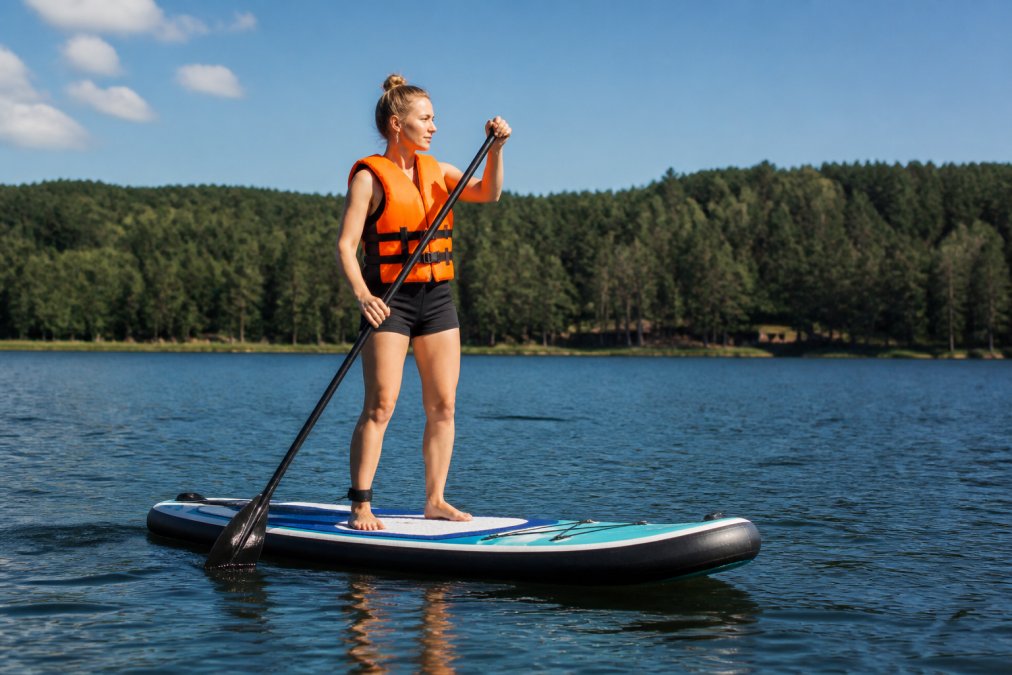
Stand-Up Paddleboarding (SUP)
Stand-up paddleboarding is the most accessible entry point for water sports. You're standing on a stable platform, using a single paddle to propel yourself forward. The learning curve is gentle, most people achieve basic competence within a few sessions. You can start in shallow, calm water and progress to moving water or longer distances as your technique improves.
Inflatable paddleboards dominate the beginner market because they're affordable, portable, and forgiving. They're less responsive than rigid boards, which actually helps beginners maintain stability. The hull stability of an inflatable SUP is naturally higher due to its buoyancy design. AdventureTrailhead carries several beginner-focused options, including the 10/11 Feet Inflatable Stand Up Paddle Board with Premium SUP Accessories at $307.99, which includes a paddle and pump, eliminating the need to buy accessories separately. The Aqua Marina VAPOR 10'4" Inflatable Paddle Board at $279.00 offers similar beginner-friendly dimensions and stability.


The key advantage of SUP is that you're upright and aware of your surroundings. You can see obstacles, other paddlers, and shore. Your center of gravity is higher, which feels more natural than lying down. If you fall, and you will, you're falling from a low height into water, which is far less intimidating than capsizing a kayak.
Kayaking
Kayaking involves sitting in a boat with legs extended forward, propelling yourself with a double-bladed paddle. It's slightly more technical than SUP because you're lower to the water and the kayak responds more directly to paddle strokes. For beginners, recreational kayaks are the right choice, they're wider, more stable, and more forgiving than touring or performance kayaks.
The learning curve for kayaking is steeper than SUP, but not dramatically. Most beginners develop basic paddle control and directional awareness in a few outings. The advantage is that you're seated, which distributes your weight differently and can feel more secure to some people. Kayaks also tend to move faster with less effort, which some find rewarding.
Drag reduction in kayak design comes from hull shape. Wider hulls (beginner boats) sacrifice speed for stability. Narrower hulls (advanced boats) require better technique to stay balanced but move more efficiently through water. As a beginner, prioritize stability over speed.
Open Water Swimming
Open water swimming is the simplest to start but requires the most caution. You're in the water with minimal equipment, just a wetsuit, cap, and goggles. There's no boat to provide flotation if something goes wrong, so this activity demands careful site selection and realistic assessment of your swimming ability.
Start in designated swim areas with lifeguards present. Water temperature rating becomes critical here because your body loses heat rapidly in water. Even if you're a strong pool swimmer, open water presents different challenges: currents, waves, visibility changes, and tide awareness. These factors require specific preparation.
Water Sports Safety Checklist Before You Launch
Before entering the water, run through a systematic check that takes five minutes and prevents most accidents. This isn't paranoia, it's the difference between a good day and a rescue situation.
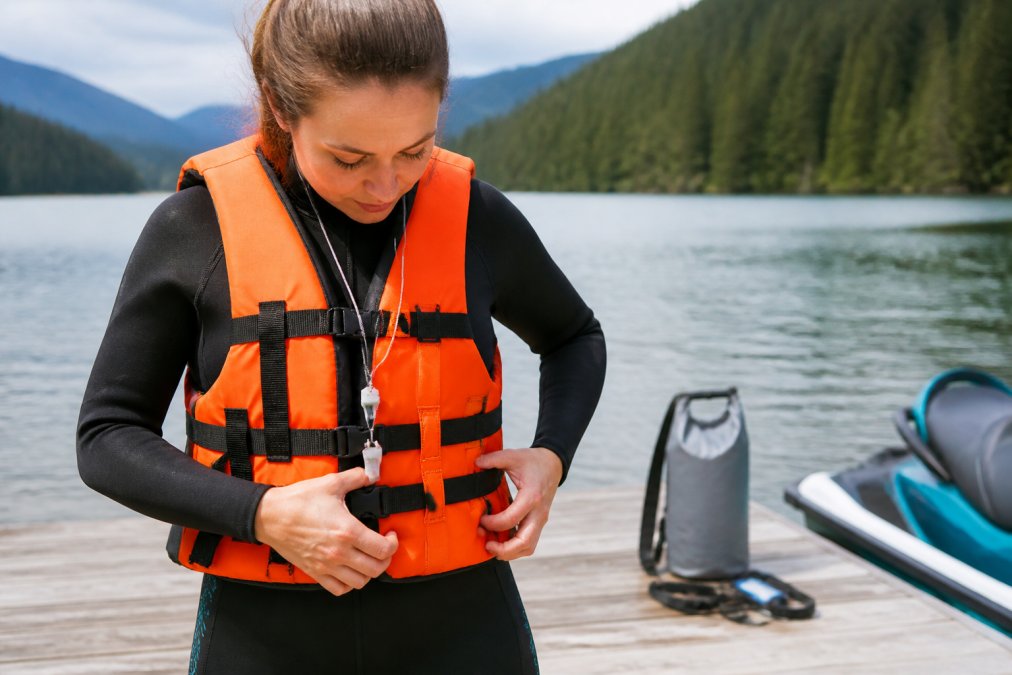
Pre-Launch Checklist:
- PFD is on, fastened, and fitted snugly
- Leash is attached to your ankle or wrist and to your board
- Safety whistle is accessible and attached to your PFD
- Water temperature is suitable for your wetsuit thickness
- Weather forecast shows no sudden wind or storm risk
- You've informed someone on shore of your departure time and expected return
- Your phone or communication device is in a waterproof dry bag
- You've assessed water conditions: current, tide, visibility, wave height
- Your gear is in good condition with no visible damage or leaks
- You've hydrated and eaten adequately before launching
Water temperature rating for your wetsuit must match actual conditions. A 3mm suit in 45-degree water won't keep you warm enough for extended time. Hypothermia develops faster than most people expect. If you're shivering uncontrollably or losing coordination, exit the water immediately.
Tide awareness is essential if you're paddling in coastal areas or tidal rivers. Incoming tides can move you away from shore faster than you can paddle back. Outgoing tides can create dangerous currents. Check tide tables before launching and understand how tide affects your specific location.
Wind conditions change. A calm morning can turn gusty by afternoon. Wind directly opposes your return journey, making paddling significantly harder. If you launch on a windy day, plan to return before wind speed increases further.
Choosing the Right Personal Flotation Device
A personal flotation device is the single most important piece of water sports gear, yet many beginners choose poorly. The wrong PFD is either uncomfortable (leading you to skip it) or ineffective (defeating its purpose). Understanding PFD types and fit standards takes the guesswork out.
US Coast Guard approved life jacket requirements specify that any PFD you wear must be USCG-certified. This certification means the device has been tested for buoyancy, construction durability, and performance under stress. Don't buy an off-brand buoyancy aid that claims to be "similar to" a life jacket, get the real thing.
Type III PFDs are the standard for recreational water sports. They provide at least 15.5 pounds of buoyancy, enough to keep most adults' heads above water if unconscious. They're more comfortable than Type I (which are bulkier and designed for open ocean) and more reliable than Type V (which are specialized for specific activities). Type III vests come in sizes from child to XXL, and sizing matters. A vest that's too large slides up when you're in water; one that's too small restricts breathing and movement.
Fit is non-negotiable. The vest should be snug around your torso with all straps fastened. When fully fastened, you should not be able to pull the vest over your head. This test takes 30 seconds and confirms proper fit. Quick-release buckles allow you to remove the vest quickly if it catches on something, but they should never come undone during normal use.
Inflatable versus hard shell PFDs represent different trade-offs. Inflatable vests are lighter and less bulky, making them more comfortable for extended wear. Hard shell PFDs are always ready, they don't require inflation. For beginners, hard shell Type III vests are more reliable because they can't deflate unexpectedly. As you gain experience and understand maintenance requirements, inflatable options become viable.
Water Sports Gear Maintenance and Storage
Your equipment only protects you if it's in good condition. Saltwater corrosion, UV damage, and general wear degrade gear over time. A maintenance routine prevents expensive replacements and keeps safety features functional.
After every saltwater session, rinse your equipment with fresh water. Salt crystals corrode metal buckles, zippers, and attachment points. A five-minute rinse extends equipment life significantly. Wetsuits should be rinsed inside and out. Paddleboards, kayaks, and PFDs need external rinsing to remove salt film.
UV protection matters for gear stored outdoors. Neoprene and inflatable materials degrade under direct sunlight. Store equipment indoors when not in use, or cover it with UV-protective tarps. A garage, shed, or interior storage space is ideal. If you only have outdoor space, invest in covers designed for marine equipment.
Inspect gear regularly for damage. Check PFDs for torn seams or broken buckles. Examine wetsuits for punctures or thin spots. Look at paddleboards for cracks or soft spots indicating internal water damage. Small repairs prevent failures during critical moments.
Quick-release buckles should be tested monthly. Open and close them several times to ensure they function smoothly. If they're stiff or corroded, clean them with fresh water and light lubrication. Leash attachments should be secure and show no signs of fraying.
Storage organization prevents gear degradation and makes launching easier. A dedicated storage area, even a corner of a garage, keeps equipment organized and protected. Hang wetsuits on wide hangers to prevent creasing. Store paddleboards vertically or horizontally on padded racks. Keep PFDs in a dry location away from direct heat sources.
Renting vs. Buying: Cost Considerations for New Participants
The decision to rent or buy water sports equipment depends on your commitment level, frequency of use, and budget. Both paths have legitimate advantages.
Renting costs between $30 and $60 per day for paddleboards or kayaks, depending on location and equipment quality. Open water swimming requires minimal rental (mainly wetsuits at $10-20 per day). If you're trying a new activity, renting lets you test the sport without significant investment. You'll discover whether you actually enjoy it before committing hundreds of dollars.
Buying offers long-term value if you plan regular participation. An inflatable paddleboard from AdventureTrailhead starts at $158.99 for basic models and goes up to $525.38 for premium boards. A quality PFD costs $80-150. A decent wetsuit runs $100-200. Total beginner setup ranges from $400-800 depending on quality and brand choices. That investment pays off after 10-15 rental sessions.

Consider frequency realistically. If you plan to paddle twice monthly, renting makes financial sense. If you'll be out weekly, buying is cheaper within a year. Seasonal participation (summer only) favors renting because storage and maintenance costs add up.
Rental quality varies significantly. Some outfitters maintain equipment meticulously; others rent gear that's worn and unreliable. Poor rental equipment can ruin your experience or create safety issues. Research local rental shops and read reviews before committing.
Buying also means responsibility. You maintain the equipment, store it properly, and replace it when it wears out. Rental companies handle these costs and hassles. This trade-off matters if you value simplicity over ownership.
Starting water sports as a beginner doesn't require expensive gear or years of training. It requires the right safety foundation and realistic progression. AdventureTrailhead provides everything you need to launch safely, from certified personal flotation devices to beginner-friendly paddleboards and wetsuits rated for various water temperatures. Begin with inflatable paddleboards or recreational kayaks, invest in proper safety equipment, and practice in calm, supervised water. Your first season will build the skills and confidence for increasingly challenging adventures ahead.
Frequently Asked Questions
What is the easiest water sport for beginners to learn?
Stand-up paddleboarding (SUP) and recreational kayaking are among the easiest water sports for beginners. SUP requires minimal prior experience, you'll be balanced and paddling within your first session. Kayaking is similarly accessible, with stable hull designs built specifically for beginners. Both sports allow you to progress at your own pace and enjoy the water immediately, making them ideal entry points into water sports.
Do I need a life vest for all water sports?
Yes. US Coast Guard regulations require a personal flotation device (PFD) for most recreational water activities, including paddleboarding, kayaking, and open water swimming. A properly fitted PFD is your primary safety tool, it provides buoyancy if you fall in and reduces fatigue over long sessions. Choose a Type III or Type V PFD rated for your weight and the water conditions you'll encounter. Never skip this step, regardless of your swimming ability.
How do I choose the right size for water sports gear like wetsuits and PFDs?
Proper fit is critical for safety and comfort. For personal flotation devices, match the PFD's weight rating to your body weight and choose a snug fit that doesn't ride up when you're in the water. For wetsuits, measure your chest, waist, and inseam, neoprene thickness (measured in millimeters) depends on water temperature: 3mm for warm water (above 70°F), 5mm for cool water (60-70°F), and 7mm or thicker for cold water (below 60°F). Test fit gear before committing; different brands size differently.
What's the most important safety gear for beginner water sports?
A US Coast Guard approved personal flotation device is non-negotiable. Beyond that, a safety whistle, leash attachment (for paddleboards and kayaks), and waterproof storage for your phone and ID matter. Wear UV-protective clothing or sunscreen to prevent sun exposure during long sessions. Before every outing, check water temperature, tide awareness if in saltwater, and weather conditions. These steps form the foundation of a water sports safety checklist that keeps you protected.
Should I rent or buy water sports gear as a beginner?
Renting is smart for your first few outings, it costs $20-$50 per day versus $150-$500+ to buy. Renting lets you test different equipment and confirm you enjoy the sport before investing. Once you're committed, buying makes sense: quality beginner gear from AdventureTrailhead, like our inflatable paddleboards starting at $158.99, lasts years and becomes more cost-effective. Budget $300-$600 for a complete beginner setup including a board, paddle, PFD, and basic accessories.
What water sports equipment requires the most maintenance?
Inflatable paddleboards and kayaks need regular care to prevent saltwater corrosion and UV damage. Rinse gear with fresh water after every saltwater use, dry it completely before storage, and store it in a cool, dry place away from direct sunlight. Wetsuits should be rinsed and hung to dry flat. Personal flotation devices need inspection for wear and proper buckle function before each use. Paddles benefit from occasional cleaning and inspection for cracks. Proper gear maintenance extends equipment life and ensures safety.
This article was written using GrandRanker