
Best Climbing Apparel for Broad Shoulders: 2026 Guide
Table of Contents
- Why Standard Climbing Apparel Fails Broad Shoulders
- How to Measure for Climbing Apparel: A Broad-Shoulder Sizing Guide
- Climbing Shirts for Muscular Build: What to Look For
- Gusseted Underarm Climbing Shirts: Why the Construction Matters
- Layering Systems for Broad-Shouldered Climbers
- Best Climbing Apparel for Broad Shoulders: Top Picks
- Common Fit Mistakes Broad-Shouldered Climbers Make
- Conclusion
Last Updated: August 17, 2026
Finding the best climbing apparel for broad shoulders is genuinely harder than it should be. Most climbing gear is cut for a narrow, ectomorphic body type, and if you carry serious muscle through your chest, traps, and deltoids, you've probably pulled on a shirt that fit your waist perfectly and pinched your shoulder blades together the moment you reached for a hold. At AdventureTrailhead, we hear this frustration constantly from climbers with athletic builds who want technical apparel that actually moves with them on the wall.
The problem goes deeper than just "sizing up." A larger size often means more fabric everywhere, which creates excess material at the waist and hips while still not solving the core issue: shoulder mobility and harness compatibility for a V-tapered frame. Below, we'll break down exactly how to measure, what construction details to prioritize, and which jacket options from our catalog genuinely work for broader athletes.
Why Standard Climbing Apparel Fails Broad Shoulders
Most climbing apparel fails broad-shouldered athletes for a structural reason. Standard patterns are drafted around proportional assumptions, chest-to-waist ratios, shoulder-to-hip measurements, and sleeve pitch angles, that don't account for a V-tapered build.
The V-Tapered Build Problem
A V-tapered build means your shoulder width is significantly greater than your waist measurement. Standard size charts assume more uniform proportions. When a climber with a 48-inch chest and a 34-inch waist sizes up to accommodate their shoulders, they end up swimming in fabric through the torso. The result is bunching under a harness, restricted arm swing, and a garment that rides up during dynamic movement.
Technical climbing apparel needs to account for shoulder mobility specifically. The shoulder seam needs to sit at the actual edge of your shoulder, not migrate toward your neck. When it does migrate inward, every overhead reach pulls the entire garment upward.
Harness Compatibility and Shoulder Mobility
A climbing harness sits on your hips and waist but interacts directly with your upper body apparel through the belay loop and gear loops. For broader climbers, the main issue is that a tight chest or armhole causes the harness to shift and ride during movement. A gusseted underarm construction, where a diamond-shaped or triangular panel is inserted at the armpit, dramatically reduces the pulling sensation when you reach overhead. According to American Alpine Club's climbing safety resources, unrestricted movement is a core safety consideration for climbers.
How to Measure for Climbing Apparel: A Broad-Shoulder Sizing Guide
Getting the right fit starts with accurate measurements. Most broader athletes measure their chest and stop there.
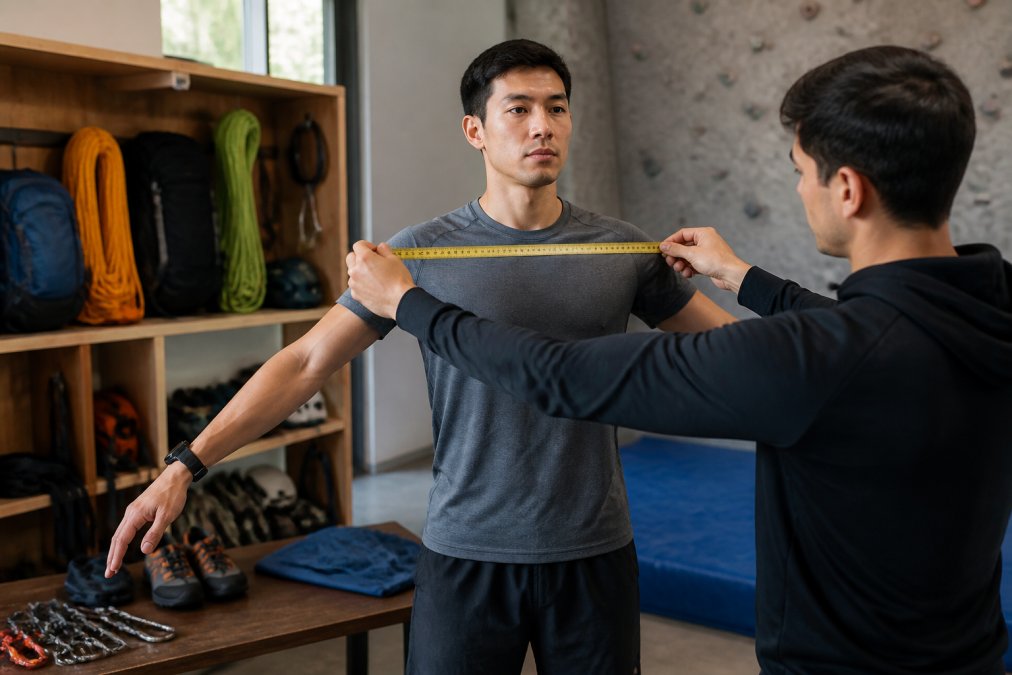
Key Measurements to Take Before You Buy
Take all measurements in centimeters or inches and record them before consulting any size chart. Here are the four critical numbers for broad-shouldered climbers:
- Shoulder width: Measure straight across your back from the edge of one shoulder to the other. This is the most important measurement for your build.
- Chest circumference: Measure at the fullest point, keeping the tape parallel to the floor and your arms relaxed at your sides.
- Sleeve length: Measure from the center back of your neck, across your shoulder, and down to your wrist with your arm slightly bent.
- Torso length: Measure from the top of your shoulder to your natural waist. This helps identify whether a garment will ride up under a harness.
Reading Size Charts as a Broader Athlete
Most size charts list chest circumference as the primary variable. For broad-shouldered climbers, size to your shoulder width first, then evaluate whether the chest measurement is also accommodated. If your shoulder width falls between sizes, go up. You can manage excess fabric at the waist with a harness; you cannot manage a seam that sits two inches too far inward.
Look for brands that publish shoulder-width measurements in their size charts. If a size chart only lists chest circumference, treat that as a red flag for fit predictability.
| Measurement | Why It Matters for Broad Shoulders | Sizing Strategy |
|---|---|---|
| Shoulder width | Determines sleeve pitch and armhole fit | Size up if between sizes |
| Chest circumference | Overall volume through the torso | Match to shoulder size, not waist |
| Sleeve length | Prevents ride-up during overhead reaches | Prioritize arm extension range |
| Torso length | Harness compatibility and coverage | Check against harness waistband height |
Climbing Shirts for Muscular Build: What to Look For
Climbing shirts for a muscular build need to solve two problems simultaneously: enough volume across the chest and shoulders to allow full range of motion, and enough tailoring through the torso to prevent excess fabric from bunching under a harness.
Fabric Technologies That Protect Shoulder Mobility
Four-way stretch fabric is the single most important construction feature for broader climbers. Unlike two-way stretch, four-way stretch allows the garment to expand both horizontally and vertically. When you reach overhead for a hold, the fabric moves with your arm rather than pulling the hem up from your waist.
Stretch-woven synthetics, typically polyester or nylon blends, offer four-way stretch alongside moisture-wicking properties and abrasion resistance. Ripstop weaves add durability without significant weight. Breathability is non-negotiable for active climbing. Look for fabrics with active ventilation or mesh panels at the underarm.
Athletic Fit vs. Standard Fit: Which Works Better
For broad-shouldered climbers, athletic fit, cut with more volume through the chest and shoulders but tapered through the waist, is almost always the better choice. Standard fit adds volume everywhere uniformly, which solves the shoulder problem but creates excess fabric through the torso.
The caveat: "athletic fit" is not standardized. Always cross-reference actual measurements, not just the label.
Gusseted Underarm Climbing Shirts: Why the Construction Matters
Gusseted underarm climbing shirts are the most underrated upgrade for broad-shouldered climbers. A gusseted underarm works by inserting an additional panel of fabric, usually diamond or triangular, at the junction where the sleeve meets the body. This eliminates the direct tension line that runs from your shoulder seam to your side seam when you raise your arm. Without a gusset, that tension line pulls your shirt hem up and restricts your final degrees of overhead reach.
For broader athletes, gusseting also reduces stress on stitching at the underarm seam, the most common failure point on climbing apparel. As noted in REI's gear construction and fit guides, gusseted construction is a key durability and mobility feature in technical outdoor apparel.
Layering Systems for Broad-Shouldered Climbers
Layering for outdoor climbing is more complex for broader athletes because each layer compounds the fit problem. Plan your layers as a system, not as individual garments.
Base Layer and Mid-Layer Fit Priorities
A base layer for a broad-shouldered climber should prioritize shoulder mobility above warmth. Choose moisture-wicking base layers with four-way stretch and a slightly longer torso length to prevent ride-up under a harness.
Mid-layers for climbing need to fit over a base layer without compressing it. Soft shell mid-layers are the most versatile option for multi-pitch climbing because they balance thermal regulation, breathability, and wind resistance. The Men Outdoor Mountaineering Camping Windproof Soft Shell Jacket at AdventureTrailhead ($110.95) is built for this use case, with wind-resistant construction and enough flexibility for active movement.

Hard Shell and Soft Shell Jackets for Wider Frames
Hard shell jackets present the biggest layering challenge because they're the outermost layer and must accommodate everything beneath them. Add 3-4 inches to your bare chest measurement to account for base and mid-layers when selecting a hard shell size.
Look for hard shells with articulated sleeves, pre-curved construction that positions the sleeve in a natural forward pitch. This dramatically reduces the pulling sensation at the shoulder when you reach for holds. Durable water repellent (DWR) coatings protect against wet rock and light precipitation without the weight of full waterproofing membranes.
The Mountain Hard Shell Jacket Windproof Waterproof Outdoor Mountaineering Clothing ($191.71) offers breathable, waterproof construction designed for mountaineering and technical climbing, with windproof and waterproof material that handles harsh weather while allowing active movement.

Best Climbing Apparel for Broad Shoulders: Top Picks
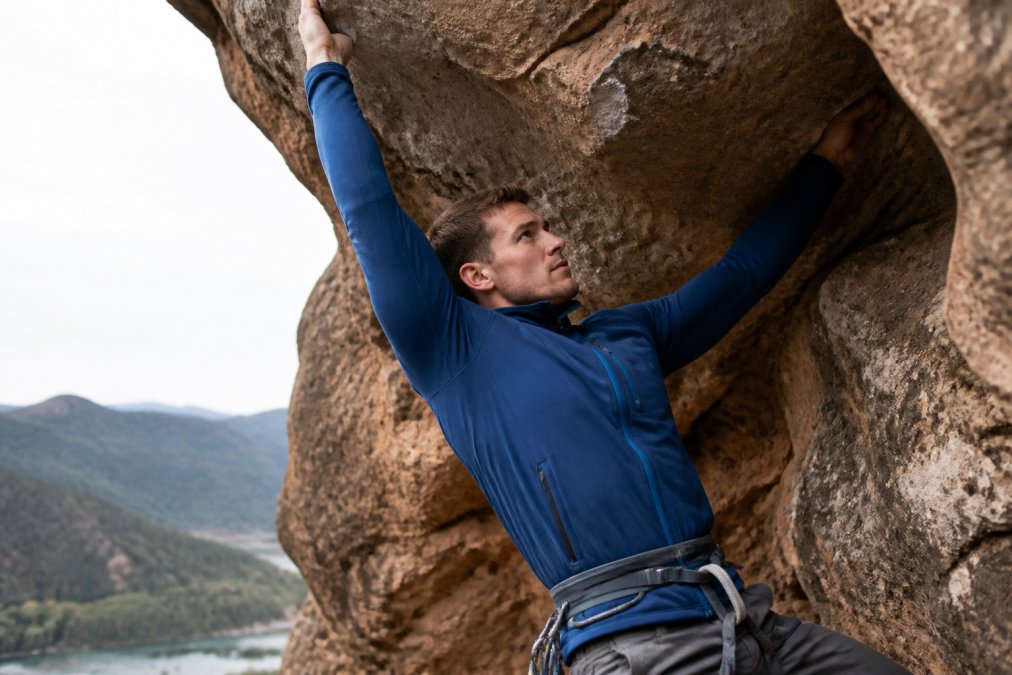
The best climbing apparel for broad shoulders prioritizes shoulder mobility, gusseted construction, four-way stretch fabrics, and layering compatibility.
| Jacket | Price | Best For | Key Feature |
|---|---|---|---|
| Mountain Hard Shell Jacket | $191.71 | Multi-pitch and mountaineering | Waterproof, breathable, windproof outer layer |
| Men Outdoor Soft Shell Jacket | $110.95 | Approach hikes and mild-weather climbing | Flexible mid-layer with wind resistance |
| Outdoor Windproof Hooded Jacket | $108.22 | Cool-weather sport climbing | Warm fabric, practical pockets, lightweight |
| LNGXO Waterproof Hiking Jacket | $49.99 | Budget-conscious all-season use | 100% polyester, abrasion-resistant, unisex sizing |
| Loose Hooded Work Jacket | $79.80 | Climbers who need extra torso room | Loose fit for broader frames, windproof and waterproof |
Best overall for broader frames: The Outdoor Windproof Waterproof Loose Hooded Work Jacket ($79.80) is the standout pick for climbers who've been burned by athletic-cut jackets that restrict shoulder movement. Its loose-fit construction provides the chest and shoulder room that V-tapered athletes need, while windproof and waterproof protection handles variable outdoor conditions.

Best for layering: The LNGXO Men Women Waterproof Hiking Jacket ($49.99) uses 100% polyester with abrasion-resistant properties and a two-way zipper for adjustable ventilation. Its unisex sizing and explicit guidance to size by body measurements makes it more honest about fit than most options in this price range.
According to Outdoor Industry Association's apparel fit standards, technical climbing apparel should prioritize freedom of movement and ergonomic design as primary performance criteria.
Common Fit Mistakes Broad-Shouldered Climbers Make
The biggest mistake is sizing to chest circumference alone. Chest circumference tells you whether a garment closes; it tells you almost nothing about shoulder mobility or harness compatibility.
A common mistake is buying a size that fits at the chest but has the shoulder seam sitting halfway down your upper arm. That misplaced seam is a hard cap on your overhead reach. Another frequent error is ignoring sleeve length. Broad-shouldered climbers often have longer arm spans proportionally. A sleeve that's too short pulls the shoulder seam forward and inward when you extend your arm.
The interaction between apparel and harness is a fit issue, not just a comfort issue. A garment that bunches under your harness straps during a rappel creates friction, shifts the harness position, and can interfere with belay device operation. Test any new climbing jacket by putting your harness on over it before you commit to wearing it on a route.
Before any climb, do a full range-of-motion check: reach both arms straight overhead, cross them across your chest, and rotate your torso fully. If the garment pulls anywhere during these movements, it will restrict you on the wall. The American Mountain Guides Association's technical climbing standards emphasizes that climber movement efficiency is directly tied to equipment fit and apparel selection.
Frequently Asked Questions
What features should climbers with broad shoulders look for in jackets?
Broad-shouldered climbers should prioritize jackets with a loose or athletic fit through the upper back and chest, articulated sleeve construction, and stretch-woven or four-way stretch panels across the shoulders. Gusseted underarms are essential for overhead reach without the jacket riding up. Raglan or drop-shoulder seam placement reduces pressure points under a harness. Durable water repellent coatings and breathable fabrics complete the package for multi-pitch or bouldering use.
How does a muscular build affect climbing shirt sizing?
A muscular or V-tapered build typically means the chest and shoulder measurements exceed what standard size charts assume for a given waist size. Sizing up for shoulder width often results in excess fabric at the torso, which can bunch under a harness. Climbing shirts designed with athletic fits address this by tapering the torso while maintaining width through the chest and shoulders. Always measure chest circumference, shoulder width, and sleeve length separately before selecting a size.
What not to wear to bouldering if you have broad shoulders?
Avoid fitted cotton T-shirts, they have no stretch, restrict shoulder mobility during dynamic moves, and absorb sweat without wicking it away. Stiff denim or non-stretch pants pair badly with the deep hip flexion bouldering demands. Loose, baggy tops can snag on holds or catch on crash pads. The best climbing apparel for broad shoulders combines four-way stretch fabric, gusseted underarms, and a tapered fit that moves with the body rather than fighting it.
Are there specific fabric technologies that help with shoulder mobility?
Yes. Four-way stretch and stretch-woven synthetics allow the fabric to expand in every direction, which is critical for overhead reaches and wide pulls. Ripstop weaves add abrasion resistance without adding stiffness. Moisture-wicking and breathable constructions prevent sweat buildup during high-intensity bouldering or multi-pitch sessions. Gusseted underarm panels are a structural feature rather than a fabric technology, but they work alongside stretch fabrics to maximize freedom of movement for broader athletes.
Finding the best climbing apparel for broad shoulders comes down to understanding that standard size charts weren't built for your frame. AdventureTrailhead carries a range of technical outdoor jackets designed for active movement, from the loose-fit waterproof options ideal for V-tapered builds to hard shell mountaineering jackets built for multi-pitch conditions. Browse our full climbing apparel selection and size by shoulder width first, your reach on the wall depends on it.
This article was written using GrandRanker