
How to Choose Beginner Climbing Gear: 2026 Guide
Table of Contents
- Rent First, Buy Smart: The Beginner Climbing Gear Timeline
- Climbing Gear Checklist for Beginners: What You Actually Need
- How to Fit Climbing Shoes: Neutral vs. Aggressive
- Choosing a Harness, Belay Device, and Carabiners for Beginner Climbing Gear
- Dynamic Rope Basics and When to Replace Climbing Ropes
- Helmets, Chalk Bags, and the Rest of Your Beginner Climbing Gear
- Buying Used Gear, Certifications, and Storage Care Protocols
- Conclusion
Last Updated: August 14, 2026
Rent First, Buy Smart: The Beginner Climbing Gear Timeline
Most beginners walk into a gear shop and spend several hundred dollars on equipment they barely understand, only to discover months later that their preferences don't match their purchases. The smarter move is to rent first. Most climbing gyms offer full rental packages for shoes, harness, and belay device at modest daily rates. Spend your first four to six sessions renting to figure out whether you prefer bouldering, top-rope, or lead climbing, each discipline has different gear priorities.
Here is a practical timeline for choosing beginner climbing gear without wasting money:
| Phase | Duration | Action | What to Buy |
|---|---|---|---|
| Exploration | Sessions 1-6 | Rent everything | Nothing yet |
| Commitment | Sessions 7-12 | Buy shoes and chalk bag | Personal fit items only |
| Progression | Sessions 13+ | Build full kit | Harness, belay device, rope |
| Outdoor transition | First crag trips | Add safety gear | Helmet, locking carabiners |
Shoes and chalk bags are the first personal purchases worth making because rental shoes are often worn out and imprecise. Everything else, harness, belay device, rope, can wait until you're climbing consistently and understand what you actually need.
Climbing Gear Checklist for Beginners: What You Actually Need
Beginner climbing gear falls into two clear categories: what you need immediately and what can wait.
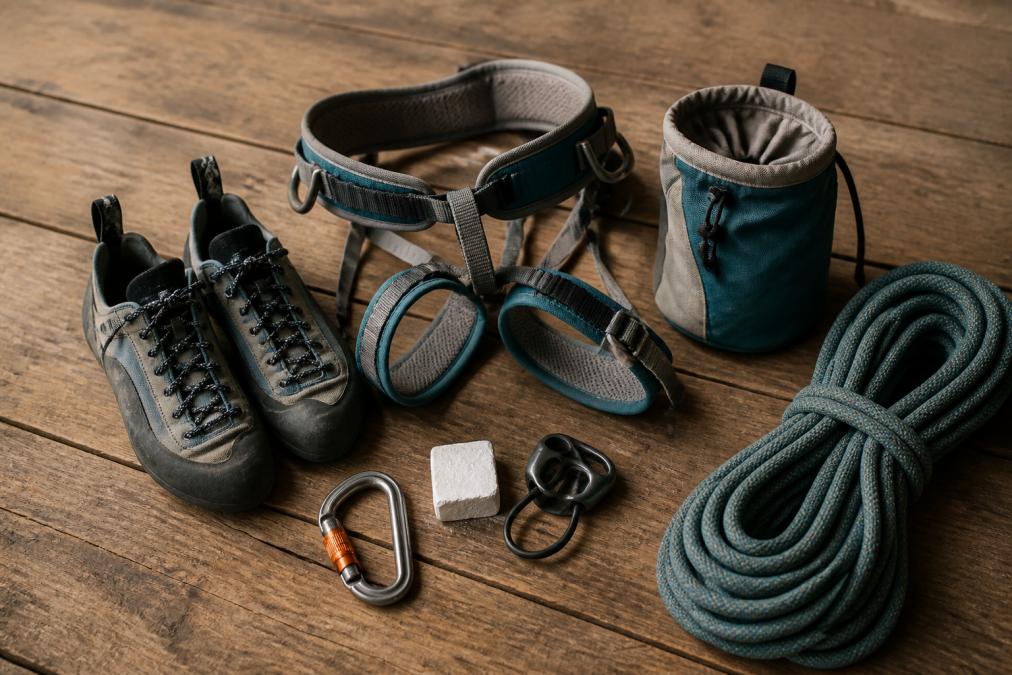
For gym-only climbers, the essential list is shorter than most guides suggest: climbing shoes, a chalk bag with chalk, a harness, a belay device, and at least one locking carabiner. A rope is only necessary if you plan to lead climb outdoors.
Essential beginner climbing gear at a glance:
- Climbing shoes (neutral fit for beginners)
- Chalk bag and loose chalk or chalk balls
- Sit harness with adjustable leg loops
- Tube-style or assisted braking belay device
- Locking carabiner (HMS or pear-shaped for belaying)
- Helmet (mandatory outdoors, strongly recommended in gyms)
Gym Climbing vs. Outdoor Crag: Different Gear Priorities
Gym climbing is a controlled environment with pre-rigged anchors and padded floors. You don't need a rope, quickdraws, or a helmet for bouldering. At the crag, outdoor rock is unpredictable, rockfall is a real hazard, and you'll need a helmet, a 60-metre dynamic rope, and locking carabiners for building anchors. Lead climbing outdoors adds quickdraws to that list. Build your gym kit first and add outdoor-specific gear only when you have a specific trip planned.
Hard Goods vs. Soft Goods: Understanding the Distinction
Hard goods are rigid items: carabiners, belay devices, and helmets. These are generally more durable and less susceptible to UV exposure or moisture.
Soft goods are textile-based items: harnesses, ropes, and webbing slings. Soft goods have a finite lifespan regardless of use. The UIAA safety standards for climbing equipment provide guidelines on inspection and retirement criteria. A harness that sat in a garage for a decade may look fine but be structurally compromised.
How to Fit Climbing Shoes: Neutral vs. Aggressive
Climbing shoe fit depends on your climbing style, not your street shoe size.
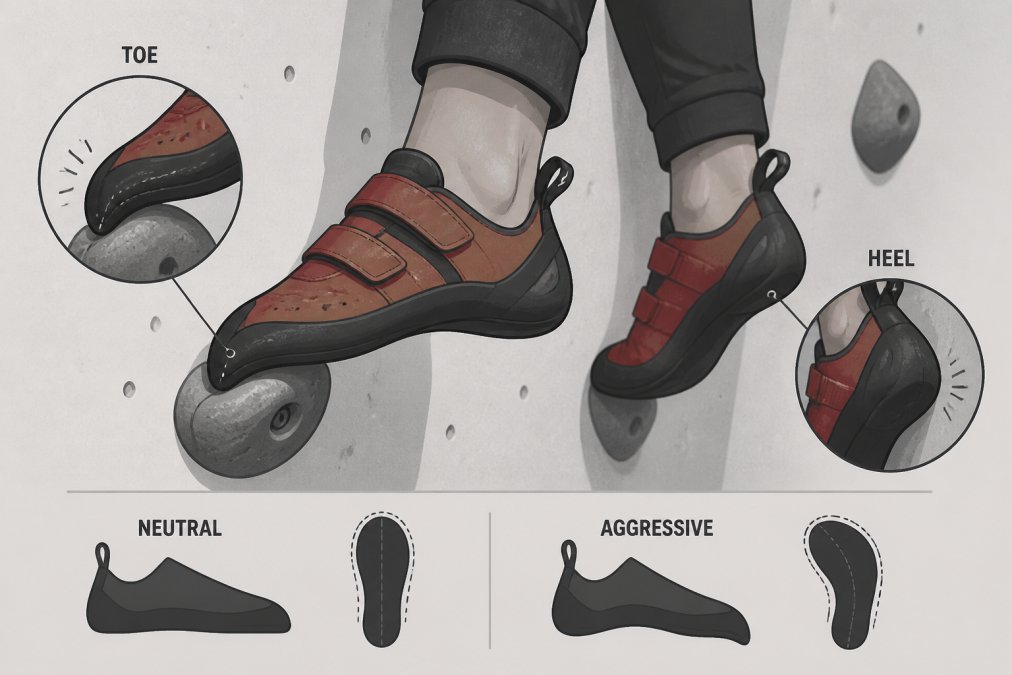
Neutral fit shoes have a relatively flat profile with minimal downturn. They're comfortable for multi-hour sessions and ideal for beginners learning footwork fundamentals.
Aggressive fit shoes have pronounced downturn and tight heel cups designed for steep overhanging routes and small holds. They're not appropriate for beginners because discomfort interferes with learning and the performance advantage is irrelevant until your technique is solid.
If you're new to climbing, buy neutral fit shoes and reassess after a year.
Reading the Toe Box, Heel Tension, and Rubber Compound
Toe box: Should be snug without causing pain. Your toes should make contact with the front but not curl painfully. A slight press is ideal for neutral shoes.
Heel tension: The heel cup should grip firmly with no slippage. Test this by standing on your toes and checking for heel lift.
Rubber compound: Softer rubber provides more friction for smearing; harder rubber lasts longer and edges better on small footholds. Most beginner shoes use medium-soft compounds that balance grip and durability.
Choosing a Harness, Belay Device, and Carabiners for Beginner Climbing Gear
The harness is your connection to the rope system. Getting this right is both a comfort and safety issue.
Harness Fit and Safety Features
A sit harness should have a padded waist belt above the hip bones, adjustable leg loops, and a clearly marked belay loop. The waist belt must be snug enough that you cannot pull it down over your hips.
Key fit checks:
- Waist belt sits 1-2 inches above the hip crest
- Leg loops are snug but allow full range of motion
- Tie-in points are accessible and clearly visible
- Buckles are fully doubled back after adjustment
Look for CE EN 12277 or UIAA certification. The Consumer Product Safety Commission guidance on climbing harnesses provides relevant safety context for equipment used in the United States.
Tube-Style vs. Assisted Braking Belay Devices
Tube-style devices are simple, lightweight, and work with many rope diameters. They require the belayer to maintain a brake hand on the rope at all times. This is where most beginners start.
Assisted braking devices use a camming mechanism that pinches the rope automatically in a fall, providing backup if the belayer's brake hand slips. They're more forgiving for new belayers and widely used in gyms, though they cost more.
For most beginners, an assisted braking device offers a meaningful safety margin during the learning phase.
Dynamic Rope Basics and When to Replace Climbing Ropes
Understanding when to replace climbing ropes is one of the most important safety skills a beginner can develop.
Dynamic ropes stretch under load, absorbing fall energy. Static ropes do not stretch and are used for rappelling or hauling, not lead climbing. Beginners purchasing their first rope for outdoor climbing should always buy a dynamic rope.
Key rope specifications:
- Diameter: Thicker ropes (9.8-10.5mm) are more durable and easier to handle. For beginners, 9.8-10.2mm is the practical range.
- Length: A 60-metre rope covers most gym-style outdoor crags.
- UIAA fall rating: Indicates how many standardized test falls the rope has survived.
When to replace a climbing rope:
- After any severe fall that loaded the rope heavily
- When the sheath shows cuts, flat spots, or significant abrasion
- When the rope feels stiff, lumpy, or inconsistent
- After 5-7 years of regular use
- After 10 years from manufacture date, even if unused
The Climbing Wall Association's rope safety guidelines provide additional detail on inspection protocols.
Helmets, Chalk Bags, and the Rest of Your Beginner Climbing Gear
Helmets are the most skipped piece of beginner climbing gear. Outdoor climbing exposes you to rockfall from above. A helmet substantially reduces the severity of head impacts. For bouldering in a gym, a helmet is not necessary. For any outdoor climbing, treat it as mandatory. Look for UIAA or CE EN 12492 certification. Foam-shell helmets are lighter and cooler; hard-shell helmets are more durable.
Chalk bags and chalk: Chalk absorbs moisture from your hands, improving grip. Chalk balls reduce mess and are required at some gyms. Loose chalk provides more coverage but is messier. Either works well.
Approach shoes: If climbing outdoors, approach shoes have sticky rubber soles for scrambling and support for trail hiking. They're not essential for your first outdoor sessions but become valuable as you explore more remote crags.
Buying Used Gear, Certifications, and Storage Care Protocols
Used gear is where beginners often make their riskiest decisions. Soft goods, harnesses, ropes, and slings, can look fine while being structurally compromised.
Hard goods (carabiners, belay devices): Used carabiners and belay devices are generally acceptable if they show no cracks, sharp edges, deep grooves, or corrosion. A carabiner with a gate that doesn't snap shut cleanly should be retired. Never buy a used helmet; like a bicycle helmet, it may have absorbed an impact that's invisible externally but has compromised its protective structure.
Soft goods (harnesses, ropes, slings): Approach used soft goods with significant caution. A harness with an unknown history should not be trusted. Any harness over 10 years old should be retired regardless of appearance.
Certifications to look for: All safety-critical climbing gear should carry UIAA certification or CE rating (EN standards). Do not purchase climbing gear that lacks these markings.
Storage and care protocols:
- Store ropes and harnesses away from direct sunlight; UV exposure degrades nylon and polyester webbing
- Keep soft goods away from chemicals, including battery acid, bleach, and fuel
- Dry wet gear at room temperature, never with direct heat
- Coil ropes loosely to prevent kinking
- Inspect all gear before every session
Well-maintained gear lasts significantly longer, reducing the environmental cost of manufacturing replacements. The Leave No Trace principles for outdoor recreation also touch on gear longevity as part of minimizing environmental impact in climbing areas.
Getting into climbing is one of the most rewarding decisions an outdoor enthusiast can make, but the gear decisions at the start shape the entire experience. AdventureTrailhead offers a comprehensive selection of beginner climbing gear, from UIAA-certified harnesses and dynamic ropes to neutral-fit climbing shoes and assisted braking belay devices, so you can build a kit you trust from day one. Browse the full climbing range at AdventureTrailhead and get equipped with gear that grows with your ability.
Frequently Asked Questions
What climbing gear should I buy first as a beginner?
Climbing shoes are the first piece of beginner climbing gear worth buying, since rental shoes are often worn out and fit poorly. A chalk bag is a low-cost second purchase. Hold off on buying a harness, belay device, and rope until you've taken a belay course and confirmed you'll climb regularly outdoors. Most gyms supply harnesses and belay devices for rental, so those can wait while you build commitment to the sport.
How should beginner climbing shoes fit?
Beginner climbing shoes should fit snugly with no dead space, but your toes should lie flat or with only a very slight curl. Aggressive downturned shoes are designed for advanced moves like overhangs and are painful for long sessions. A neutral fit with a rounded toe box suits top-rope and bouldering beginners. Try shoes on at the end of the day when feet are slightly swollen, and expect a short break-in period as the rubber compound softens.
Is it better to rent or buy climbing gear when starting out?
Rent for the first one to three months while you decide whether climbing sticks. Gyms rent harnesses, belay devices, and shoes at reasonable session rates. Once you're climbing two or more times per week, buying your own shoes and chalk bag pays off quickly in hygiene and performance. Ropes, quickdraws, and a full rack of carabiners make sense to purchase only after you commit to regular outdoor crag sessions.
What safety certifications should I look for in climbing equipment?
Look for UIAA certification and CE rating markings on all life-safety gear: harnesses, dynamic ropes, carabiners, belay devices, and helmets. UIAA sets internationally recognized impact and tensile strength standards. CE marking confirms compliance with European safety directives, which most reputable manufacturers meet alongside UIAA. Both marks should appear on the product itself and in its documentation. Never purchase used soft goods like ropes, harnesses, or webbing without a full and verifiable history.
This article was written using GrandRanker