
Best Camping Gear for Multi-Day Trips (2026)
Table of Contents
- Quick Comparison: Best Camping Gear for Multi-Day Trips
- Essential Camping Gear for Beginners: What You Actually Need
- Lightweight Camping Equipment That Won't Wreck Your Back
- Sleep System: Tent, Sleeping Pad, and Rest Quality
- Kitchen Gear, Hydration, and Water Filtration on the Trail
- Clothing Layers, Footwear, and Navigation Essentials
- First Aid, Sanitation, and Emergency Gear
- How to Pack for a 3 Day Backpacking Trip
Last Updated: August 15, 2026
Planning a multi-day backpacking trip without the right gear turns a weekend adventure into a miserable slog. At AdventureTrailhead, we've helped thousands of outdoor enthusiasts gear up for everything from overnight loops to week-long wilderness crossings. This guide covers the best camping gear for multi-day trips in 2026, organized by category so you can build a complete kit without guessing.
Quick Comparison: Best Camping Gear for Multi-Day Trips
| Gear Category | Product | Price | Best For |
|---|---|---|---|
| Backpack | 90L Waterproof Hiking Backpack | $79.99 | Multi-day loads, mountaineering |
| Tent | Waterproof Camping Tent | $228.52 | All-season protection |
| Sleeping Pad | Matrix Air Cell Memory Foam Mattress | $74.97 | Comfort-focused sleepers |
| Camp Stove | Portable Folding Card Stove | $77.42 | Ultralight fuel-efficient cooking |
| Cookware | 12-Piece Aluminum Cookware Set | $55.99 | Groups of 2-3 |
| Footwear | Men's High-Top Hiking Boots | $78.25 | Technical terrain |
| Hydration | Hydration Pack Backpack (Medium) | $44.99 | Day sections, fast movement |
| Headlamp | Rechargeable LED Headlamp 1600 Lumens | $99.95 | Night navigation, camp tasks |
| Emergency | 47-Piece Survival Kit with Pouch | $78.99 | Safety and first aid |
| Clothing | Men's Convertible Hiking Pants | $67.99 | Versatile weather conditions |
Essential Camping Gear for Beginners: What You Actually Need
Essential camping gear for beginners is the foundation of any safe multi-day trip: a shelter system, a sleep system, a way to cook and drink, and clothing that handles changing conditions. Most first-timers overbuy; the real skill is knowing what to leave behind.

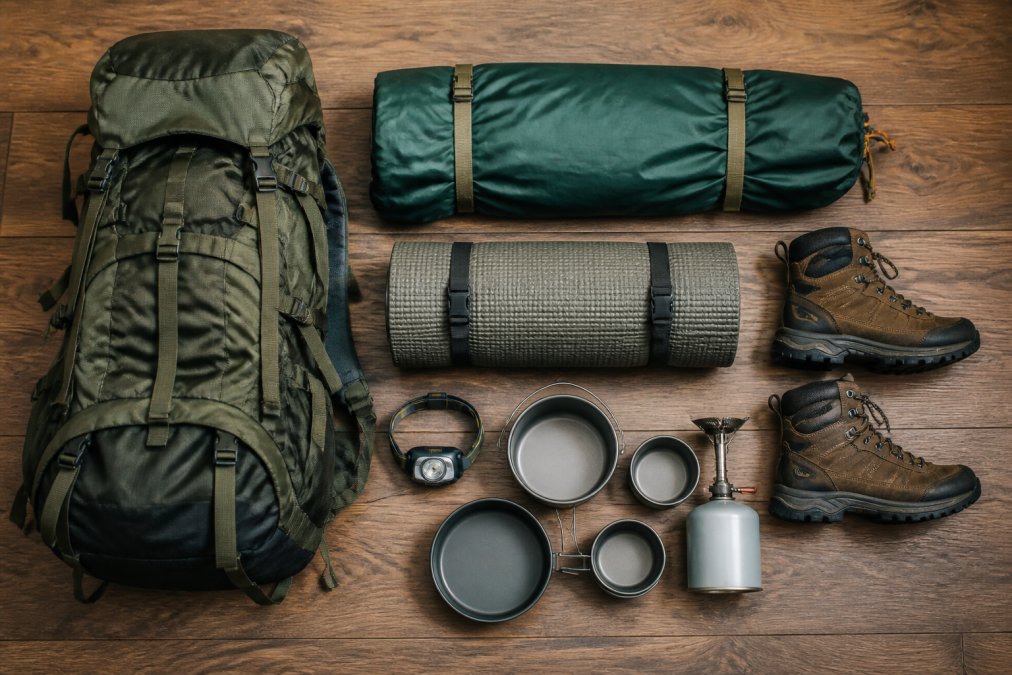
The non-negotiables for any multi-day excursion:
- Shelter: A waterproof tent with a sealed floor and at least 2,500mm hydrostatic head rating
- Sleep system: Sleeping bag rated below your expected overnight low, plus an insulated pad
- Water filtration: Filter or purification tablets for every water source on trail
- Navigation: Offline map app or paper topo map plus compass
- Headlamp: Hands-free lighting for camp tasks and early starts
- First aid and emergency: At minimum a blister kit, wound care, and emergency blanket
- Camp kitchen: Stove, fuel, lightweight cookware, and utensils
Buy your backpack first, it's your foundation. Size it to your torso length, then fill it. The 90L Waterproof Hiking Camping Backpack at $79.99 handles serious multi-day loads with waterproof construction and spacious compartments that organize gear without fighting for space.
Lightweight Camping Equipment That Won't Wreck Your Back
Going light means making smarter trade-offs, not sacrificing comfort. Keeping base weight manageable, everything in your pack excluding food, water, and fuel, makes a 3-day trip feel like a 3-day trip rather than punishment. According to Leave No Trace Center for Outdoor Ethics, lighter hikers also cause less soil compaction on sensitive routes.
Aluminum cookware is a good example of weight savings. The 12-Piece Aluminum Camping Cookware Set at $55.99 packs a full kitchen into a compact mesh bag. Anodized aluminum conducts heat quickly, burning less fuel per meal.
Weight-to-Comfort Ratio: Where to Spend and Where to Save
For each piece of equipment, ask: how much weight am I paying per unit of comfort or safety gained?
Spend more on:
- Sleeping pad (insulation and comfort directly affect sleep quality and recovery)
- Footwear (blisters end trips; ankle support prevents injuries on technical terrain)
- Rain shell (a waterproof shell that breathes is worth the investment on multi-day trips)
Save on:
- Trekking poles (basic aluminum poles work nearly as well as carbon fiber)
- Cookware (aluminum performs well at a fraction of titanium's price)
- Stuff sacks and accessories (dry bags and organizers don't need to be premium)
The Matrix Air Cell Memory Foam Camping Mattress Pad at $74.97 provides cushioning that standard foam pads can't match. Better sleep means better performance on day two and three.

Sleep System: Tent, Sleeping Pad, and Rest Quality
A bad night's sleep degrades decision-making, slows recovery, and makes the next day harder. Your sleep system is where no amount of trail fitness compensates for poor gear.
The three components work together: tent (weather protection and condensation management), sleeping bag (thermal insulation), and sleeping pad (ground insulation and cushioning). Most people underinvest in the pad and overpay for a sleeping bag with an unused temperature rating.
The Waterproof Camping Tent at $228.52 is built for real conditions. The outer shell uses 210T rubberized fabric with glue-treated seams and a 2,500-3,000mm waterproof rating, while the 190T breathable inner reduces condensation. The floor uses Oxford cloth with 3,000mm PU coating, handling wet ground without soaking through. Storage size is 54 x 13 x 12 cm, fitting cleanly in most large packs.

For sleeping bags, choose a bag rated 10-15°F below your expected overnight low. Down insulation packs smaller and weighs less; synthetic performs better when wet.
Kitchen Gear, Hydration, and Water Filtration on the Trail
A good camp kitchen prioritizes fuel efficiency and packability. You're rehydrating food and boiling water quickly, not cooking elaborate meals.
The Portable Folding Card Stove at $77.42 runs at 2,600 watts and folds to 25 x 8 x 10.5 cm. Stainless steel and aluminum construction keeps weight down while the windproof design maintains performance in exposed conditions. Paired with the 12-piece aluminum cookware set, you have a complete camp kitchen in a single bag.
Dehydration sets in before you feel thirsty, especially at elevation. The Hydration Pack Backpack (Medium) at $44.99 includes a 2-liter BPA-free bladder with a leak-proof valve, keeping water accessible without stopping. The breathable mesh back panel and adjustable straps make it comfortable for fast-moving sections.
For water filtration, carry a primary filter and a chemical backup. According to the CDC's guidance on water treatment for backcountry travel, combining mechanical filtration with chemical treatment provides the most reliable protection against pathogens in natural water sources.
A bear canister is required in many wilderness areas and strongly recommended everywhere else. Check regulations for your specific trail before you leave.
Clothing Layers, Footwear, and Navigation Essentials
Your layering system is your primary thermoregulation tool. Getting it wrong creates real risk in changing conditions.
The standard three-layer system:
- Base layer: Moisture-wicking fabric (merino wool or synthetic). Never cotton.
- Mid layer: Insulation. A down or synthetic jacket that compresses into its own pocket.
- Outer layer: A waterproof shell with taped seams and pit zips for ventilation.
The Men's Convertible Hiking Pants at $67.99 handle layering well. Quick-dry, waterproof fabric manages light rain and stream crossings, while detachable lower legs convert to shorts when temperatures climb.
Footwear prevents blisters. The Men's High-Top Breathable Hiking Boots at $78.25 feature a rubber lug outsole for grip, EVA midsole cushioning for all-day comfort, and a high-top collar that reduces ankle roll on uneven ground.
For navigation, pair a dedicated GPS device or offline-capable phone app with a paper topo map. The Rechargeable LED Headlamp at $99.95 delivers 1,600 lumens for night navigation and camp tasks, with a rechargeable battery eliminating spare cells on longer trips.
Weather-Specific Gear Adjustments
Your gear list should change based on conditions, not just season.
- Hot and dry: Prioritize sun protection (hat, UPF shirt, sunscreen), electrolyte supplements, and extra water capacity. Reduce insulation layers but keep a light synthetic jacket for night.
- Cold and clear: Add a down jacket, insulated gloves, and a balaclava. Upgrade your sleeping bag temperature rating. Bring hand warmers for emergency use.
- Wet and variable: A waterproof shell becomes non-negotiable. Pack all electronics and sleeping gear in dry bags inside your pack. Bring gaiters to keep boots dry.
- High elevation: UV exposure increases significantly above 8,000 feet. Bring glacier glasses or UV-rated sunglasses. Adjust your sleeping bag rating down by 10°F for exposed ridgeline camps.
First Aid, Sanitation, and Emergency Gear
A complete first aid and emergency kit is non-negotiable for any multi-day excursion. The further you are from a trailhead, the more a small kit matters.
The 47-Piece Emergency Survival Kit with Pouch at $78.99 covers critical bases: wound care supplies, CPR mask, tourniquet, emergency blanket, rain poncho, compass, and fire starter, all packed into a 600D Oxford cloth pouch. For serious wilderness travel, supplement it with a blister treatment kit and any personal medications.
A sanitation kit should include biodegradable soap, hand sanitizer, a trowel for cat holes (dig 6-8 inches deep, 200 feet from water sources), waste bags if required, and dental hygiene items in a sealed bag.
The U.S. Forest Service Leave No Trace guidelines require that human waste be buried or packed out depending on the wilderness area. Check specific regulations for your route before departure. Clean wounds immediately and cover them to reduce infection risk from minor cuts and abrasions common on multi-day routes.
How to Pack for a 3 Day Backpacking Trip
Pack with one principle: heaviest items closest to your back, lightest items at the top and outside. Load distribution affects how the pack carries over miles.
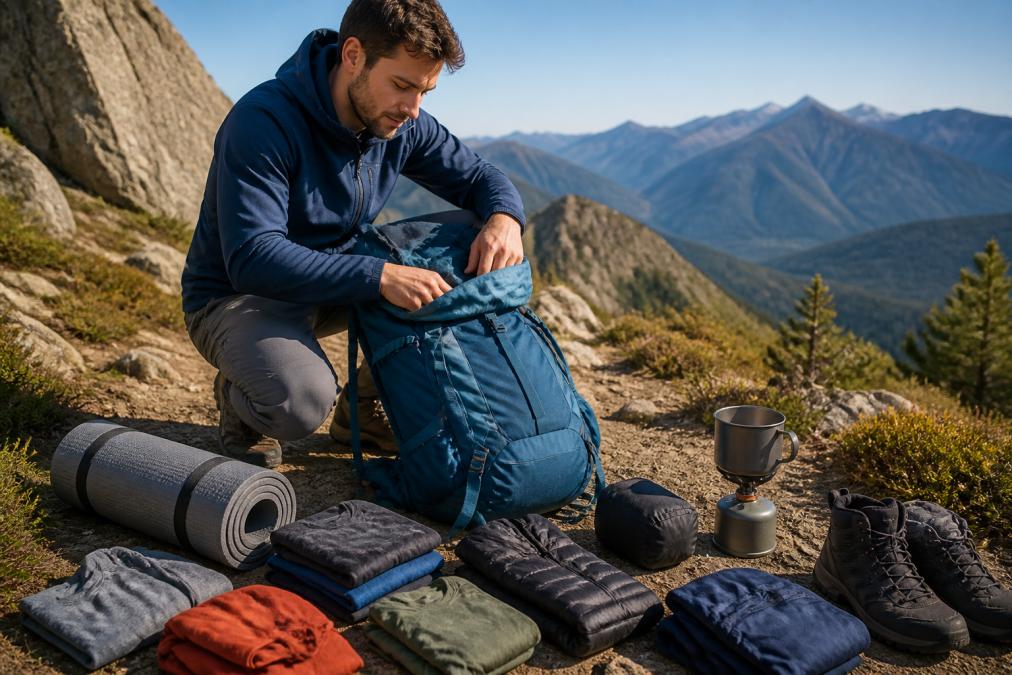
Step-by-step packing order:
- Bottom zone: Sleeping bag and sleeping pad (bulky but light)
- Core zone: Heavy items against your back: tent body, food, water, and stove fuel
- Top zone: Rain gear, first aid kit, and anything you need fast access to
- Hip belt pockets: Snacks, sunscreen, lip balm, and phone
- External attachment: Trekking poles, wet gear, and items too bulky to fit inside
For a 3-day trip, a 90-liter pack like AdventureTrailhead's waterproof hiking backpack gives you room to organize without overpacking. Spacious compartments separate clothing from cooking gear, and waterproof construction protects everything if caught in rain.
Gear Maintenance and Repair Tips Before You Leave
Gear that fails on day two of a three-day trip is worse than not having it at all. Run through this checklist before every trip:
- Tent: Check pole ferrules for cracks, seams for delamination, and zipper teeth for smooth operation
- Sleeping pad: Inflate fully and leave for 30 minutes; any deflation indicates a leak
- Stove: Test ignition at home; check fuel canister threads for cross-threading
- Boots: Check sole bonding at the toe and heel; resole or replace if separation has started
- Headlamp: Charge fully and test all brightness modes; check for corrosion in battery contacts
- Pack: Inspect hip belt stitching and shoulder strap webbing for fraying; test all buckles
Carry a basic repair kit: duct tape, seam sealer, a spare buckle, and needle and thread. Seam sealer applied to tent seams before a trip prevents leaks that ruin sleep systems. Duct tape handles split boot soles, torn pack fabric, and broken pole sections well enough to finish a trip.
Prioritize gear built for repair over gear built for replacement. Tents with replaceable poles, boots with resole-able outsoles, and packs with field-replaceable buckles last significantly longer than sealed alternatives. The Outdoor Industry Association's sustainability resources provide guidance on evaluating gear longevity and environmental impact before purchase.
Multi-day trips demand gear that performs when conditions turn, not just when they're comfortable. The challenge is building a complete kit without overspending on categories that don't move the needle. AdventureTrailhead carries everything covered in this guide, from the 90L waterproof backpack and memory foam sleeping pad to the 1,600-lumen rechargeable headlamp and 47-piece emergency survival kit, so you can gear up from a single trusted source. Get started with AdventureTrailhead and head into the backcountry with a kit you've actually thought through.
Frequently Asked Questions
What should I take for a 3 day camping trip?
For a 3-day camping trip, you need a shelter system (tent and sleeping pad), a sleep layer matched to overnight temperatures, a stove and cookware set, at least 2 liters of water capacity plus a filtration method, moisture-wicking base layers, a waterproof outer shell, a headlamp, a first aid kit, and navigation tools. Aim to keep your loaded pack under 30% of your body weight. A 90L backpack gives you enough volume without forcing you to overpack.
How do you pack light for a multi-day hike?
Start by laying out every item and cutting anything that duplicates a function. Choose lightweight camping equipment made from aluminum or technical fabrics instead of steel or cotton. Consolidate your kitchen to a compact cookware set and a single-burner stove. Wear your heaviest items, boots and insulating layers, instead of packing them. Place dense gear close to your back and high in the pack for better load distribution. A hydration bladder saves more space than carrying separate water bottles.
What is the most forgotten item when camping?
Experienced backpackers most often forget blister prevention supplies, a reliable headlamp with charged batteries, and a personal sanitation kit. A 47-piece emergency survival kit covers many of these gaps in one compact pouch. Also commonly overlooked: tent stakes for hard ground, a camp towel, and a backup navigation tool when phone batteries die. Build a printed checklist and check it the night before you leave, not the morning of your trip.
What gear is essential for backcountry camping?
Backcountry camping requires gear that handles complete self-sufficiency: a waterproof tent rated for the season, a sleep system suited to the lowest expected overnight temperature, a water filtration method, a bear canister or hang system where required by land management rules, a stove with enough fuel for the trip length, a first aid and emergency kit, and reliable navigation tools. Lightweight camping equipment matters more in the backcountry because every gram compounds over distance.
How do I choose the right backpack size for a multi-day trip?
Match pack volume to trip length and gear volume, not body size alone. A 3-day trip with a compact sleep system fits comfortably in a 50-65L pack. Trips of 5 or more days, or colder seasons requiring bulkier insulation, call for 70-90L. The 90L Waterproof Hiking Camping Backpack at AdventureTrailhead ($79.99) suits longer expeditions and carries a full sleep system, kitchen gear, and clothing layers without compression issues. Fit the hip belt first, it should carry 70-80% of the load.
This article was written using GrandRanker