
Backcountry Technical Climbing Gear Alternatives for 2026
Table of Contents
- Backcountry Technical Climbing Gear: What You Actually Need
- How to Choose Technical Climbing Gear: A Framework
- UIAA Certified Climbing Equipment Guide
- Independent Manufacturers and Regional Gear Sourcing
- Repair, Maintenance, and Equipment Lifecycle
- Backcountry Gear Setup: Budget vs. Performance
- Conclusion
Last Updated: August 23, 2026
Backcountry Technical Climbing Gear: What You Actually Need
When planning a multi-pitch climb or alpine start in remote terrain, your gear choices determine whether you summit safely or turn back in frustration. Backcountry technical climbing gear isn't just about having the right equipment, it's about understanding which pieces actually matter for your objectives and which are marketing hype.
At AdventureTrailhead, we offer a comprehensive selection of essential climbing and mountaineering equipment. The truth is simpler than most retailers want you to believe: you need a harness, rope, belay device, carabiners, and a few pieces of safety hardware. Everything else is either redundant or specialized for niche scenarios.
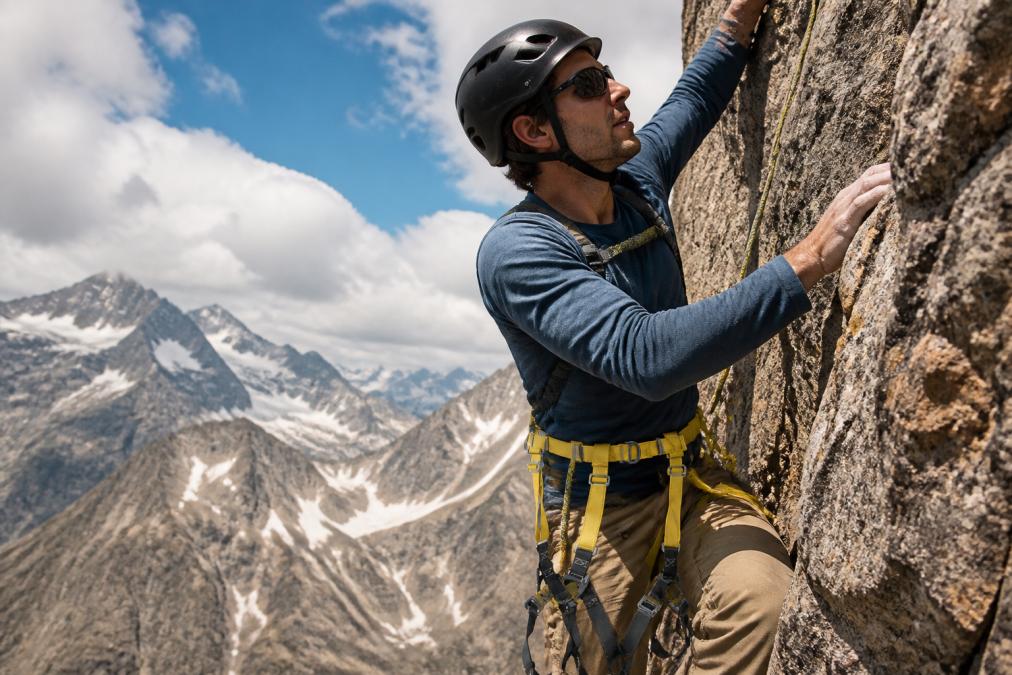
Essential Hardware for Multi-Pitch and Sport Climbing
Your core system starts with a harness rated for load-bearing applications. The Full Body Climbing Harness with Multi D Ring Support ($118.00) provides secure attachment points on the back, front, and hips, critical when rappelling or working in technical terrain where you might be suspended at odd angles.

For sport climbing and cragging where you're mostly upright, the Outdoor Climbing Belt Safety Harness ($104.83) offers a lighter alternative designed for comfort during extended outdoor activities.

If you're starting out, the Half Body Harness for Women, Men, and Children ($28.52) works for basic climbing and tree work, though you'll outgrow it once you move to technical terrain.

The Rock Climbing O Shape Thread Lock Carabiner ($32.65) uses a thread lock mechanism for secure attachment. The O-shaped design distributes load evenly and handles the tensile strength demands of multi-pitch routes.
Rope and Safety Equipment Selection
Dynamic rope is non-negotiable for sport climbing and mountaineering. The 8mm Predator Rope ($1.25 per foot) offers flexibility, you buy exactly the length you need rather than committing to a full spool. This matters when managing weight for alpine starts.
For climbers wanting a complete system ready to deploy, the Predator Standard One Stick Rappel Kit ($137.99) bundles rope with hardware in a compact, travel-friendly package.
The Kong 8 Classic Descender ($18.95) provides controlled rope handling for rappelling. For ascending, the Kong Lift Hand Ascender ($80.95) offers secure grip and efficient rope progression during ascents, critical when climbing fixed ropes or doing rope access work.
How to Choose Technical Climbing Gear: A Framework
The decision framework comes down to three questions: What terrain are you climbing? How much weight can you carry? What's your actual experience level? Your answers determine everything else.
Weight-to-Durability Trade-offs
A full body harness adds weight compared to a half body harness, but it distributes load across your torso and thighs. When hanging from a rope for extended periods during a belay or rescue, that weight penalty buys comfort and safety. For sport climbing where you're mostly upright, the weight penalty isn't justified.
Rope diameter affects both weight and durability. An 8mm rope weighs less than a 10mm rope but has less tensile strength. Most backcountry climbers choose 8-9mm as the sweet spot, light enough to carry on long approaches, strong enough for multi-pitch security.
Hardware like carabiners and descenders follows the same pattern. A titanium carabiner weighs half what a steel carabiner weighs, but steel costs less and handles repeated use better. For backcountry use where you're carrying gear miles into the wilderness, the weight savings might justify titanium.
Load-Bearing Specifications and Tensile Strength
Every piece of backcountry technical climbing gear has published specifications. Understanding them prevents buying equipment that looks good but won't support you.
Harnesses are rated for fall protection, typically 15-20 kN of force capacity, far exceeding what your body can handle. The real specification that matters is comfort under load. A harness that distributes pressure evenly is better than one rated higher but uncomfortable when hanging.
Carabiners are rated in three directions: along the major axis (strongest), along the minor axis, and in open-gate scenarios (weakest). The Rock Climbing O Shape Thread Lock Carabiner is rated for major axis loading, how you'll actually use it in climbing. Open-gate failures are rare because proper technique keeps gates closed.
Rope specifications include tensile strength, impact force, and elongation. Dynamic ropes stretch to absorb fall energy (peer-reviewed research). The 8mm Predator Rope stretches appropriately for climbing while maintaining tensile strength for multiple pitches.
UIAA Certified Climbing Equipment Guide
The Union Internationale des Associations d'Alpinisme (UIAA) sets safety standards governing climbing equipment across Europe and increasingly in North America (uiaa.org). Understanding these certifications tells you whether gear has been independently tested.
Why Certifications Matter for Safety Standards
A UIAA certification means equipment has undergone third-party testing for load-bearing capacity, durability under repeated use, and failure modes. It's not a guarantee nothing will break, it's a guarantee the manufacturer tested it and published results.
The Elite Cobra Rigger's Belt with D Ring Buckle ($114.95) exceeds ANSI Z359.1, CSA, EN, UIAA, and NFPA standards for fall protection. The D-ring is rated to 5,000 lbs straight pull, far beyond what any climber will experience.
Verifying Third-Party Testing and Field Performance
Look for three pieces of evidence: the certifying body's name, the test date, and customer reports from people using the gear in actual climbing conditions.
A certification older than three years is outdated. Standards evolve and manufacturers update designs. If certification is old, ask why.
Field performance reports come from climbers who've used the gear in serious conditions. Read reviews from people doing multi-pitch climbs and alpine mountaineering, not gym climbers. The Kong Lift Hand Ascender ($80.95) gets consistent reports from rope access professionals who depend on it for their livelihood.
Independent Manufacturers and Regional Gear Sourcing
The outdoor industry is dominated by massive retailers and brands offering consistent quality through scale. Independent manufacturers often innovate faster and build gear optimized for specific climbing styles.
Finding Quality Beyond Mass-Market Retailers
Independent manufacturers typically focus on one category and obsess over details that big brands ignore. They're more likely to listen to climber feedback and update designs based on field reports.
The trade-off is availability and price. An independent manufacturer might make the best alpine harness on the market, but you'll only find it in specialty shops. Prices are often higher because they lack mass-market scale.
AdventureTrailhead offers a comprehensive selection of outdoor and sporting goods, including specialized gear for climbing and mountaineering. The Predator Standard One Stick Rappel Kit ($137.99) represents an approach to a complete system optimized for specific use cases.
Second-Hand Market and Gear Rotation Strategies
Used climbing gear is legitimate if you know what to look for. Ropes degrade from UV exposure and repeated falls, so buying used rope is risky. Harnesses, carabiners, and descenders are safer second-hand purchases because they don't degrade from normal use.
Inspect used hardware for cracks, corrosion, or damage. A used harness that's been properly stored is likely as safe as a new one.
The gear rotation strategy is simple: buy quality gear, use it until worn out, then replace it. A harness that's five years old and still fits properly is still safe. The money saved by not replacing perfectly good gear can go toward upgrading something that actually matters.
Repair, Maintenance, and Equipment Lifecycle
Backcountry technical climbing gear lasts longer with proper maintenance. This basic care extends equipment lifecycle and keeps you safer.
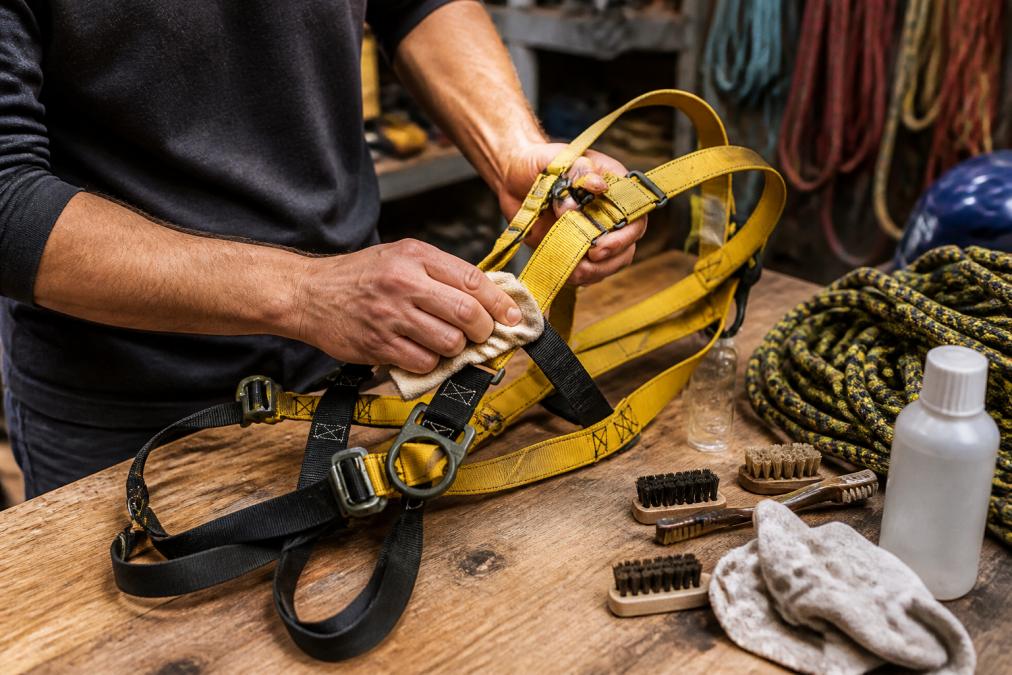
Extending Gear Durability Through Proper Care
Ropes need the most attention. Store them dry, away from direct sunlight. UV exposure degrades rope fibers. If your rope gets wet, dry it completely before storing.
Inspect your rope before every climb for cuts, abrasions, or flat spots. A rope that's been dragged across sharp rock might look fine but have internal damage. If unsure, retire it.
Harnesses should be washed occasionally with mild soap and water. Check the stitching regularly, loose threads indicate stress or age.
Carabiners and descenders need minimal maintenance. Rinse them with fresh water after climbing near the ocean. Check the gate mechanism periodically to ensure it closes smoothly.
Upcycling and Repair Options for Worn Equipment
A harness with torn webbing can be repaired by sewing new webbing over the damaged section, extending its life significantly.
Ropes that are worn but not damaged can be repurposed. Cut off the damaged section and use the remaining rope for training or backup systems.
Carabiners that are bent or cracked should be retired. Carabiners that are simply old but mechanically sound can be donated or used for non-critical applications.
The equipment lifecycle mindset shifts how you buy. A harness that costs $100 and lasts ten years is cheaper than five harnesses at $50 each that last two years.
Backcountry Gear Setup: Budget vs. Performance
The price gap between entry-level and professional-grade backcountry technical climbing gear is significant. Understanding what you're paying for helps you make decisions matching your needs.
Entry-Level Kits for Beginning Climbers
Starting climbers need a harness, rope, carabiners, and a belay device. The Outdoor Safety Belt Climb Rock Safety Harness ($28.52) covers the harness. The 8mm Predator Rope at $1.25 per foot gets you 60 meters for about $250. Add the Rock Climbing O Shape Thread Lock Carabiner ($32.65 each, buy at least two) and the Kong 8 Classic Descender ($18.95) and you're at roughly $400 total.
This functional entry-level system isn't optimized for comfort on long climbs or weight savings. It's designed to let you learn technique without breaking the bank. Most beginners outgrow it within a year.
Mid-Range and Professional-Grade Options
Mid-range climbers upgrade to better harnesses and specialized hardware. The Full Body Climbing Harness with Multi D Ring Support ($118.00) combined with quality rope and multiple carabiners brings you to $600-800 for a complete system. This is where most recreational climbers land, good enough for serious mountaineering and multi-pitch climbing.
Professional-grade systems add specialized hardware and redundancy. The Kong Lift Hand Ascender ($80.95), the Elite Cobra Rigger's Belt with D Ring Buckle ($114.95), and the Predator Standard One Stick Rappel Kit ($137.99) bring you above $1,200. This is gear for guides, rescue professionals, and climbers doing high-consequence mountaineering.
The performance difference between mid-range and professional-grade is real but not linear. A professional harness is more comfortable, but the difference is 10-15%, not 50%. Professional hardware is more reliable, but mid-range hardware from reputable manufacturers is already quite reliable.
Choosing backcountry technical climbing gear requires balancing weight, durability, cost, and your experience level. Start with essentials, harness, rope, carabiners, and a belay device, then add specialized hardware as your skills and objectives demand it. AdventureTrailhead offers equipment across all price points, with UIAA certification standards for climbing safety ensuring every product meets independent testing requirements. Focus on gear matching your current climbing goals rather than aspirational projects. A harness that fits your body and climbing style matters more than the lightest option on the market. Maintain your equipment properly, and it will serve you for years of backcountry adventures.
Frequently Asked Questions
Q: What essential technical climbing gear should I prioritize for my first backcountry kit?
A: Start with a quality harness, dynamic rope, carabiners, and a belay device. The Full Body Climbing Harness with Multi D Ring Support ($118.00) provides secure attachment points for multi-pitch climbing. Add the 8mm Predator Rope ($1.25 per foot) for reliable strength, O-shaped carabiners with thread locks ($32.65 each), and the Kong 8 Classic Descender ($18.95) for controlled rappelling. These core items handle most technical terrain and alpine starts without overloading your pack.
Q: How do I verify that climbing equipment meets UIAA certified standards and safety ratings?
A: Check product documentation for UIAA, ANSI Z359.1, or EN certification marks. The Elite Cobra Rigger's Belt ($114.95) exceeds ANSI Z359.1 standards with a D-ring rated to 5000 lbs straight pull. Request third-party testing reports from manufacturers, especially independent brands. Verify load-bearing capacity (tensile strength) on spec sheets and cross-reference against field reviews from climbers who've used the gear in serious conditions on technical terrain.
Q: What's the difference between sport climbing and mountaineering gear, and do I need both?
A: Sport climbing focuses on quickdraws and shorter rope systems for cragging. Mountaineering gear prioritizes lightweight, multi-functional hardware for alpine starts and long approaches over technical terrain. For backcountry work combining both, choose versatile items like the Kong Lift Hand Ascender ($80.95) that handles rope access efficiently. The Predator Standard One Stick Rappel Kit ($137.99) works across both disciplines, reducing gear rotation needs and total weight for uphill travel.
Q: Are independent climbing gear manufacturers as reliable as major retail brands?
A: Many independent manufacturers focus on durability and repairability over mass production, often exceeding safety standards. They typically offer better weight-to-durability ratios and field-tested equipment. However, verify certifications and read reviews from climbers with real-world experience on technical terrain. AdventureTrailhead carries tested hardware from established brands meeting professional standards, ensuring you get equipment proven in backcountry conditions without sacrificing reliability for novelty.
This article was written using GrandRanker