
Best Mountaineering Equipment Alternatives to CampSaver
Table of Contents
- Why Mountaineers Switch from CampSaver
- Best Online Climbing Gear Stores for Technical Equipment
- Mountaineering Gear Price Comparison: What You'll Actually Pay
- Best Beginner Mountaineering Gear 2026: Where to Start
- Return Policies and Warranty Support Across Retailers
- Safety Certification and Gear Authenticity: What Matters
- How to Choose the Right Mountaineering Equipment Retailer
Last Updated: August 22, 2026
Why Mountaineers Switch from CampSaver
When climbers outgrow a single retailer, it's rarely about price alone. CampSaver served a purpose for many outdoor enthusiasts, but the landscape has shifted. Mountaineers today demand more than a catalog, they want retailers who understand technical climbing gear, prioritize safety certifications, and back their products with genuine expertise.
The real issue isn't that CampSaver disappeared. It's that mountaineering equipment alternatives now offer what serious climbers actually need: transparent warranty support, authentic gear verification, knowledgeable customer service, and retailers who don't just sell equipment, they understand how you'll use it on a rock face or ice wall.
At AdventureTrailhead, we've tracked what drives climbers to switch. The pattern is consistent. Climbers start with convenience, but they stay with retailers that demonstrate real knowledge of mountaineering equipment. They want to know that the harness they're buying meets current CE ratings, that the rope has been properly tested, and that if something fails, the retailer stands behind it.
This guide breaks down the best alternatives to CampSaver for mountaineering equipment, comparing where to actually source reliable climbing gear, how pricing stacks up across retailers, and what separates a trustworthy mountaineering equipment vendor from one that's just moving inventory.
Best Online Climbing Gear Stores for Technical Equipment
Finding the right retailer for mountaineering equipment comes down to three factors: selection depth, safety verification, and customer support that actually understands technical climbing.
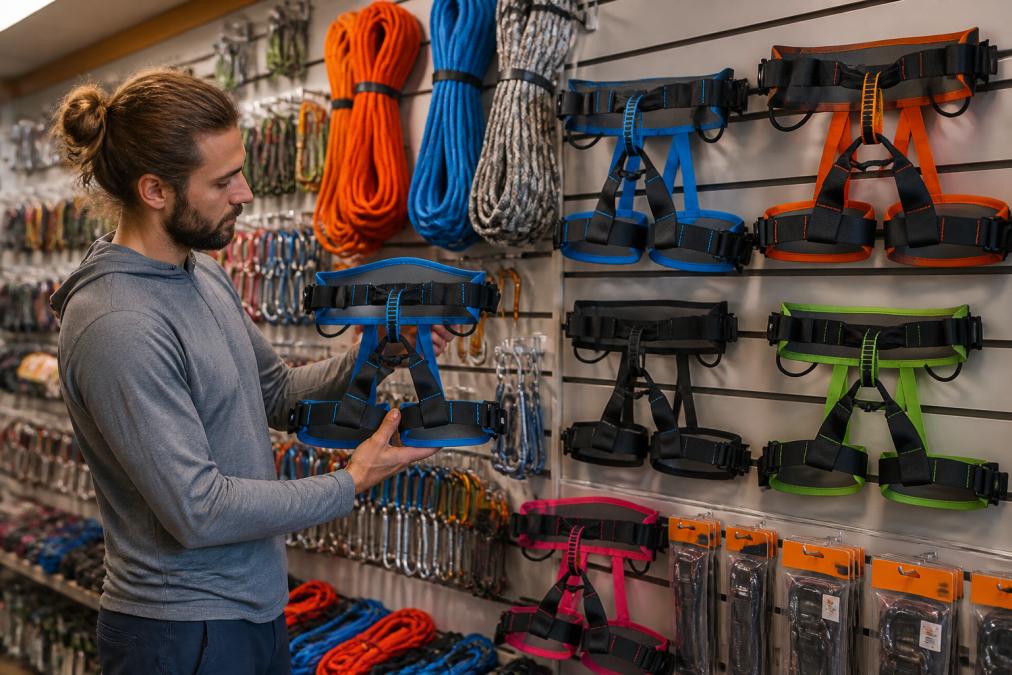
AdventureTrailhead leads the field for climbers who need comprehensive mountaineering equipment without compromising on safety. The retailer stocks everything from climbing harnesses to rappel kits, with products like the Full Body Climbing Harness with Multi D Ring Support ($118.00) that includes D-rings on back, front, and hips for secure attachment points. Their 8mm Predator Rope ($1.25 per foot) is available by spool, letting you customize exactly what you need. For climbers building complete systems, the Predator Standard One Stick Rappel Kits ($137.99) deliver a compact, travel-ready solution. What sets AdventureTrailhead apart is their focus on mountaineering equipment that meets current safety standards.

Beyond AdventureTrailhead, several other retailers have built reputations for serious climbing gear. These stores typically excel at inventory selection and competitive pricing, though support quality varies.
The best online climbing gear stores maintain relationships with manufacturers, carry current inventory (not clearance stock from five years ago), and employ staff with actual climbing experience. Look for retailers that publish equipment reviews, explain safety certifications, and don't pressure you toward the most expensive option.
Mountaineering Gear Price Comparison: What You'll Actually Pay
Pricing for mountaineering equipment varies significantly based on brand, safety certifications, and retailer markup. Understanding where costs come from helps you avoid both false economy and unnecessary overspending.
Basic climbing harnesses range from around $80 to $200 depending on features and safety certifications. AdventureTrailhead's Outdoor Climbing Belt Safety Harness ($104.83) sits in the practical middle, solid construction without premium branding that doesn't add performance. The Full Body Climbing Harness at $118.00 adds multi-point attachment for complex mountaineering applications.

Rope pricing is where you see the most variation. The 8mm Predator Rope at $1.25 per foot means a 60-meter rope runs roughly $245, reasonable for dynamic climbing rope. Pre-assembled kits like the One Stick Rappel Kit at $137.99 save you the hassle of sourcing individual components, though you lose customization.
Specialized hardware like the Kong Lift Hand Ascender ($80.95) represents essential mountaineering equipment for rope work. These aren't luxury items, they're safety-critical tools.

| Gear Category | Budget Option | Mid-Range | Premium |
|---|---|---|---|
| Climbing Harness | $80-100 | $100-150 | $150-250 |
| Dynamic Rope (60m) | $200-250 | $250-350 | $350-500 |
| Hand Ascender | $70-90 | $90-120 | $120-180 |
| Complete Rappel Kit | $120-150 | $150-200 | $200-300 |
| Carabiners (per unit) | $15-25 | $25-40 | $40-60 |
The key insight: expensive doesn't mean better for mountaineering equipment. A $200 harness isn't inherently superior to a $120 harness if both meet CE standards and fit your body properly. Where you should spend more is on rope (quality matters for safety) and on hand ascenders and belay devices (these directly impact your safety on vertical terrain).
Best Beginner Mountaineering Gear 2026: Where to Start
New climbers often buy too much gear too fast, then abandon half of it. Starting smart means understanding what you actually need for your first mountaineering expeditions.
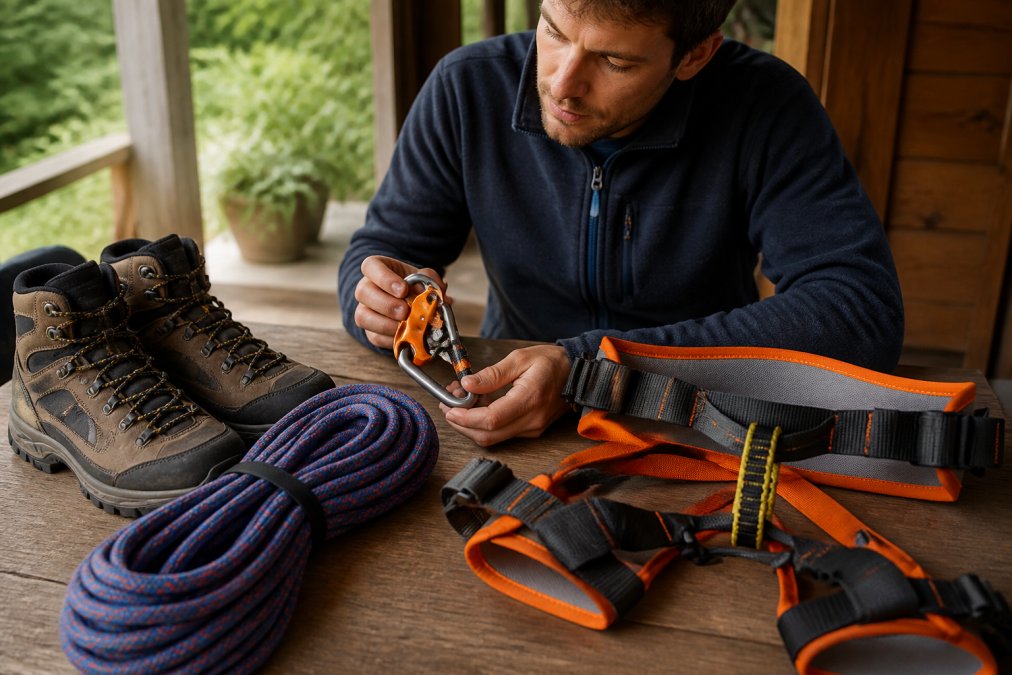
Your foundation needs five items: a harness, dynamic rope, carabiners, a belay device, and a hand ascender. Everything else is refinement.
Start with a harness that fits your body type, this matters more than brand name. Many beginners squeeze into harnesses designed for different body shapes, which creates discomfort and safety issues on long climbs. The Full Body Climbing Harness with Multi D Ring Support ($118.00) works for most body types because the multi-point attachment system distributes pressure differently than single-attachment designs.
Next, get proper dynamic rope. The 8mm Predator Rope is a solid beginner choice, durable, reasonably priced, and available in exactly the length you need. Don't cheap out on rope. A dynamic rope rated for climbing absorbs fall energy differently than static rope, and that difference saves your life (peer-reviewed research).
For rope work, the Kong Lift Hand Ascender ($80.95) is purpose-built for climbers learning to ascend fixed ropes. It's not fancy, but it works reliably.
A complete kit approach saves money and ensures compatibility. The Predator Standard One Stick Rappel Kits ($137.99) bundle rope and hardware together, eliminating the guesswork of sourcing individual components.
Common beginner mistakes: buying a sport climbing harness for mountaineering (wrong design), choosing rope based on color instead of safety rating, and skipping hand ascenders (then struggling on vertical terrain). Retailers that push you toward these mistakes are prioritizing their margins, not your safety.
Return Policies and Warranty Support Across Retailers
This is where many climbers discover the difference between a retailer and a genuine mountaineering equipment partner.
A solid return policy for climbing gear should cover at least 30 days, long enough to test equipment in real conditions. Some retailers offer 60 or 90 days, which matters if you're buying multiple pieces and need time to verify they work together safely.
Warranty support is more important than most climbers realize. If a harness strap tears, a rope shows damage, or a carabiner develops a stress fracture, you need a retailer who will replace it without argument. This is a safety issue, not a customer service nicety.
Look for retailers that:
- Accept returns on safety-critical gear if it doesn't meet your expectations
- Replace damaged equipment without requiring proof of defect (within reason)
- Offer exchanges, not just refunds, so you can try different sizes or models
- Document warranty coverage clearly on product pages
- Respond to warranty claims within 48 hours
Many online retailers hide return policies in fine print or make the process deliberately difficult. Reputable mountaineering equipment retailers make this transparent because they stand behind their products.
Safety Certification and Gear Authenticity: What Matters
This is the section where most guides fail climbers. They list certifications without explaining what they actually mean or why they matter.
CE (Conformité Européenne) marking indicates that climbing gear has been tested to European safety standards (europa.eu). For mountaineering equipment, CE certification is non-negotiable. It means the harness, rope, and carabiners have been stress-tested and documented.
UIAA (Union Internationale des Associations d'Alpinisme) standards are even more specific. UIAA-certified gear has been tested under conditions that simulate alpine climbing, ice, extreme cold, repeated use. If a retailer stocks UIAA-certified equipment, they understand mountaineering.
The real risk isn't buying uncertified gear by accident, it's buying counterfeit certified gear. Counterfeit climbing harnesses and ropes exist. They carry fake CE markings and documentation. A climber can't tell the difference by looking.
How to verify authenticity:
- Buy from authorized retailers (not third-party marketplaces where certification can't be verified)
- Check that documentation includes batch numbers and test dates
- Verify CE markings are consistent with manufacturer standards (bad counterfeits have sloppy printing)
- Contact the manufacturer directly if you're uncertain
Retailers that source from authorized distributors and maintain relationships with manufacturers are your protection against counterfeits. This is another reason to buy from established mountaineering equipment retailers rather than generalist outdoor sites.
According to UIAA safety standards for climbing equipment, proper certification requires independent testing and documentation. Retailers that can explain these standards are retailers that understand climbing.
How to Choose the Right Mountaineering Equipment Retailer
The decision comes down to five factors: expertise, selection, safety standards, customer support, and return policies.
Expertise shows itself in how staff communicate. Can they explain why a full-body harness differs from a waist harness? Do they understand alpine climbing versus sport climbing? Can they recommend gear based on your actual use case, not just margin? Retailers staffed by climbers outperform those run by general outdoor retail staff.
Selection matters because you shouldn't have to shop five different sites to build a complete system. A strong mountaineering equipment retailer stocks harnesses, ropes, carabiners, ascenders, belay devices, and specialized alpine gear all in one place. AdventureTrailhead's catalog covers this range, you can build a complete mountaineering system without hunting across multiple sites.
Safety standards are non-negotiable. Every product should carry current CE or UIAA certification. Retailers should display certifications prominently and explain what they mean. If a retailer is vague about safety standards, they're not a mountaineering equipment specialist.
Customer support means responsiveness when you have questions before buying and accountability if something fails. Email support that takes a week isn't good enough for climbing gear. You need access to knowledgeable staff who can answer technical questions quickly.
Return policies should be straightforward and generous for safety-critical gear. If a retailer makes returns difficult, they're not confident in their products.
The best mountaineering equipment retailers combine all five. They're not the cheapest option, but they're the safest and most reliable choice for serious climbers.
Switching from CampSaver or any single retailer isn't about finding a cheaper alternative, it's about finding a partner who understands mountaineering equipment deeply enough to keep you safe on challenging terrain. AdventureTrailhead delivers that combination of comprehensive selection, transparent safety standards, and genuine climbing expertise. Start with their Full Body Climbing Harness, Predator Rope, and Hand Ascender to build a foundation you can trust on every climb. Get equipped with confidence and explore the great outdoors knowing your gear will perform when it matters most.
Frequently Asked Questions
What makes a reliable mountaineering equipment retailer different from general outdoor stores?
Reliable mountaineering equipment retailers prioritize safety certifications like UIAA and CE ratings, stock authorized dealer inventory, and verify gear authenticity to prevent counterfeits. They maintain detailed product specifications and offer manufacturer warranties. General retailers often stock basic camping gear but may not have the same level of expertise for technical specifications like rope dynamic ratings or harness load capacities that directly affect safety on rock faces.
How do I compare mountaineering gear price comparison across different online retailers?
Start by identifying the exact product model and specifications you need, then check multiple retailers for that specific item. Beyond base price, factor in shipping costs, return policies, and warranty coverage, which vary significantly. Compare total cost of ownership including potential return shipping fees. For complete kits like rappel systems, calculate per-unit costs. AdventureTrailhead's Predator Standard One Stick Rappel Kit at $137.99 includes everything needed, while purchasing components separately may cost more overall.
What should beginners prioritize when selecting best beginner mountaineering gear 2026?
Beginners should prioritize safety-certified equipment first: harnesses meeting UIAA or CE standards, dynamic ropes rated for climbing, and properly fitting boots. Start with essential items like the Full Body Climbing Harness with Multi D Ring Support ($118.00) rather than buying complete kits immediately. Choose retailers offering strong return policies since fit and comfort vary by body type. Durability matters more than buying the cheapest option, as quality gear holds up through skill progression and prevents costly replacements.
How can I verify that mountaineering equipment is authentic and not counterfeit?
Purchase from authorized dealers who maintain direct relationships with manufacturers. Verify certification marks like UIAA, CE, or ASTM on product labels and documentation. Check serial numbers on high-value items like harnesses and ascenders through manufacturer databases. Examine packaging quality, stitching, and material consistency. Be cautious of prices significantly below market rates, which often indicate counterfeits. Retailers like AdventureTrailhead maintain authentication standards and stand behind gear reliability with warranty support.
This article was written using GrandRanker