
How to Verify Climbing Gear Safety: A Step-by-Step Guide
Table of Contents
- Why Verifying Climbing Gear Safety Matters
- Visual Inspection Techniques for Climbing Gear
- Tactile Inspection Methods That Work
- How to Inspect Climbing Harness for Wear and Damage
- How Long Do Climbing Ropes Last and When to Replace Them
- Climbing Gear Retirement Criteria You Must Know
- Partner Safety Checks and Logbook Maintenance
- Conclusion
Last Updated: August 20, 2026
Why Verifying Climbing Gear Safety Matters
Your life depends on equipment you may not have inspected in months. Gear fails silently, a rope doesn't announce when UV damage compromises its tensile strength, and a harness buckle won't warn you before it fails. You must verify climbing gear safety before every climb and understand when gear has reached the end of its service life.
Climbers who inspect their gear regularly catch problems early, avoid catastrophic failures, and extend equipment life. A single missed inspection could be the difference between a safe ascent and a life-altering accident. Rope sheath damage, harness stitching failure, carabiner corrosion, and webbing degradation are all detectable with basic knowledge and attention.
Visual Inspection Techniques for Climbing Gear
Start every inspection with your eyes under proper lighting, natural daylight or a bright flashlight. Lay your gear on a clean, flat surface and dedicate 10-15 minutes to thorough inspection before you climb.
Checking the Sheath and Core
Dynamic ropes consist of a sheath (outer covering) and core (load-bearing interior). The sheath protects the core from abrasion, UV damage, and contamination. Examine the entire rope length under bright light for:
- Flat spots or shiny areas: Indicate sheath abrasion from dragging over sharp rock
- Discoloration or bleaching: Suggest UV degradation and reduced tensile strength
- Soft or mushy sections: May indicate core damage from impact or chemical exposure
- Visible core material: Means the rope is compromised and should be retired immediately
Run your hand along the rope's length. Your tactile sense will catch irregularities your eyes might miss.
Examining Webbing and Stitching
Inspect webbing for fraying edges (especially near stress points), discoloration or staining (indicating chemical exposure or mold), and thinning or translucency (visible when held to light).
Examine all stitching seams with a magnifying glass if available. Look for broken or missing stitches, loose thread, and stitching that's pulled tight or distorted.
Tactile Inspection Methods That Work
Your hands detect texture, temperature, and structural integrity in ways your eyes cannot. Wear clean hands or thin gloves during tactile inspection to avoid introducing contaminants.
Run your hands along the entire length of ropes, webbing, and straps. Press gently to assess firmness and squeeze sections of rope to check for consistency. Feel for knots, lumps, or irregularities. For harnesses and slings, pay special attention to stress points where webbing attaches to hardware and where stitching concentrates.
Test the flexibility of webbing by gently bending it. Healthy webbing bends smoothly and returns to shape; degraded webbing may feel stiff, crack slightly, or not return to its original shape.
How to Inspect Climbing Harness for Wear and Damage
Your harness is the interface between your body and the rope. Inspect it before every climb and after any fall, no matter how minor.
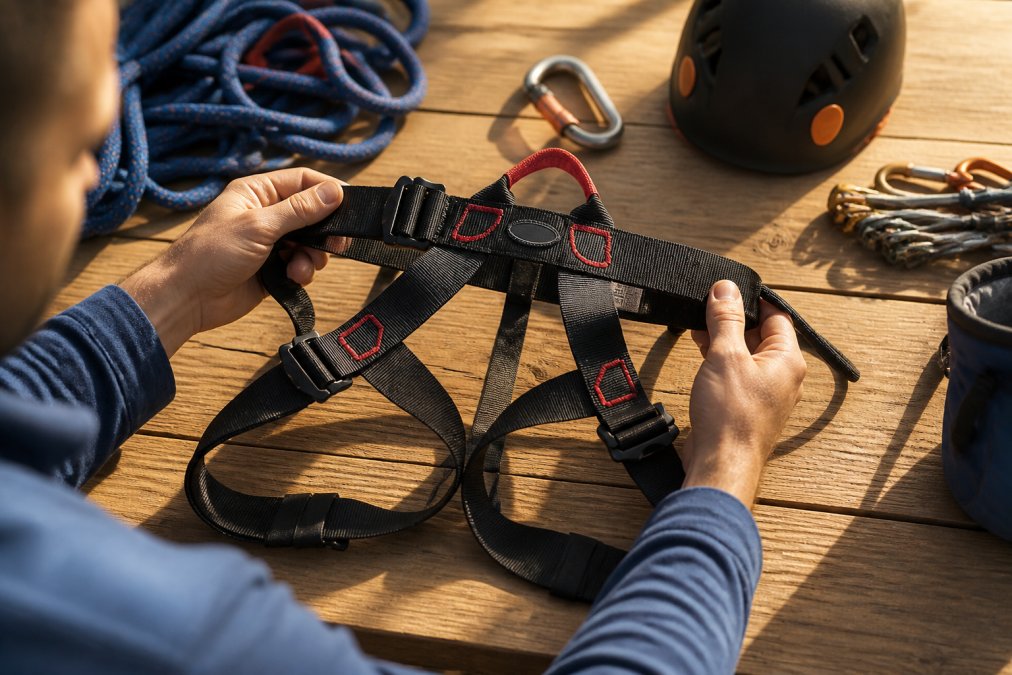
Start with a full visual sweep, comparing current condition to how it looked when new. Check all attachment points where webbing connects to hardware, these are high-stress areas. Look for fraying, torn stitching, or webbing pulling away from the attachment point. Gently pull on the webbing; it should not move relative to the hardware.
Inspect the interior where it contacts your body. Look for discoloration, mold, or musty smell. If you find mold, clean the harness thoroughly with water and mild soap, then air-dry completely before use.
Harness Inspection Points: Buckles, Leg Loops, and Waist Belt
Waist belt: This primary load-bearing component should maintain its shape without sagging or twisting. Press along the belt to ensure it's evenly padded and firm.
Leg loops: Inspect them with the same care as the waist belt. Look for tears, fraying, or damage where the leg loop attaches to the waist belt. Flex each leg loop gently; it should feel firm and supportive.
Buckles: Check that plastic and metal buckles are intact with no cracks or sharp edges. Open and close each buckle multiple times, it should move smoothly and lock securely.
Belay loop: Inspect the stitching that creates this reinforced loop. Look for broken stitches or fraying. Gently pull on it; it should feel solid and immovable.
AdventureTrailhead's Full Body Climbing Harness with Multi D Ring Support features reinforced attachment points and durable webbing engineered to withstand repeated inspection and use. The D-rings on the back, front, and hips are securely stitched and corrosion-resistant.

Testing Hardware and Carabiner Locking Mechanisms
Inspect each carabiner for corrosion or discoloration (indicating moisture exposure), cracks or deformation, and smooth operation. Open and close the carabiner repeatedly, the gate should move smoothly without sticking.
Test the locking mechanism specifically. The lock should engage with a solid click. Open the carabiner fully and close it firmly; the lock should seat completely with no gaps. For screw-lock carabiners, ensure the collar threads smoothly and locks tight. For auto-lock carabiners, verify that the gate closes and locks automatically. For twist-lock carabiners, check that the collar twists smoothly and locks securely.
Gently pull on the gate while it's locked. There should be no movement.
How Long Do Climbing Ropes Last and When to Replace Them
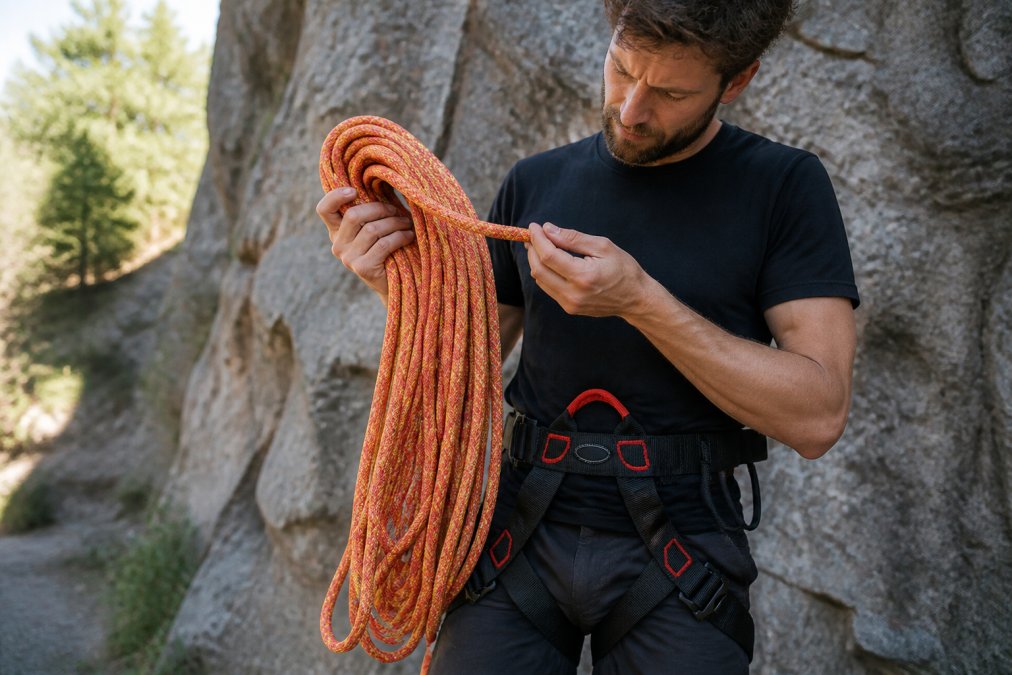
Ropes don't have expiration dates printed on them. You must assess service life based on use, storage, and environmental exposure. A rope that looks fine may not be fine, damage to the core happens inside the sheath, where you can't see it.
Dynamic Rope vs. Static Rope Service Life
Dynamic ropes are used for lead climbing and sport climbing. They typically last 5-7 years from manufacture with moderate use. Heavy use shortens this to 3-5 years; light use extends it to 7-10 years. However, use frequency is only one factor.
Static ropes are used for rappelling, top-rope climbing, and rescue operations. They typically last 10-15 years from manufacture with proper care. However, static ropes are more susceptible to damage from sharp edges and abrasion because they don't give when dragged across rock.
Neither type lasts forever. Even perfectly stored ropes degrade chemically over time as fibers break down and the sheath becomes brittle.
UV Degradation and Chemical Exposure
UV light breaks down the polymer chains that give rope its strength. A rope stored in sunlight ages faster than one stored indoors. Inspect ropes for fading or bleaching. Discolored sections have been exposed to UV and have likely lost strength.
Chemical exposure is equally damaging. Battery acid, fuels, and certain cleaning products can degrade rope fibers. If you suspect chemical exposure, look for discoloration, staining, or a chemical smell. Gently squeeze sections of the rope; if any area feels soft or mushy, contamination may have damaged the core. When in doubt, retire the rope.
A rope subjected to a significant fall (10+ feet) has absorbed enormous energy. The core may have micro-fractures that aren't visible. Many climbers retire a rope after a major fall as a precaution.
Climbing Gear Retirement Criteria You Must Know
Retire a rope immediately if it has been subjected to a major fall, the sheath is torn or severely abraded, you can see or feel core material, it has a mushy section, it smells like chemicals or has unexplained staining, or it shows significant discoloration from sunlight storage.
Retire a harness immediately if any stitching is broken or missing, webbing is torn or has holes, buckles are cracked or don't lock securely, the belay loop is damaged, or any attachment point is pulling away from the hardware.
Retire carabiners immediately if the gate doesn't lock securely, there are visible cracks in the body, the carabiner is significantly bent or deformed, or corrosion is deep or extensive.
For gear that doesn't meet immediate retirement criteria, assess it based on age and use history. A rope that's 8 years old and has seen heavy use is nearing the end of its service life, even if it looks acceptable.
Post-Fall Inspection Protocol
After any fall, perform an immediate inspection before continuing to climb. Check the rope for new damage to the sheath and feel along the entire length for soft spots or irregularities. Inspect your harness for damage and test your carabiners to ensure locking mechanisms still work properly.

If you had a significant fall, consider retiring the rope as a precaution. Document the fall in your gear logbook, noting the date, height of fall, and any visible damage.
Manufacturer Recommendations and Shelf Life
Most climbing gear manufacturers provide guidance on service life and retirement criteria. Manufacturers typically recommend retiring dynamic ropes after 5-10 years from manufacture, regardless of use. Static ropes last longer, typically 10-15 years. Harnesses should be retired after 5-10 years of regular use. Carabiners can last indefinitely if properly maintained, but should be retired if damaged.
The date of manufacture is printed on most climbing gear. For ropes, it's usually on the sheath. For harnesses and carabiners, check the tag or label.
Partner Safety Checks and Logbook Maintenance
Your climbing partner should verify that your gear is safe before you climb together. Have your partner inspect your harness, carabiners, and belay device, looking for secure stitching, functioning buckles, smooth-operating carabiners, and intact attachment points. Your partner should do the same, and you should inspect their gear with equal care. This takes 5 minutes and is worth it.
Maintain a logbook for each piece of gear. Record the date of manufacture, acquisition date, and every time you use it. Note any damage, repairs, concerns, falls, and environmental factors. A simple spreadsheet works fine with columns for: gear name, manufacturer, manufacture date, acquisition date, total uses, last inspection date, condition notes, and retirement date.
This logbook becomes your decision-making tool. When deciding whether to retire a rope, you can see exactly how much use it's had, what conditions it's been stored in, and whether it's been involved in significant falls.
AdventureTrailhead's Outdoor Safety Belt Climb Rock Safety Harness Tree Climbing Half Body Harness For Women Men Children Ideal Gift For Rock Climber is designed for durability and includes clear manufacturer guidance on inspection and retirement. Keep this documentation with your gear logbook.
Climbing gear fails silently, which is why systematic inspection is non-negotiable. Start with visual and tactile inspection. Learn to recognize the signs of damage: fraying, discoloration, soft spots, broken stitching, and corrosion. Understand the service life of ropes, harnesses, and carabiners. Maintain a logbook so you have a complete history of each piece of gear. Have your partner verify your inspection. When gear shows signs of wear or age, retire it without hesitation.
AdventureTrailhead's climbing harnesses and safety equipment are built to last, but even the highest-quality gear eventually reaches the end of its service life. Invest in gear you can trust, inspect it religiously, and know when to replace it. Your life depends on it.
Frequently Asked Questions
How often should you inspect climbing gear?
Inspect all climbing gear before every climb as part of your pre-climb check. Perform a detailed tactile and visual inspection at least monthly if you climb regularly. After any fall, especially a significant one with high impact force, inspect your harness, rope, and carabiners immediately. Store your gear in a logbook and note inspection dates to track maintenance frequency and identify patterns of wear.
What are the signs that climbing gear needs to be retired?
Retire gear immediately if you notice deep cuts or abrasion on the sheath, visible core damage, fraying webbing, cracked or corroded carabiners, broken stitching on harness leg loops or waist belt, discoloration from chemical exposure, or a locking mechanism that no longer closes securely. Most dynamic ropes should be retired after 5-10 years of use, even if they appear undamaged. Always follow manufacturer recommendations for service life and retirement criteria.
How do you check a climbing harness for wear and tear?
Inspect your harness by checking the waist belt for fraying or cuts, testing all buckles to ensure they lock and release smoothly, examining leg loops for stitching integrity, and feeling for soft spots or lumps in the padding. Look for discoloration or stiffness that signals chemical exposure. Test the D-rings by gently pulling to ensure they're secure. If any stitching is torn or any buckle is cracked, retire the harness immediately, it's your primary connection to the rope.
Can you use climbing gear that has been dropped?
Inspect dropped gear carefully before using it again. A short drop on soft ground may cause no damage, but a fall from height requires immediate post-fall inspection. Check for micro-fractures in hard goods like carabiners and belay devices, and examine the rope sheath and core for hidden damage. If you cannot visually confirm the gear is safe after a significant drop or fall, retire it. When in doubt, replace the gear, your safety is worth more than the cost.
This article was written using GrandRanker