
How to Store Bulky Camping Gear: 7 Proven Methods
Table of Contents
- Assess Your Gear and Storage Space
- How to Organize Camping Gear in a Garage
- Best Way to Store Sleeping Bags and Tents
- Choosing the Right Camping Gear Storage Bins
- Climate Control and Moisture Prevention
- Labeling, Inventory Management, and Accessibility
- Apartment-Friendly Storage for Bulky Camping Gear
- Pest-Proofing and Material Preservation Strategies
Last Updated: August 21, 2026
Assess Your Gear and Storage Space
Take inventory of what you own and measure your available space honestly. Categorize everything: tents, sleeping systems, climbing equipment, water sports gear, and day packs. Note vertical clearance, wall space, and overhead areas. Climate matters, a humid basement requires different solutions than a climate-controlled room. Understanding these constraints prevents buying storage systems that won't work.
Consider your access patterns. Do you rotate gear seasonally, or is most stored year-round? Will you grab items frequently or touch them only before expeditions? This distinction shapes every organizational decision.
How to Organize Camping Gear in a Garage
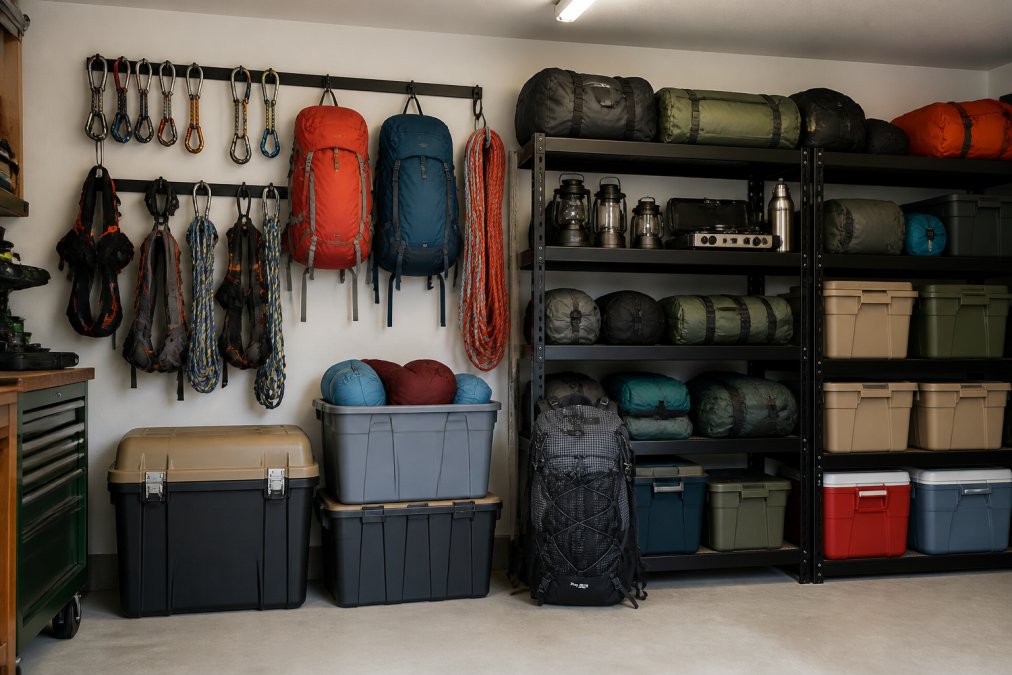
Garages offer the most space and flexibility. Zone your garage into three areas: wall-mounted storage for frequently accessed items, shelving units for medium-weight gear, and floor space for large containers.
Vertical Storage and Wall-Mounted Systems
Vertical space is your most underutilized resource. Install heavy-duty wall-mounted hooks, pegboards, or rail systems to hang backpacks, harnesses, and carabiners. This keeps frequently used items visible and accessible while freeing floor space.
When mounting systems, use studs or appropriate anchors rated for the weight. A 30-35L daypack like the Large-capacity Hiking Backpack from AdventureTrailhead weighs 2-3 pounds empty but can exceed 15 pounds loaded. Your wall system must handle multiple loaded packs without sagging.

Arrange items by frequency of use. Put daily or weekly gear at eye level. Seasonal equipment goes higher or lower. Carabiners, climbing harnesses, and smaller accessories fit perfectly in pegboard organizers, keeping them dust-free and visible.
Heavy-Duty Shelving and Overhead Storage
Metal shelving rated for at least 500 pounds per shelf handles camping equipment without wobbling (the CDC). Overhead storage using ceiling-mounted racks works for items accessed rarely, tents in stuff sacks, compressed sleeping bags, and off-season gear. Reserve overhead space for equipment you won't need until the next season.
Stack containers strategically. Heavier items go on lower shelves to keep the center of gravity stable. Label everything clearly so you can locate specific items without unloading entire shelves.
Best Way to Store Sleeping Bags and Tents
Sleeping bags and tents are your most valuable pieces of gear. The common mistake is compressing them tightly indefinitely. This damages insulation permanently, down loses loft, synthetic fills get matted, and both perform worse when needed.
Preparing Sleeping Bags for Long-Term Storage
Clean your sleeping bag thoroughly before storage. Use a gentle wash cycle with minimal detergent, then dry completely on low heat. Moisture trapped inside invites mildew, which destroys insulation and creates permanent odors.
Store sleeping bags in breathable cotton storage sacks, not compression stuff sacks. Cotton sacks allow air circulation while keeping dust and pests away. Keep sleeping bags in a cool, dry location at around 50-60°F with humidity below 50% (peer-reviewed research). If your garage temperature fluctuates significantly, use a small dehumidifier or moisture-absorbing desiccant packs inside the storage container.
Tent Maintenance and Storage Setup
Clean the interior and exterior, removing dirt and debris. Allow them to dry completely, any moisture creates mildew that weakens fabric. Set up your tent indoors for a final inspection. Look for holes, torn seams, or zipper issues and repair problems now.
Store tents in breathable storage bags, not compressed. Lay the tent flat or hang it loosely to prevent stress on seams. Store tent poles and stakes separately in a labeled container. Poles can crack if stored inside the tent, and stakes get lost if left loose.
Choosing the Right Camping Gear Storage Bins
Storage containers are the foundation of any gear organization system. The wrong choice wastes space or damages gear; the right containers protect your investment while keeping your space organized.
Hard-Shell vs. Soft-Sided Containers
Hard-shell containers offer maximum protection and resist crushing, keeping moisture and pests out reliably. They're ideal for valuable or fragile gear, climbing equipment, and electronics. The downside is weight and space efficiency.
Soft-sided containers are lighter, more flexible, and pack efficiently. They compress to fit awkward spaces but offer less protection against crushing. Use soft-sided containers for bulky items that don't need rigid protection, sleeping bag storage, or off-season apparel.
Many people use a hybrid approach: hard-shell bins for valuable items and soft-sided totes for bulk storage.
Modular and Collapsible Storage Solutions
Modular storage systems let you customize your setup as needs change. Collapsible organizers hold shape when full but compress flat when empty. Use them inside larger containers to subdivide and organize smaller items like carabiners and quickdraws.
Climate Control and Moisture Prevention
Moisture causes mildew, rust, and material degradation. If storing gear in an uncontrolled space, moisture management becomes critical.
Desiccant packs are inexpensive insurance. Place them inside storage containers to absorb excess moisture and replace them every 3-6 months. A small dehumidifier in your storage area prevents moisture from accumulating, especially important in basements or humid climates. Keep moisture levels below 50% where mildew starts forming (the EPA).
Ensure containers have ventilation. Completely sealed containers trap moisture inside. Choose containers with small vents or leave them slightly open if in a protected space.
Labeling, Inventory Management, and Accessibility
Label every container clearly with its contents and the date stored. Create a simple inventory spreadsheet or use a phone note listing each container's location, contents, and last access date.
Arrange containers so frequently accessed gear is easy to reach. Items you grab once a year can go higher or deeper. Seasonal gear rotates, winter climbing equipment gets easier access in October, water sports gear in June.
Stack containers thoughtfully. Heavy containers go on lower shelves. Leave some empty shelf space for flexibility.
Apartment-Friendly Storage for Bulky Camping Gear
Apartment living means limited space, but you can still store bulky camping gear effectively. The strategy shifts to vertical organization and creative use of existing spaces.
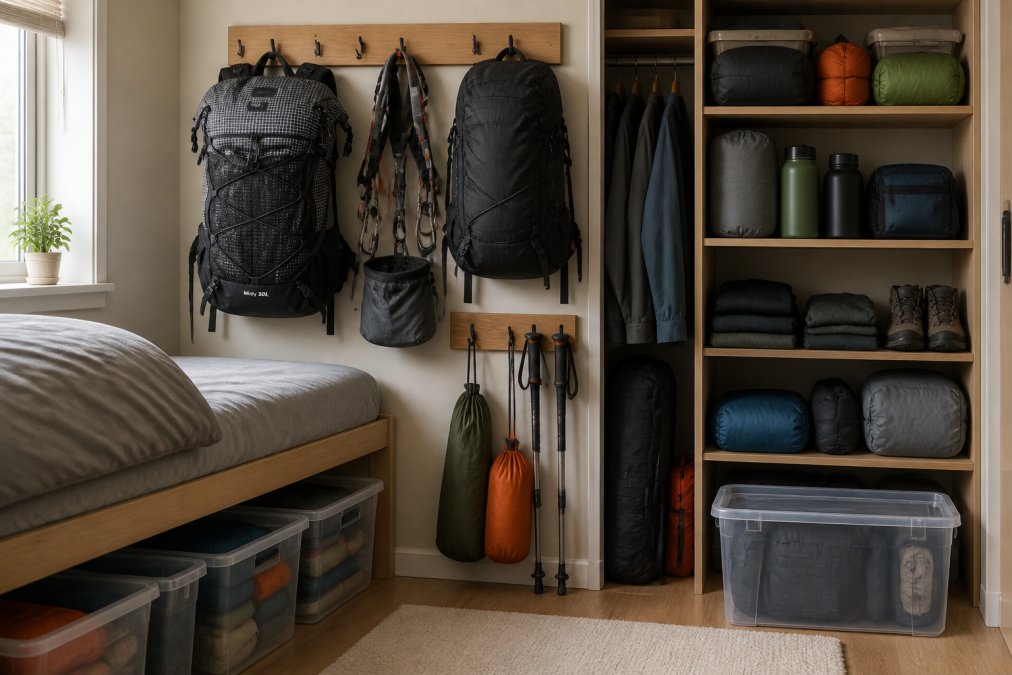
Closets are your primary storage zone. Install additional shelves above existing ones and use hanging organizers on closet rods for smaller items. Vacuum-seal bags compress bulky items dramatically, though this isn't ideal long-term since compressed insulation loses loft.
Under-bed storage containers hold surprising amounts of gear. Rolling containers make access easier than sliding heavy boxes. Wall-mounted hooks in a bedroom or entryway hold backpacks and harnesses without taking up floor space.
Vertical shelving units against a wall maximize storage in small spaces. Consider off-site climate-controlled storage for seasonal gear you rarely access.
Pest-Proofing and Material Preservation Strategies
Pests damage gear and create health hazards. Store gear in sealed containers that pests can't penetrate. Hard-shell bins with tight-fitting lids work best. Keep containers off the floor on shelving or pallets.
Avoid storing food with gear. Keep your storage area clean and free of crumbs. Cedar blocks or mothballs inside containers deter insects. Replace them periodically as their scent fades.
For long-term material preservation, keep gear out of direct sunlight. UV exposure degrades fabric and synthetic materials. A covered storage area extends the lifespan of everything you store.
Check stored gear periodically, especially before a trip. Inspect for damage, moisture, or pest activity. A quick inspection every few months catches problems early.
Storing bulky camping gear doesn't require expensive systems or elaborate setups. Assess what you have, choose appropriate containers, control moisture, and organize for accessibility. Start with wall-mounted systems and basic shelving in a garage, or maximize vertical space in an apartment. Use labeled containers and maintain an inventory. Protect your gear from moisture and pests, these cause real damage over time.
AdventureTrailhead carries high-quality backpacks and gear designed to last, but proper storage extends that lifespan significantly. Whether organizing a 90L waterproof hiking backpack or climbing equipment, the principles remain the same: keep things dry, organized, and accessible. Start implementing these strategies today, and your gear will be ready for your next adventure.
Frequently Asked Questions
What's the best way to store bulky camping gear long-term?
Store bulky camping gear in a climate-controlled space away from direct sunlight and moisture. Use hard-shell containers for durable protection, label everything for easy inventory management, and keep gear off the ground on shelving or overhead racks. Before storage, clean all equipment thoroughly, dry it completely, and use desiccant packs to prevent mold. For sleeping bags and down gear, store them uncompressed in breathable storage sacks to maintain loft and insulation properties. Check stored gear every few months for pest activity or moisture accumulation.
How should you prepare camping gear before long-term storage?
Start by cleaning all gear with mild soap and water, paying special attention to zippers, seams, and fabric. Dry everything completely in sunlight or a well-ventilated area before packing. Inspect tents for tears or mold and apply tent-specific treatments if needed. Store sleeping bags uncompressed in breathable storage sacks rather than compressed stuff sacks, which can damage the insulation loft over time. Remove batteries from devices, drain fuel from stoves, and store fuel separately in a safe location. Apply UV protection products to items that will be exposed to any light, and use desiccant packs in sealed containers to control moisture.
How can you prevent mold and mildew on camping equipment during storage?
Moisture is the primary culprit behind mold and mildew growth. Store gear in a climate-controlled space with humidity levels between 30-50 percent. Use desiccant packs inside sealed storage containers to absorb excess moisture, replacing them every 3-6 months. Ensure proper air circulation by avoiding airtight seals on all containers; breathable storage solutions work better for long-term preservation. Keep gear off the ground on shelving to prevent moisture wicking from concrete floors. Inspect stored items monthly for any signs of mold or moisture, and avoid storing damp gear even briefly. Consider a small dehumidifier in your storage space if humidity is consistently high.
Is it safe to store camping gear in a garage or shed?
Yes, garages and sheds work well for camping gear storage if you manage temperature and humidity. Garages offer better climate control than uninsulated sheds and protect gear from extreme weather. However, garages and sheds can experience temperature fluctuations and moisture issues, so use climate-controlled storage containers, desiccant packs, and proper shelving. Ensure good ventilation to prevent stagnant, moisture-heavy air. Keep gear elevated off concrete floors, which can absorb and transfer moisture. Pest-proof your storage by sealing gaps and cracks, using airtight containers for food-related items, and inspecting gear regularly. Avoid storing fuel, batteries, or pressurized canisters in enclosed residential spaces; keep these in a separate, well-ventilated shed or outdoor storage locker.
This article was written using GrandRanker