
What Is a Shank in Hiking Boots? Stiffness Guide
Table of Contents
- What Is a Shank in Hiking Boots and Why It Matters
- Nylon vs Steel Shank Hiking Boots: Which Material Wins
- How Shank Stiffness Affects Trail Stability and Torsional Rigidity
- Hiking Boot Stiffness Ratings: A Practical Scale
- How to Prevent Blisters While Hiking: The Shank Connection
- How to Tell If a Boot Has a Shank: A Visual Identification Guide
- Shank Failure Symptoms and When to Replace Your Boots
- Choosing the Right Shank for Your Terrain
- Frequently Asked Questions
Last Updated: October 3, 2026
What Is a Shank in Hiking Boots and Why It Matters
A shank in hiking boots is a stiff plate embedded between the midsole and outsole that controls how much the sole twists and bends under load. It decides whether a boot protects your feet on sharp rock or folds like a slipper on gravel.

Without a shank, your foot absorbs every rock edge and uneven landing; with the right one, that load spreads across the sole and your arch stays supported.
Where the Shank Sits in the Sole
The shank sits inside the sole stack, above the outsole and below the footbed, bonded into the midsole during construction.
Picture a boot sole as a sandwich: the rubber outsole grips, the midsole (usually EVA or polyurethane foam) cushions, and the shank is the rigid layer between them with the footbed on top.
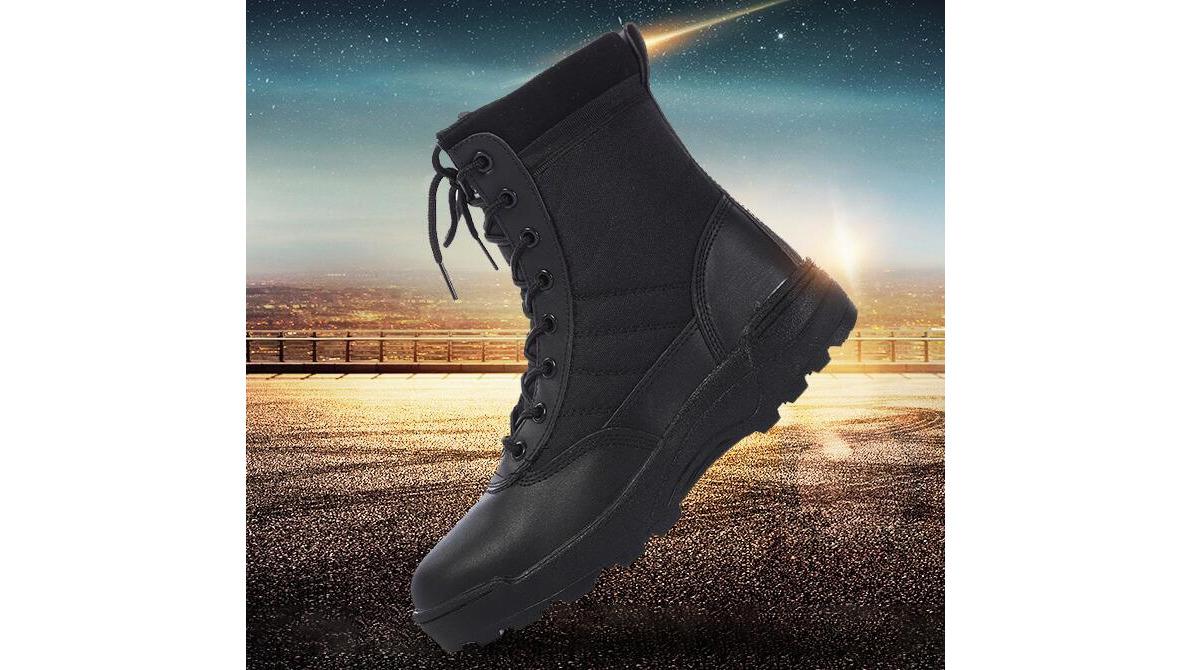
Nylon vs Steel Shank Hiking Boots: Which Material Wins
Nylon wins for most hikers; steel wins for the heaviest loads and sharpest terrain. Nylon shanks are lighter, more flexible, and cheaper, which is why they dominate mainstream hiking footwear. Steel shanks are stiffer, heavier, and far more resistant to deformation.
The trade-off is straightforward:
- Nylon shanks flex enough for natural foot roll, keep boot weight down, and handle packed trails, day hikes, and moderate backpacking well.
- Steel shanks resist bending almost entirely, protect against sharp edges under a heavy pack, and suit mountaineering, ladder work, and long approaches on scree.
- Thermoplastic polyurethane (TPU) shanks sit between the two, offering more torsional rigidity than nylon without steel's weight penalty.
Material alone does not determine stiffness: thickness and shape matter just as much. A thick nylon shank can feel stiffer than a thin steel one in the same category.
How Shank Stiffness Affects Trail Stability and Torsional Rigidity
Torsional rigidity is the shank's resistance to twisting along the boot's length, and it separates a stable boot from a wobbly one.
That compensation is where foot fatigue starts: every twist makes your foot and lower leg muscles work harder to stay balanced, and over a long day with a loaded pack it adds up.
Longitudinal stiffness governs how much the boot bends at the ball of the foot. Too stiff and your heel lifts awkwardly on descents; too soft and the sole collapses over rock edges.
Hiking Boot Stiffness Ratings: A Practical Scale
Hiking boot stiffness ratings run from 1 (soft, flexible trail shoe) to 5 (rigid mountaineering boot), with most hiking footwear between 2 and 4. The rating tells you more about real-world behavior than any material label, since it is shorthand for how the sole manages load, torsion, and fatigue over distance.
| Rating | Flex Behavior | Best For | Typical Shank | Biomechanical Effect |
|---|---|---|---|---|
| 1 | Bends fully in hand | Casual walks, groomed paths | None or minimal | Foot muscles do all stabilization; fine for short, smooth miles |
| 2 | Flexes easily at the ball | Day hikes, light loads | Thin nylon | Natural foot roll; plantar fascia works moderately |
| 3 | Moderate resistance | Backpacking, mixed terrain | Nylon or TPU | Shank shares torsional load; arch strain drops on uneven ground |
| 4 | Stiff with slight give | Heavy packs, scree, trekking | Thick nylon or TPU | Sole stays flat on edges; calf and ankle compensate less |
| 5 | Nearly rigid | Mountaineering, crampons | Steel or full-length | Maximum edge protection; foot roll is restricted, so break-in matters |
What the Rating Actually Changes Underfoot
The rating is about how much work your foot does per mile. On a rating-2 boot, your plantar fascia and intrinsic foot muscles absorb most of the deformation on a rock edge; on a rating-4 boot, the shank absorbs it and your foot stays closer to neutral.
That is why a stiff boot can feel wonderful under a loaded pack and miserable on a flat, groomed trail: a rating-5 sole does not flex at the ball, so your calf lifts the entire boot with every step.
Matching the Rating to Your Real Trip
A common mistake is buying a 4 or 5 when your trips are 2s and 3s. Overly stiff boots tire your calves on flat trails and take months to break in.
- Under 15 pounds total pack weight, mostly maintained trail: rating 2 to 3.
- 15 to 30 pounds, rocky or rooty terrain: rating 3 to 4.
- Over 30 pounds, scree, snow, or crampons: rating 4 to 5.
If you are between two ratings, choose the softer one for warm-weather trips and the stiffer one for cold, wet, or loaded trips. Cold rubber and foam stiffen on their own, so a rating-3 boot can behave like a 4 in freezing conditions.
Why the Rating Is Not the Whole Story
Two boots can share a rating and behave differently. Shank length matters: a three-quarter shank stiffens the arch and midfoot but leaves the forefoot flexible, while a full-length shank stiffens the whole sole. A three-quarter rating-4 boot can feel more natural on descents than a full-length rating-4, because your toes can still bend over a rock edge. When a spec sheet gives a rating without shank length, treat the number as a rough guide and rely on the flex test below.
How to Prevent Blisters While Hiking: The Shank Connection
The fix is not more socks. It is matching sole stiffness to your terrain and load, then locking the fit down properly.
- Choose a shank rating that matches your pack weight, not the steepest trail you might attempt.
- Lace the boot so the heel stays seated, using a heel-lock lacing pattern on descents.
- Break boots in on short walks before a multi-day trip so the footbed molds to your foot.
For a boot with a cushioned footbed and a supportive high-top collar that helps hold the heel in place, the Men's Outdoor High-top Breathable Hiking Boots pair a breathable mesh and leather upper with an EVA midsole and rubber lug outsole for day hikes and moderate terrain.
Men's Outdoor High-top Breathable Hiking Boots →
How to Tell If a Boot Has a Shank: A Visual Identification Guide
You can identify a shank without cutting the boot open by testing flex and twist in your hands. Most boots do not advertise the shank, so a two-minute physical check tells you more than the label.
Try these in order:
- The twist test. Hold the boot at the heel and toe and twist it like wringing a towel. Resistance means a shank is present. Easy twisting means little or none.
- The flex test. Press the toe up toward the heel. A boot that folds in half at the middle has a soft or absent shank. A boot that bends only near the toes has a stiff one.
- The arch press. Push your thumb into the footbed under the arch. A hard, unyielding surface underneath signals a shank plate.
- The weight check. Heavier boots in the same category often carry a steel or thick TPU shank, though construction varies.
- The spec sheet. Look for terms like "shank," "TPU plate," "stability plate," or "midfoot support" in the product description.
Shank Failure Symptoms and When to Replace Your Boots
Shank failure shows up as sudden loss of arch support, a creaking or popping sound in the sole, or a visible bulge in the midsole. Once a shank cracks or delaminates, the boot usually cannot be repaired, and the lost torsional rigidity puts your ankles at risk on uneven ground.
Watch for these signs:
- The sole twists easily where it once felt rigid.
- A hard ridge or lump appears under the arch.
- The midsole separates from the outsole along the side.
If the shank has cracked, replacement is the honest answer: a boot that has lost its structure will roll your ankle.
Choosing the Right Shank for Your Terrain
Match the shank to the ground you actually walk on, not the ground you aspire to. That single rule prevents most boot-buying mistakes, especially on the mixed terrain that makes up most real trips. Here is how shank rigidity maps to specific surfaces.
Groomed Trails, Rail Trails, and Light Day Hikes
Hard-packed dirt, crushed gravel, and boardwalk reward a flexible sole. A thin nylon shank or none at all lets your foot roll through the gait cycle, sparing your calf on flat miles. If your longest days are under 8 miles with a daypack, a rating-2 boot is usually right; a stiff shank here buys nothing and costs comfort.
Rooty, Rocky Singletrack and Mixed Backcountry
This is where a mid-stiff shank earns its keep. Roots and embedded rocks create constant small torsional inputs, and a rating-3 boot with a nylon or TPU shank smooths them out so your ankle and arch are not correcting every step. Carrying 20 to 30 pounds over this ground, step up to a rating-4: the shank keeps the sole flat on angled rock, the difference between a stable platform and a rolled ankle.
Scree, Talus, and Loose Rock
Loose rock is the classic case for a stiff shank. On scree, the ground shifts with every step, and a rating-4 or rating-5 sole spreads your weight across the whole foot instead of letting a single rock edge dig into your arch. Full-length shanks are common here because they keep the entire sole rigid, reducing the chance of a stone bruise.
Mud, Snow, and Wet Roots
Soft ground does not demand stiffness the way rock does, but it demands torsional control: when you plant a foot in mud, the sole can twist as the ground gives, and a mid-stiff shank keeps your knee and ankle tracking straight. In snow, cold stiffens rubber and foam, so a rating-3 boot can feel like a 4. For shoulder-season slop, a TPU shank holds rigidity better than nylon when temperatures drop.
Mountaineering, Crampons, and Steep Snow
Crampon compatibility is the hard requirement here. Most strap-on and hybrid crampons need a boot with a stiff, full-length shank and a pronounced heel welt; a soft boot flexes under the crampon and the points can pop off the ice. This is the one category where rating 5 is not overkill. For front-pointing on steep snow or glacier travel, choose a boot built for it rather than stiffening a softer boot with insoles.
A Quick Decision Rule
If unsure, ask what the ground does under your foot: flat and predictable means go softer; shifting, angled, or poking means go stiffer. If your trips span two categories, choose the shank for the hardest ground you will actually encounter, then break the boot in before you go.
Terrain, not ambition, should pick your shank. Groomed trails want flex, mixed backcountry wants mid-stiffness, and scree, snow, and crampons want full rigidity. Buy for the ground under your feet on the trips you take most often.
Frequently Asked Questions
How can I tell if a boot has a shank?
Press the boot's midfoot against a hard surface and try to fold it in half. A boot with a shank resists bending at the arch, while one without folds easily. You can also twist the boot lengthwise; a shank limits torsional twist. Checking the product listing for terms like 'shank' or 'stabilizer' helps, since most manufacturers list shank material in their specs. If the boot flexes freely at the arch, it likely has no shank or only a minimal one.
Is a steel shank good for hiking?
Steel shanks offer maximum rigidity and load-bearing support, making them ideal for backpacking with heavy loads, mountaineering, and crampon compatibility. However, steel adds weight and does not flex, which can feel stiff on smooth trails. Nylon shanks are lighter and more flexible, suiting day hikes and moderate terrain. Your choice depends on load weight and terrain difficulty. For most casual hikers, a nylon shank provides enough support without the extra weight.
Do all hiking boots have shanks?
No. Many lightweight trail runners and flexible day-hiking shoes skip the shank entirely to save weight and allow natural foot movement. Boots designed for backpacking, mountaineering, or rough terrain typically include a nylon or steel shank for added stability and protection. If you plan to carry a heavy pack or traverse rocky ground, look for a boot with a shank. For groomed paths and light loads, a shank-free shoe may be sufficient.
How does a shank affect hiking boot stiffness?
The shank is the primary stiffness component in a hiking boot's sole. A steel shank creates a nearly rigid platform that resists bending and twisting, while a nylon shank offers moderate stiffness with some flex. Thicker or more rigid shanks increase longitudinal stiffness and torsional rigidity, which helps on uneven terrain but reduces flexibility on smooth paths. Boots without shanks are the most flexible. Matching shank stiffness to your terrain and load prevents foot fatigue and improves trail stability.
Most hikers only discover how much the shank matters after a long day on rocky ground with the wrong boot. AdventureTrailhead carries footwear built for the terrain you actually walk, from breathable high-top hiking boots to waterproof options with VIBRAM® traction outsoles and cushioned memory foam footbeds. Gear up with AdventureTrailhead and step onto the trail knowing your feet are supported for every mile.