
Belay Loop Safety Standards: Complete Guide
Table of Contents
- What Is a Belay Loop and Why Safety Standards Matter
- UIAA 105 Harness Standards and CE Certification Requirements
- Climbing Harness Inspection Checklist: How to Spot Damage
- When to Retire a Climbing Harness: Manufacturer Guidelines
- Belay Loop vs. Tie-In Points: Structural Differences
- Common Harness Safety Mistakes and How to Avoid Them
- Proper Harness Maintenance and Inspection Frequency
- Frequently Asked Questions
Last Updated: August 31, 2026
What Is a Belay Loop and Why Safety Standards Matter
A belay loop is a reinforced webbing loop sewn onto the front of a climbing harness where carabiners attach to connect you to ropes and anchors. It's the critical link between your body and fall protection. When you're 200 feet up a rock face, the belay loop keeps you connected to the rope. A compromised loop means catastrophic failure.

The belay loop is engineered to withstand dynamic forces, abrasion, and repeated loading cycles. The standards governing belay loops, primarily UIAA 105 and CE certification requirements, exist because climbers have died from harness failures. These aren't bureaucratic formalities; they're lessons written in accident reports and engineering specifications.
The belay loop sits at the intersection of three critical forces: your body weight, the dynamic shock load of a fall, and the friction and abrasion created by carabiner movement.
UIAA 105 Harness Standards and CE Certification Requirements
Climbing harness safety standards ensure consistent performance across manufacturers. The two primary standards are UIAA 105 and CE certification, each with specific requirements for belay loop strength and durability.

UIAA 105 is the Union Internationale des Associations d'Alpinisme standard for climbing harnesses. It mandates that a belay loop must withstand a minimum breaking strength of 15 kilonewtons (kN) when tested under static load conditions, approximately 3,300 pounds of direct pull before rupture. The standard also requires the loop to maintain structural integrity through repeated loading cycles.
CE certification (European Conformity) applies the EN 12277 standard with even more rigorous requirements. CE-certified harnesses must demonstrate a belay loop breaking strength of at least 15 kN, but the testing protocol includes dynamic loading, simulating actual fall conditions. CE testing accounts for the shock forces that occur during a real fall, not just static pulling.
Breaking Strength and Load Ratings in Kilonewtons
Breaking strength is measured in kilonewtons, a unit of force. One kilonewton equals approximately 225 pounds of force. When manufacturers state that a belay loop has a 15 kN breaking strength, they mean it will not rupture under 3,375 pounds of direct, static pull.
Breaking strength is not the same as safe working load. Climbing equipment uses a safety factor of 5:1 for harnesses, meaning the belay loop should withstand five times the maximum expected force during normal use. If a climber weighs 200 pounds and experiences a fall factor of 2 (the most severe common climbing fall), the dynamic forces can exceed 1,000 pounds. The 15 kN minimum breaking strength provides a substantial margin above this.
Dynamic vs. Static Loading on Belay Loops
Static loading occurs when weight is applied slowly and remains constant. Dynamic loading occurs when force is applied suddenly, with shock and movement. Your belay loop experiences both during climbing.
Static loading happens during normal climbing, the weight of your body hanging on the harness, rope tension, pressure from resting. Dynamic loading occurs during a fall, when the sudden jerk as the rope catches creates forces far greater than your body weight. A 200-pound climber in a factor-2 fall can experience forces exceeding 1,000 pounds for a fraction of a second.
The belay loop's nylon webbing is designed to flex slightly during dynamic loading, dissipating energy. If weakened by UV exposure, chemical degradation, or abrasion, it may snap instead of flex.
Climbing Harness Inspection Checklist: How to Spot Damage
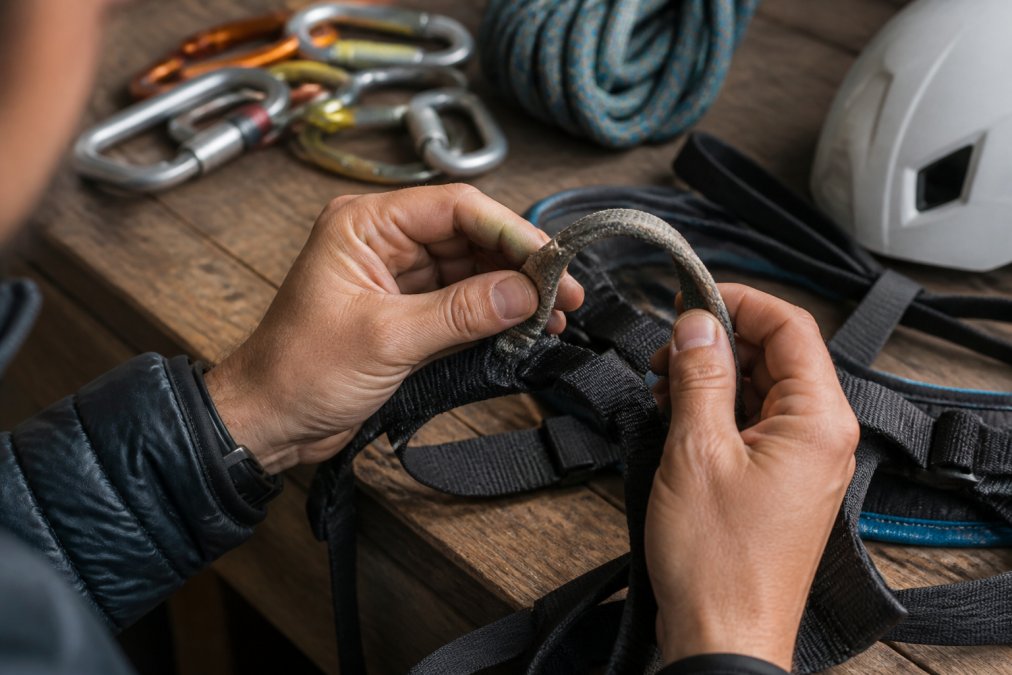
Before every climb, inspect your harness. A thorough visual inspection takes five minutes and can prevent catastrophic failure.
Start by examining the belay loop itself. Look for these specific signs of damage:
- Fraying or unraveling threads at the edges of the webbing
- Discoloration suggesting chemical exposure or UV damage
- Soft or mushy areas where the webbing has lost structural integrity
- Separation between the loop and harness body where stitching has failed
- Shiny or glazed appearance indicating heat damage
- Visible tears or cuts in the webbing
- Abrasion marks where the loop shows thinning or worn areas
If you find any of these, the harness is unsafe. Do not climb with it.
Next, inspect the stitching that attaches the belay loop to the harness body. The bartack stitching, the dense cross-hatch pattern where the loop connects, bears enormous stress. Look for broken stitches, gaps in the pattern, or loose threads. Check the tie-in points where you thread the rope through the harness and examine the waist belt and leg loops for abrasion, cuts, or degradation.
Visual Signs of Wear and Tear
Normal wear on a harness differs from damage that compromises safety. A regularly used harness will show faded color, slight pilling, and scuffed areas where carabiners have rubbed. This is expected and acceptable.
Damage requiring retirement includes holes or punctures, fraying extending more than a quarter-inch from the edge, staining suggesting chemical exposure, permanent deformation, loss of structural rigidity, stitching failure anywhere on the harness, and webbing separation from the harness body. A single damaged area means the entire harness is unsafe. You cannot repair a climbing harness by sewing, patching, or gluing.

Chemical Degradation and UV Exposure
Nylon webbing is vulnerable to chemical attack and ultraviolet radiation. Both degrade the polymer structure, weakening the fibers.
UV exposure occurs whenever your harness is exposed to sunlight. Even indirect sunlight causes gradual degradation (the CDC). The outer surface becomes brittle and loses tensile strength.
Chemical degradation occurs when the webbing contacts solvents, strong acids, bleach, or other reactive substances. Chlorine from pools, salt spray from ocean climbing, or harsh laundry detergent can attack the nylon structure.
Store your harness in a cool, dry place away from direct sunlight and chemicals. If your harness contacts a chemical, rinse it thoroughly with fresh water and allow it to dry completely before use.
When to Retire a Climbing Harness: Manufacturer Guidelines
Most harness manufacturers recommend retiring a harness after 5-10 years of regular use, or sooner if it shows damage (peer-reviewed research). If you climb regularly, multiple times per week, your harness should be retired within 5-7 years. If you climb occasionally, a few times per year, the harness may last 10 years or longer.
Black Diamond recommends retiring harnesses after 10 years of use or immediately if damaged. Petzl recommends inspection before every use and retirement if any damage is found, regardless of age.
The most important rule: retire a harness immediately if it shows any damage signs. Age is secondary to visible damage. Keep records of when you purchased your harness and how frequently you use it. If you cannot remember when you bought it, retire it.
Belay Loop vs. Tie-In Points: Structural Differences
A climbing harness has two main attachment points for ropes: the belay loop and the tie-in points. Understanding the difference is critical for safe climbing.
The belay loop is a single, reinforced loop of webbing sewn to the front of the harness. It's designed specifically for attaching a carabiner that connects to the rope. The belay loop is the primary attachment point for sport climbing, gym climbing, and most outdoor climbing.
The tie-in points are two separate webbing sections where the waist belt connects to the leg loops. These points are where you thread the rope directly through the harness using a figure-eight follow-through knot. Tie-in points are used in traditional climbing and some specialized applications.
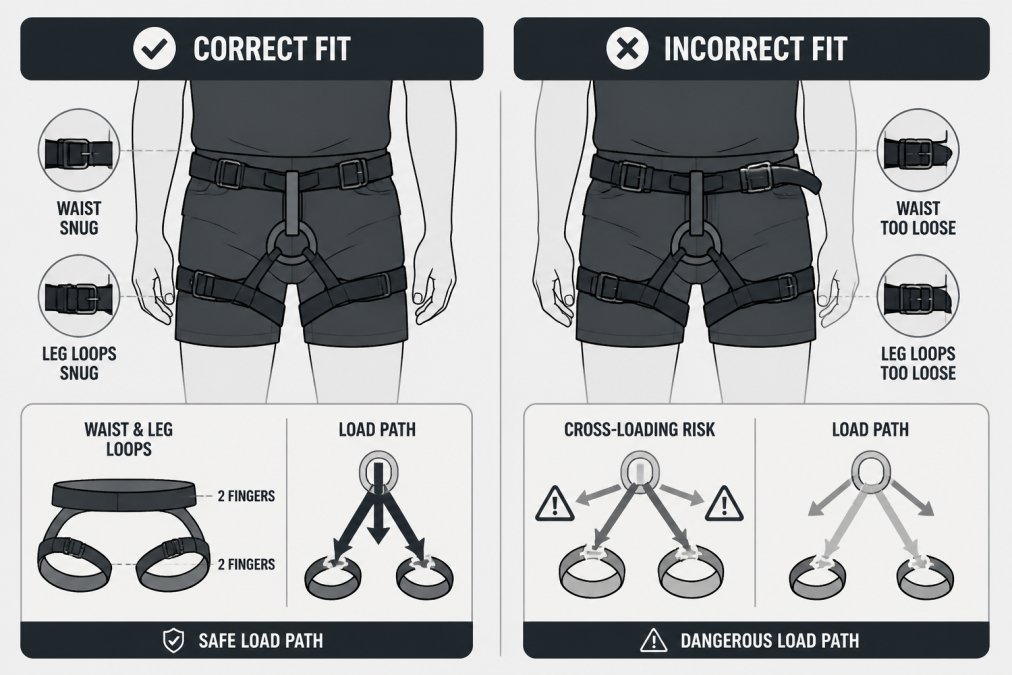
The belay loop is stronger than the tie-in points because it's a single, unified structure with reinforced stitching. Never attach a carabiner to the tie-in points, as this creates cross-loading where the carabiner pulls on the webbing at an angle, creating stress the connection is not designed to handle.
Always use the belay loop for carabiner attachment. Always thread the rope through the tie-in points if tying in directly.
Common Harness Safety Mistakes and How to Avoid Them
Harness failures are rare when equipment is used correctly and maintained properly. Most accidents result from misuse, not equipment defect.
Mistake 1: Attaching carabiners to the tie-in points. Always use the belay loop.
Mistake 2: Failing to inspect the harness before climbing. A five-minute inspection catches damage that could be fatal.
Mistake 3: Storing the harness in direct sunlight. UV exposure degrades nylon webbing. Store your harness in a cool, dark place.
Mistake 4: Using a harness with visible damage. A torn belay loop, broken stitching, or frayed webbing means the harness is unsafe.
Mistake 5: Not knowing when to retire the harness. Track the age and use frequency of your harness. Retire it after 5-10 years of regular use, or immediately if damaged.
Mistake 6: Assuming a harness is safe because it looks fine. UV damage and chemical degradation can weaken webbing without visible signs.
Mistake 7: Mixing harness components from different manufacturers. Different harnesses have different geometry and attachment points.
Mistake 8: Failing to fit the harness correctly. The waist belt should sit at your hip bones, not your ribs or abdomen. The leg loops should be snug but not restrictive.
Proper Harness Maintenance and Inspection Frequency
Harness maintenance is simple but critical. A well-maintained harness lasts longer and performs reliably.
Before every climb: Perform a visual inspection. Check the belay loop, stitching, tie-in points, waist belt, and leg loops for damage.
After every climb: Wipe down the harness with a dry cloth to remove dirt and debris. Store it in a cool, dry place away from direct sunlight.
Monthly (if climbing regularly): Perform a detailed inspection. Feel the webbing for soft spots or areas of degradation. Check the stitching carefully.
Annually: Inspect the harness thoroughly. Check every seam and stitch. If you've been climbing regularly, consider whether retirement is appropriate based on age and use frequency.
After any incident: If you've taken a fall, had a near-miss, or your harness has been exposed to chemicals or extreme heat, inspect it carefully before using it again.
Cleaning your harness is straightforward. Use cool water and mild soap. Scrub gently with a soft brush. Rinse thoroughly and allow to air dry completely before storing. Do not use harsh chemicals, bleach, or hot water. Do not machine wash or dry.
Store the harness away from direct sunlight, heat sources, and chemicals. A closet, garage shelf, or dry bag is ideal.
| Inspection Frequency | What to Check | Action if Damage Found |
|---|---|---|
| Before every climb | Belay loop, stitching, tie-in points, webbing | Do not climb; retire harness |
| Monthly (regular climbers) | All webbing, seams, structural integrity | Retire if damage is significant |
| Annually | Complete harness condition, age assessment | Consider retirement if 5+ years old |
| After falls or incidents | Full structural inspection | Retire if any damage is present |
A belay loop is the most critical component of your climbing harness. Understanding the safety standards that govern it, UIAA 105 and CE certification requirements, ensures you're using equipment that meets rigorous performance criteria. Regular inspection, proper storage, and knowing when to retire your harness are the practices that keep you safe.
At AdventureTrailhead, we stock climbing harnesses that meet or exceed these safety standards, including the Full Body Climbing Harness with Multi D Ring Support, which features reinforced attachment points and durable construction for serious climbers. Whether you're a beginner learning the fundamentals or an experienced mountaineer planning a multi-pitch ascent, selecting certified equipment and maintaining it properly is the foundation of safe climbing. Inspect your harness before every climb, retire it when damaged, and you'll have the confidence to focus on the rock and the adventure ahead.
=== FAQ ANSWERS (audit these too, same rules) ===
[1] Q: What is the minimum breaking strength required for a belay loop? A: According to UIAA 105 and CE standards, a belay loop must withstand a minimum of 15 kilonewtons (kN) of breaking strength. Always verify your harness meets these certified standards before climbing.
[2] Q: How often should you inspect your harness belay loop for wear? A: Inspect your belay loop before every climbing session and conduct a thorough examination monthly if you climb regularly. Look for fraying, discoloration, abrasion, and loss of elasticity in the nylon webbing. Check the bartack stitching for separation or damage. If you've taken a significant fall or notice any signs of structural compromise, retire the harness immediately. Frequent inspection catches early degradation before it becomes a safety hazard.
[3] Q: What are the signs of a compromised belay loop? A: Warning signs include visible fraying or unraveling of the nylon webbing, discoloration from UV exposure or chemical contact, flattened or hardened webbing indicating material degradation, loose or separated bartack stitching, and reduced elasticity when you stretch the loop gently. Abrasion marks, punctures, or thin spots where the webbing has worn through are critical failure indicators. Any of these signs means the harness should be retired immediately to prevent catastrophic failure during a fall.
[4] Q: Is it safe to clip a carabiner directly into the belay loop? A: Yes, clipping into the belay loop is safe and is its intended use. However, avoid cross-loading the carabiner, which occurs when force is applied perpendicular to the gate. Always ensure the carabiner gate faces away from the rock and your body. The belay loop is specifically engineered to handle carabiner attachment, but improper carabiner orientation or cross-loading can reduce its effective strength. Inspect both the loop and carabiner before every climb to ensure proper function.
[5] Q: Why do belay loops have a lower kN rating than tie-in points? A: Belay loops are rated at 15 kN while tie-in points are rated at 22 kN due to differences in how they're constructed and how forces distribute through the harness geometry. The bartack stitching and webbing configuration of the belay loop are optimized for carabiner attachment rather than direct rope connection. This engineering distinction ensures safe performance for each attachment point's specific purpose.
[6] Q: What does UIAA 105 certification mean for climbing harness safety? A: UIAA 105 is the Union Internationale des Associations d'Alpinisme standard that specifies safety requirements for climbing harnesses, including belay loop strength, stitching durability, and material properties. Harnesses meeting UIAA 105 have undergone rigorous testing for breaking strength, abrasion resistance, and structural integrity. CE certification indicates the harness complies with European safety directives. When purchasing a harness, look for both UIAA 105 and CE markings to ensure it meets established safety standards. These certifications are your assurance that the harness has passed independent testing.
[7] Q: How do I know when it's time to retire my climbing harness? A: Retire your harness if it shows visible damage to the belay loop or tie-in points, has experienced a significant fall, displays chemical degradation or UV damage, has lost elasticity or feels stiff, or has reached the manufacturer's recommended lifespan (typically 5-10 years depending on use frequency). Even if your harness looks fine cosmetically, retire it if you cannot remember its history or if it has been exposed to harsh conditions. Safety margins matter, replacing a harness is far cheaper than risking a climbing accident.
Frequently Asked Questions
Q: What is the minimum breaking strength required for a belay loop?
A: According to UIAA 105 and CE standards, a belay loop must withstand a minimum of 15 kilonewtons (kN) of breaking strength. Always verify your harness meets these certified standards before climbing.
Q: How often should you inspect your harness belay loop for wear?
A: Inspect your belay loop before every climbing session and conduct a thorough examination monthly if you climb regularly. Look for fraying, discoloration, abrasion, and loss of elasticity in the nylon webbing. Check the bartack stitching for separation or damage. If you've taken a significant fall or notice any signs of structural compromise, retire the harness immediately. Frequent inspection catches early degradation before it becomes a safety hazard.
Q: What are the signs of a compromised belay loop?
A: Warning signs include visible fraying or unraveling of the nylon webbing, discoloration from UV exposure or chemical contact, flattened or hardened webbing indicating material degradation, loose or separated bartack stitching, and reduced elasticity when you stretch the loop gently. Abrasion marks, punctures, or thin spots where the webbing has worn through are critical failure indicators. Any of these signs means the harness should be retired immediately to prevent catastrophic failure during a fall.
Q: Is it safe to clip a carabiner directly into the belay loop?
A: Yes, clipping into the belay loop is safe and is its intended use. However, avoid cross-loading the carabiner, which occurs when force is applied perpendicular to the gate. Always ensure the carabiner gate faces away from the rock and your body. The belay loop is specifically engineered to handle carabiner attachment, but improper carabiner orientation or cross-loading can reduce its effective strength. Inspect both the loop and carabiner before every climb to ensure proper function.
Q: Why do belay loops have a lower kN rating than tie-in points?
A: Belay loops are rated at 15 kN while tie-in points are rated at 22 kN due to differences in how they're constructed and how forces distribute through the harness geometry. The bartack stitching and webbing configuration of the belay loop are optimized for carabiner attachment rather than direct rope connection. This engineering distinction ensures safe performance for each attachment point's specific purpose.
Q: What does UIAA 105 certification mean for climbing harness safety?
A: UIAA 105 is the Union Internationale des Associations d'Alpinisme standard that specifies safety requirements for climbing harnesses, including belay loop strength, stitching durability, and material properties. Harnesses meeting UIAA 105 have undergone rigorous testing for breaking strength, abrasion resistance, and structural integrity. CE certification indicates the harness complies with European safety directives. When purchasing a harness, look for both UIAA 105 and CE markings to ensure it meets established safety standards. These certifications are your assurance that the harness has passed independent testing.
Q: How do I know when it's time to retire my climbing harness?
A: Retire your harness if it shows visible damage to the belay loop or tie-in points, has experienced a significant fall, displays chemical degradation or UV damage, has lost elasticity or feels stiff, or has reached the manufacturer's recommended lifespan (typically 5-10 years depending on use frequency). Even if your harness looks fine cosmetically, retire it if you cannot remember its history or if it has been exposed to harsh conditions. Safety margins matter, replacing a harness is far cheaper than risking a climbing accident.
This article was written using GrandRanker