
Why Breathable Hiking Socks Are Essential
Table of Contents
- What Makes Breathable Hiking Socks Different
- How to Prevent Blisters While Hiking
- Moisture-Wicking and Temperature Regulation
- Merino Wool vs Synthetic Hiking Socks
- Hiking Sock Thickness Guide
- Durability and Long-Term Care
- Choosing the Right Breathable Hiking Socks for Your Trail
- Frequently Asked Questions
Last Updated: September 24, 2026
What Makes Breathable Hiking Socks Different
Breathable hiking socks manage moisture, reduce friction, and maintain comfort over long distances. Unlike cotton socks, they combine moisture-wicking fabrics with strategic cushioning and ventilation zones designed for trail demands.

Breathable hiking socks pull sweat away from your skin through engineered fiber blends, preventing the wet environment that causes blisters, fungal issues, and foot fatigue.
Construction includes reinforced heel and toe areas, arch support, and seamless toe designs. Sock height affects boot compatibility and ankle protection on rocky terrain.
How to Prevent Blisters While Hiking
Blisters form from friction, heat, and moisture buildup. Breathable hiking socks reduce hot spots through cushioning and moisture management, but proper boot fit is equally essential.
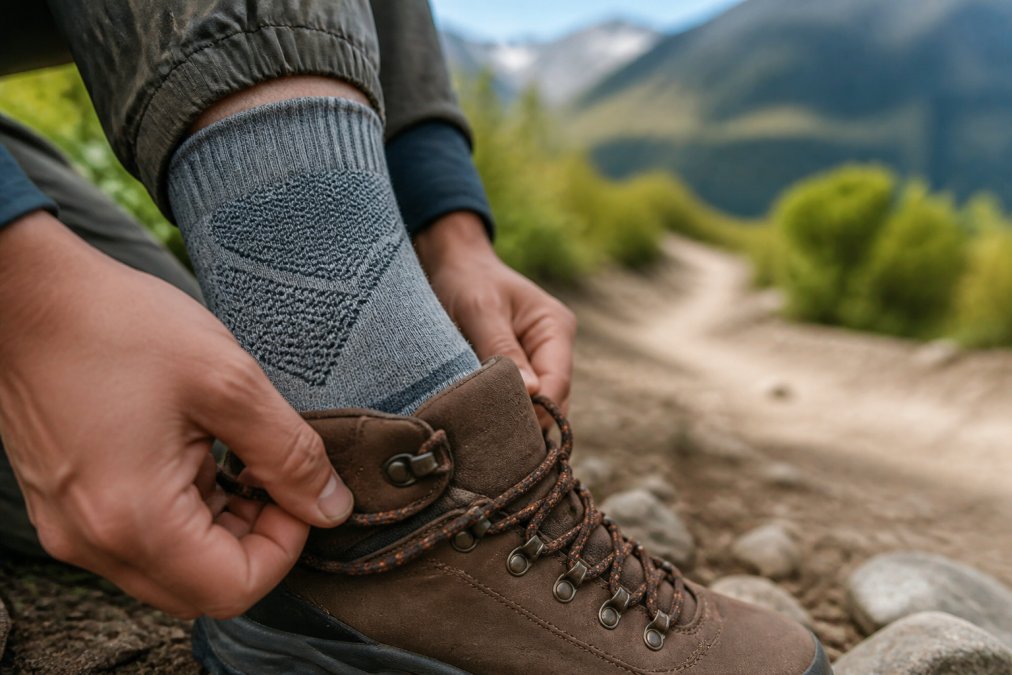
Moisture-wicking prevents most blister formation by keeping your foot dry and reducing friction vulnerability.
Socks must fit snugly in your boot without bunching or shifting. A snug heel cup and arch support keep the sock in place without restricting circulation.
Seamless toe construction and smooth fabric surfaces reduce friction. Flat-lock or minimal seaming in high-friction areas prevents irritation.
The Sock Layering System for Extended Treks
For hikes longer than 8-10 hours or multi-day expeditions, a two-layer sock system reduces blister risk by managing moisture in stages and distributing friction.
A thin synthetic liner sock pulls moisture from your skin and transfers it to the outer breathable hiking sock, which wicks it further outward. This two-stage process keeps skin drier than a single sock.
Your skin rubs against the smooth liner sock, and slight movement between layers dissipates friction energy that would otherwise create blisters.
The liner sock should be thin synthetic fiber (under 100 grams) for quick drying. The outer breathable hiking sock should be merino wool for cool weather or synthetics for hot conditions.
Two socks require larger boots to avoid foot compression. Many hikers need to size up half a size when switching to layering.
Start with quality breathable hiking socks and properly broken-in boots. Test sock layering on day hikes before multi-day expeditions.
Moisture-Wicking and Temperature Regulation
Moisture-wicking fibers pull liquid away from your skin through capillary action, even when saturated with sweat.
Ventilation zones allow air circulation where feet generate the most heat, balancing cushioning with airflow to prevent overheating.
Merino wool resists bacterial growth when damp, ideal for multi-day trips. Synthetics dry faster and excel in high-sweat conditions. Choose based on climate and hiking intensity.
During steep climbs, foot temperature rises 15-20 degrees above core temperature. Moisture evaporation from breathable hiking socks cools your foot and prevents overheating.
Merino Wool vs Synthetic Hiking Socks
Merino wool wicks moisture, regulates temperature, and resists odor, ideal for cool-weather treks where you wear the same pair for 2-3 days.
Synthetics dry faster, cost less, and excel in wet conditions. They're ideal for hot-weather hiking, water crossings, or daily washing.
Merino wool suits backcountry trips where laundry isn't available; wear for three days with minimal odor. Synthetics require frequent washing but dry faster and cost less.
Socks Waterproof Breathable Outdoor →
Merino wool costs 40-60% more and requires gentler care. Synthetics are more durable under aggressive washing.
Consider a hybrid approach: merino wool for cool-weather backpacking trips, synthetics for day hikes or warm-weather trekking. Many experienced hikers keep both types in their gear rotation.
| Feature | Merino Wool | Synthetic Blends |
|---|---|---|
| Moisture-wicking | Excellent | Very Good |
| Odor resistance | Superior | Good |
| Drying speed | Moderate | Fast |
| Temperature range | Wide | Moderate to wide |
| Cost | Higher | Lower |
| Durability | Good with care | Excellent |
| Best for | Multi-day trips | Day hikes, wet conditions |
Hiking Sock Thickness Guide
Sock thickness directly affects cushioning, boot fit, and thermal insulation. The industry uses a simple classification: ultralight, lightweight, midweight, and heavyweight. Understanding these categories helps you match socks to your specific hiking conditions.
Ultralight socks suit summer day hikes in well-fitted boots but offer limited blister protection on rough terrain.
Lightweight socks are most versatile, providing adequate cushioning for three-season hiking. Most quality breathable hiking socks land here, including the Mens And Womens Hiking Breathable Sweat-absorbing Mid-calf Cotton Socks at AdventureTrailhead.
Midweight socks add substantial cushioning for rocky terrain, long-distance hiking, or heavier pack loads. They work well in three-season conditions and provide excellent impact protection. The trade-off is reduced boot room, you need slightly larger boots to accommodate midweight socks comfortably.
Heavyweight socks are specialized for winter mountaineering, extreme cold conditions, or ultra-long expeditions. The extra cushioning and insulation come at the cost of weight and bulk. These are rarely necessary for typical hiking.
Boot fit is critical when selecting sock thickness. Your boot should fit snugly with your hiking socks, not so tight that circulation is restricted, not so loose that your foot moves inside the boot. If you're between sizes, choose the larger boot and use thicker socks to achieve proper fit.
Durability and Long-Term Care
Proper care extends the lifespan of your breathable hiking socks and maintains their performance characteristics.
Washing: Preserving Moisture-Wicking Fibers
Washing matters more than most people realize because it directly affects the fibers' ability to transport moisture. Hand wash your socks in cool water with mild detergent, or use a gentle machine cycle. Avoid fabric softeners entirely, they coat the fibers with a waxy residue that reduces moisture-wicking capability and can make socks feel slippery inside your boot.
Temperature is critical. Hot water damages the elastic components (typically spandex or elastane) that keep socks snug and supportive. It also causes merino wool to felt slightly, reducing its breathability. Stick with cool or warm water (below 100°F) to preserve fiber structure. Wash socks separately from rough items like jeans or towels, which create unnecessary friction during the cycle.
Drying is equally important and often misunderstood. The tumble dryer's heat, typically 130-160°F, damages elastic fibers and causes shrinkage, especially in merino wool. Even one cycle in a standard dryer can permanently reduce a sock's stretch and fit. Air dry your socks whenever possible. A clothesline, drying rack, or even laying them flat on a towel preserves the sock's structure and elasticity. Air drying takes 24-48 hours but adds years to your socks' useful life.
For merino wool specifically, consider wool-specific detergent (such as products designed for delicate wool garments). Regular detergent can be harsh on the fiber's scales, leading to pilling and matting. Wool-specific formulas are gentler and help maintain the fiber's natural properties.
Storage and Inspection
Keep your hiking socks in a cool, dry place away from direct sunlight. UV exposure degrades synthetic fibers over time, breaking down the polymer chains that give them strength and elasticity. A dark drawer or closet is ideal. Rolling socks rather than folding them reduces creasing and stress on elastic areas, which is especially important for merino wool that can develop permanent creases if stored folded for long periods.
Inspect your socks regularly for signs of wear. Thinning fabric (especially on the heel and ball of the foot), loose seams, pilling on the surface, or loss of elasticity are signals that performance is declining. Even if a sock isn't torn, once it loses its elastic recovery, meaning it doesn't spring back to shape after being stretched, it won't provide the support and fit needed for comfortable hiking.
When to Replace
Replace socks before they fail completely. Worn-out breathable hiking socks lose their moisture-wicking efficiency as fibers compress and flatten, and they increase blister risk due to poor fit.
Choosing the Right Breathable Hiking Socks for Your Trail
The best breathable hiking socks match your specific conditions: climate, terrain difficulty, trip duration, and boot type. Start by considering temperature. Cool-weather hiking benefits from merino wool's insulation and odor resistance. Hot-weather hiking demands synthetic blends' superior moisture transport and faster drying.
Frequently Asked Questions
Why are cotton socks bad for hiking?
Cotton absorbs moisture and holds it against your skin, creating the perfect environment for blisters, odor, and bacterial growth. Unlike breathable hiking socks with moisture-wicking properties, cotton stays wet and loses its cushioning when damp. This leads to increased friction, hot spots, and foot fatigue on longer hikes. Synthetic and merino wool alternatives transport moisture away from your skin, keeping your feet dry and protected.
What makes a hiking sock breathable?
Breathability comes from the fiber composition and knit structure. Merino wool naturally wicks moisture and regulates temperature, while synthetic fibers like polyester and nylon move sweat away from skin quickly. Breathable hiking socks feature ventilation zones in high-heat areas and a looser weave that allows air circulation. The combination of moisture transport and air flow prevents moisture buildup and keeps feet cooler on the trail.
Do you actually need hiking socks?
Yes. Regular socks lack the cushioning, arch support, and moisture management that hiking socks provide. Breathable hiking socks reduce blister risk, prevent foot fatigue, and regulate temperature, all critical on multi-hour or multi-day hikes. The investment in proper hiking socks pays off in comfort and foot health. Even beginners benefit from the friction reduction and moisture-wicking properties on their first trail.
How do breathable socks help prevent blisters?
Breathable hiking socks prevent blisters through moisture management, cushioning, and reduced friction. By wicking sweat away from skin, they eliminate the wet conditions that cause hot spots and blisters. The seamless toe and extra cushioning in high-impact zones reduce abrasion resistance issues. Proper arch support and compression also stabilize your foot inside the boot, minimizing the movement that creates friction and leads to blister formation.