
Lightweight vs Heavy Sleeping Bags for Side Sleepers
Table of Contents
- Lightweight vs Heavy Sleeping Bags for Side Sleepers: The Core Trade-Off
- Quick Comparison: Three Bags That Fit Side Sleepers
- The Best Sleeping Bag Shape for Side Sleepers
- Lightweight Sleeping Bag Weight: How Light Is Too Light?
- Sleeping Bag vs Quilt for Side Sleepers
- Sleeping Bag Temperature Rating and Comfort for Side Sleepers
- How to Decide: A Weight-vs-Comfort Framework
- Frequently Asked Questions
Last Updated: October 8, 2026
Lightweight vs Heavy Sleeping Bags for Side Sleepers: The Core Trade-Off
Side sleepers face a problem back sleepers never notice: the sleeping bags for side sleepers that top most best-of lists are built for people who lie flat and still.
The trade-off in one sentence: a lightweight sleeping bag saves pack weight but often narrows the cut, while a heavier bag buys width, durability, and warmth at the cost of your shoulders.

Below, we break down shapes, weights, temperature ratings, and quilt alternatives, plus three bags from our own lineup that fit side sleepers at different budgets.
Quick Comparison: Three Bags That Fit Side Sleepers
Three bags in our catalog work for side sleepers, differing mainly in weight, width, and warmth.
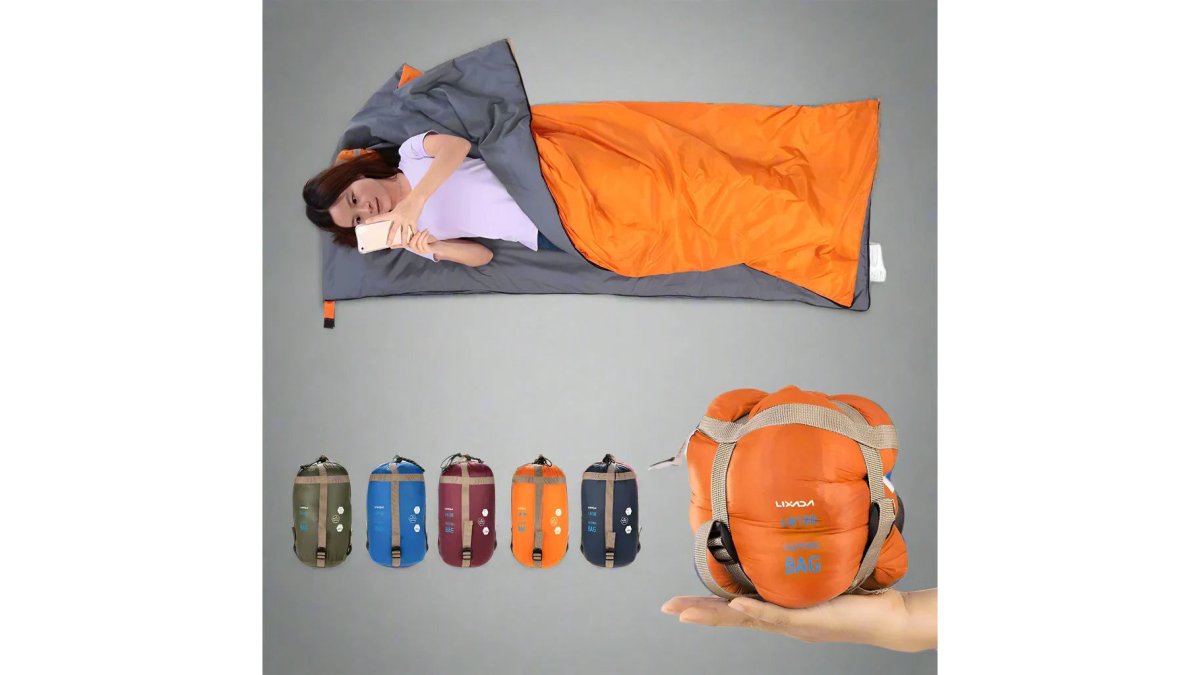
The Lightweight Envelope Sleeping Bag at $66.97 is the value pick: a standard 86"x29" cut or wider 86"x33" version, 2.2-3.9 lbs, with a 210T anti-tear polyester shell and 100% cotton fill.
The Camping Sleeping Bag 4 Season Envelope at $97.00 uses the same shell and fill but offers more weight options, 2.2-3.9 lbs, so you can match fill weight to your coldest expected night.

The 190x75cm Ultralight Envelope Sleeping Bag at $79.99 is our lightest at roughly 680 g, with a water-resistant nylon shell and soft polyester lining.
Weight, Width, and Warmth at a Glance
| Bag | Price | Weight | Width | Best For |
|---|---|---|---|---|
| Lightweight Envelope Sleeping Bag | $66.97 | 2.2-3.9 lbs | 29" or 33" | Budget buyers, car camping, three-season use |
| Camping Sleeping Bag 4 Season Envelope | $97.00 | 2.2-3.9 lbs | 29" or 33" | Cold sleepers who want fill-weight options |
| 190x75cm Ultralight Envelope Sleeping Bag | $79.99 | ~680 g | 29.5" | Backpacking, minimalist travel, spring to fall |
The Best Sleeping Bag Shape for Side Sleepers
The best sleeping bag shape for side sleepers is the envelope, not the mummy. An envelope keeps near-constant width from shoulder to foot, so your knees bend and hips rotate without the shell dragging tight across your back.

Why Mummy Bags Restrict Side Sleepers
A mummy cut fights the two motions side sleepers make most: rolling over and drawing the knees up.
When you roll, your shoulder and hip press outward, compressing insulation at exactly the points that need loft, a cold spot on the hip and a shoulder that never settles. Side sleepers also bend at the waist, and a tapered bag fights that bend, leaving you half on your back by 2 a.m.
How to Compare Usable Interior Dimensions
Most product pages list one "width" number, but that usually describes the widest point of the shell, not the space your body gets. For a side sleeper, three measurements matter more than length:
- Shoulder girth, the interior circumference at the widest point, usually near the chest or shoulder.
- Hip girth, the interior circumference where the bag narrows toward the foot.
- Footbox width, how much room your feet and ankles have when your knees are bent.
A bag advertised as 33" wide measures roughly 33" across the outer shell at the shoulders, about 29" to 31" of usable interior width once you subtract shell thickness, baffle seams, and loft. That is why two bags with the same listed width can feel completely different.
A Fit Check You Can Do Before You Buy
Measure your body first, then compare against the bag's interior numbers:
- Shoulder girth. Wrap a tape around the widest part of your shoulders and upper back, arms down. Note the number.
- Hip girth. Measure around your hips at the widest point.
- Add allowance. Add 4 to 6 inches to each measurement for clothing and loft. If you sleep in a puffy layer, add closer to 6.
- Compare to interior girth, not shell width. If the bag only lists outer width, subtract roughly 2 to 4 inches to estimate interior width.
Envelope and Wider Cuts Compared
An envelope bag trades some thermal efficiency for usable interior space, a fair trade for most side sleepers.
Our envelope options come in two widths: the 29" standard suits roughly average builds, while the 33" wide version adds four inches across the shoulders and hips, the difference between snug and comfortable for broader frames.
What most guides miss: bag length matters less than shoulder girth. A 6'2" side sleeper with narrow shoulders fits a standard envelope fine; a 5'8" sleeper with broad shoulders often does not.
Zipper Position and Draft Control
Where the zipper sits changes how a side sleeper experiences the bag. A zipper along the side you sleep on presses into your hip or shoulder and creates a cold seam. If you sleep on your right side, look for a left-side zipper or a center-zip design that keeps hardware off your pressure points. A draft collar and draft tube behind the zipper matter more for side sleepers, because rolling opens gaps a still sleeper never creates.
Lightweight Sleeping Bag Weight: How Light Is Too Light?
Too light is when the bag stops holding warmth or giving you room to turn.
Weight itself is not the enemy, the problem is what manufacturers remove to hit a low number: a narrower cut, thinner fill, no draft collar.
A heavier bag, 2.2 to 3.9 lbs, buys three things: more fill, a more durable shell, and more forgiveness when temperatures drop below the rating.
Lightweight Envelope Sleeping Bag - Warm & Cold Weather for Camping →
Sleeping Bag vs Quilt for Side Sleepers
A quilt beats a sleeping bag for side sleepers who roll constantly and hate feeling enclosed. It is an open-bottom insulation layer that attaches to your sleeping pad, so no shell wraps your legs and there is no zipper to fight.
The catch is drafts. A quilt relies on a well-fitted pad and a secure attachment system to keep warm air in.
A sleeping bag is safer if you want a closed system with a draft collar and a sealable zipper.
The honest answer: quilts suit disciplined sleepers who stay on their pad. Bags suit sleepers who move a lot and want nothing to think about at 3 a.m.
Sleeping Bag Temperature Rating and Comfort for Side Sleepers
A temperature rating describes the lowest temperature a bag should keep an average sleeper comfortable, not the temperature you personally sleep warm at. Side sleepers should treat it as a ceiling, not a promise.
Our envelope bags list comfort ranges rather than a single number: summer above 25°C, spring and autumn roughly 10°C to 20°C, winter about 0°C to 10°C.
Four Factors That Shift Your Real Comfort Floor
- Sleep position. Side sleepers compress insulation under hip and shoulder, so they run colder than the rating suggests, a 20°F bag may feel like 30°F to a side sleeper who rolls all night.
- Pad quality. A bag's bottom insulation is crushed under your weight, so your pad does the real work. A pad with an R-value around 4 or higher keeps more warmth under a side sleeper than thin foam, because it does not compress the way bag fill does.
- Layering. A dry synthetic or merino base layer next to skin plus a warm hat moves your comfort floor down several degrees for very little weight, the cheapest warmth you can add.
How to Read a Rating Like a Side Sleeper
Most manufacturers publish a comfort rating (where an average woman or cold sleeper stays comfortable) and a lower limit (where an average man or warm sleeper survives the night).
A practical rule: sleep cold, buy one step warmer than the trip's expected low; sleep hot, match the rating and vent with the zipper; unsure, split the difference and bring a layer for 2 a.m.
Why Fit Changes the Rating
A bag too narrow for your shoulders does not just feel tight, it sleeps colder. When your shoulder presses the shell against the insulation, you flatten the loft at your coldest point. A wider cut keeps the shell off your body, preserves loft, and lets you wear a layer without compressing the fill. This is the counterintuitive part of the lightweight-versus-heavy decision: a slightly heavier, wider bag can sleep warmer than a lighter, narrower bag with the same rating, because the wider bag keeps its insulation working.
Matching the Rating to the Trip
For summer backpacking with mild nights, a three-season bag vented with the zipper is usually enough. For spring and fall trips near freezing, choose a comfort rating at or below your expected low and pair it with a pad rated R-4 or higher. For winter or high-altitude trips, a heavier bag with real fill and a draft collar is safer, the extra weight is the difference between sleeping and shivering.
How to Decide: A Weight-vs-Comfort Framework
Use this framework to choose between a lightweight and a heavier bag without guessing.
Score each trip on three questions: miles per day, how cold it gets, and how much you roll.
- Long miles, mild nights, restless sleeper: ultralight envelope bag, wide cut, plus a warm pad.
- Long miles, cold nights, restless sleeper: heavier bag with real fill, accept the pack weight.
- Short miles, cold nights, any sleeper: heaviest bag you own, comfort wins.
The rule underneath all four: never trade width for weight. Width is what makes a bag usable for a side sleeper.
Match the Bag to Your Trip Type
Backpacking and thru-hiking reward low pack weight, so our ultralight envelope bag fits best. Car camping and base camps reward warmth and durability, so the 4 Season Envelope at $97.00 is stronger. For a first bag covering most trips, the Lightweight Envelope at $66.97 in the 33" width is the safest all-rounder.
Frequently Asked Questions
What shape of sleeping bag is best for side sleepers?
Envelope and wider-cut bags work best for side sleepers because they leave room to bend your knees and roll without fighting the fabric. Mummy bags taper at the shoulders and hips, which pins a side sleeper in place. Look for a bag at least 33 inches wide at the shoulders if you sleep on your side. The wider type in AdventureTrailhead's envelope line measures 86 x 33 inches, giving your shoulders and hips space to move.
What is a good weight for a lightweight sleeping bag?
For backpacking, most side sleepers do well in a bag between 2.2 and 3.9 pounds. The ultralight envelope option at AdventureTrailhead weighs about 680 grams (1.5 pounds) and suits spring through fall trips where pack weight matters most. Heavier bags in the 2.2 to 3.9 pound range add width and insulation, which helps if you roll around at night or sleep cold.
Do side sleepers need a wider sleeping bag?
Yes, in most cases. When you lie on your side, your shoulders and hips push outward and take up more width than when you sleep on your back. A standard mummy cut squeezes those points, which wakes you up when you shift. A bag with a 33-inch shoulder girth, like the wider envelope option, lets you roll from side to side without the fabric pulling tight across your back.
Are sleeping bag quilts more comfortable for side sleepers?
Quilts can be comfortable for side sleepers who sleep warm and use a wide sleeping pad, because there is no hood or back panel to restrict rolling. The catch is draft control: every time you turn, cold air can slip in along the edges. A quilt works best when paired with a pad strap system and a draft collar. If you sleep cold or move a lot, an envelope bag with a full zipper keeps heat in more reliably.
How do you keep a sleeping bag warm when you move around at night?
Start with the right temperature rating for your sleep style, then manage drafts. A bag rated for 0 to 5 degrees Celsius handles winter for most cold sleepers, while 10 to 20 degrees Celsius suits spring and fall. Add a draft collar or wear a base layer to seal gaps. If you roll often, choose a wider bag so the insulation stays lofted around you instead of compressing against the walls when you turn.
The real challenge is not finding a bag that is light or warm. It is finding one wide enough to let you sleep on your side all night without waking up stiff. AdventureTrailhead stocks envelope sleeping bags in standard and wide cuts, with fill options for summer, shoulder seasons, and winter, plus compression sacks included so they pack down small. Browse our sleeping bag range and gear up for your next trip with a bag built for how you actually sleep.