
How to Store Climbing Ropes Properly: 2026 Guide
Table of Contents
- Why Proper Climbing Rope Storage Matters
- What You'll Need Before You Store Your Rope
- Step-by-Step: How to Store Climbing Ropes Properly
- How to Clean a Climbing Rope Before Storage
- Signs of Climbing Rope Wear to Check Before Storing
- How Long Do Climbing Ropes Last in Storage?
- Storage for Specific Climates and Pests
- Common Rope Storage Mistakes to Avoid
- Frequently Asked Questions
Last Updated: September 12, 2026
Why Proper Climbing Rope Storage Matters
Climbing rope storage is the practice of keeping your rope in conditions that preserve its strength between trips, and getting it right directly affects how long your rope stays safe to climb on. This guide from AdventureTrailhead walks through the full process, from cleaning and coiling to choosing a container that protects the rope from the elements that quietly destroy it. A rope is a piece of soft goods, not a metal carabiner you can inspect for cracks. Damage accumulates invisibly, and most of it happens while the rope sits in your garage, not while you're on the wall.
How UV Light and Chemicals Break Down Rope Fibers
Ultraviolet degradation is the single most underestimated threat to a stored rope. Nylon sheath and core fibers lose strength when exposed to sunlight over time, and the damage isn't visible from the outside. A rope left hanging on a sunny garage wall can weaken significantly without showing a single fray (theuiaa.org).
Chemical contamination is just as serious and far more common. Battery acid, solvents, gasoline, and even some cleaning products attack nylon at a molecular level. UIAA guidance on rope care and retirement is clear that chemical exposure is grounds for immediate retirement, not cleaning.
What You'll Need Before You Store Your Rope
Gathering the right tools takes five minutes and prevents most storage mistakes. You need a clean, dry surface, a rope bag or breathable container, and a cool dark spot with good ventilation. Skip the sealed plastic bin; trapped moisture causes mildew, and mildew weakens nylon.
Here's your pre-storage checklist:
- A clean tarp or rope bag to work on
- Lukewarm water and a mild soap (no detergents)
- A shaded, ventilated drying area
- A rope bag, mesh sack, or breathable storage bin
- A cool, dark shelf away from chemicals and direct sun
For rope organization, AdventureTrailhead carries a glove hanging buckle and rope storage buckle that keeps coiled ropes tidy and off the floor, which matters more than most climbers realize.
Step-by-Step: How to Store Climbing Ropes Properly
The full process takes about 30 minutes of active work plus drying time. Follow these steps in order, and your rope will come out of storage ready to climb.
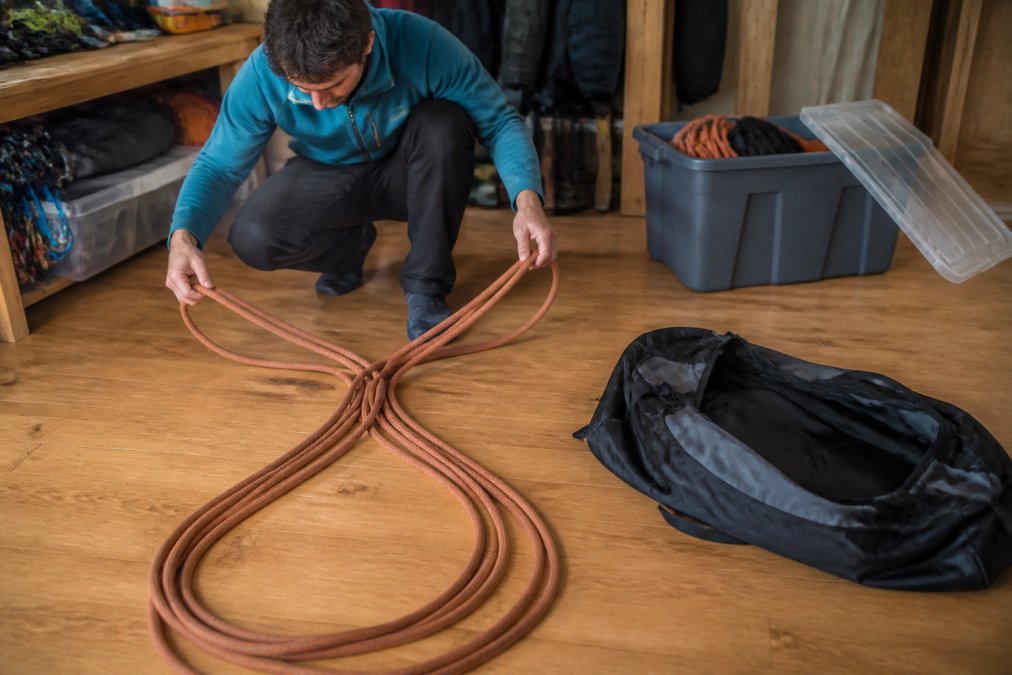
Step 1: Clean and Dry the Rope Completely
Dirt and grit work their way into the sheath and grind against the core fibers every time the rope bends. Wash the rope in lukewarm water with mild soap, then dry it completely in the shade. Never dry a rope in direct sunlight, and never put it in a dryer. A damp rope stored in a bag is a mildew farm.
Step 2: Coil Using the Butterfly or Mountaineer Method
The butterfly coil and the mountaineer coil both keep the rope organized without introducing twists or kinks. The butterfly coil is faster for storage; the mountaineer coil is better when you'll carry the rope on your back. Either way, avoid coiling the rope around your hand and elbow, which adds twist with every loop.
Step 3: Choose the Right Storage Spot and Container
Hang the coiled rope in a rope bag or lay it on a shelf in a cool, dry, dark space. A dedicated rope bag protects against abrasion, dust, and light. If you hang the rope, use a wide, smooth hook rather than a thin nail, which can create a sharp bend point over months of storage.
How to Clean a Climbing Rope Before Storage
Cleaning a climbing rope is simpler than most climbers expect, and it's the step that most extends rope lifespan. Rope cleaning is the process of removing dirt, grit, and salts from the sheath and core using mild soap and cool water, followed by thorough air drying in the shade. Never use a washing machine, bleach, or detergent; all three damage nylon.

Here's the method:
- Fill a bathtub with lukewarm water and a capful of mild soap.
- Flake the rope into the water and agitate gently by hand.
- Rinse with clean water until no suds remain.
- Lay the rope loosely in a shaded, ventilated area to dry fully.
- Coil only after the rope is completely dry to the touch.
Signs of Climbing Rope Wear to Check Before Storing
Climbing rope wear shows up in a handful of predictable ways, and checking before you store is the best time to catch it. Glancing at the rope as you coil it lets you spot problems while the rope is fully extended and easy to inspect. Look for these signs:
- Flaking or fuzzing sheath: light fuzz is normal; deep, matted areas are not.
- Flat or stiff spots: the core may be damaged under an intact sheath.
- Sheath slippage: the sheath bunches or slides relative to the core.
- Kinks and twists that won't relax: often a sign of prior damage.
- Discoloration or chemical smell: retire the rope immediately.
If you find any of these, retire the rope. A climbing rope is a life-safety item, and the cost of replacement is trivial next to the cost of a failure.
How Long Do Climbing Ropes Last in Storage?
Climbing ropes last up to 10 years in storage if never used, according to manufacturer retirement guidance compiled by REI, but that clock only holds for a rope kept clean, dry, and out of UV light. Usage life is a separate question. A rope in regular use should be retired after a few years of hard climbing regardless of how it looks, because internal core damage accumulates invisibly.
The key distinction is shelf life versus usage life. A rope that has hung in a dark closet since purchase has a longer theoretical lifespan than one that has taken hundreds of falls, even if the second rope is newer. Track both: purchase date and approximate number of falls.
| Storage Factor | Ideal Condition | What It Protects |
|---|---|---|
| Light | Dark, no UV exposure | Sheath and core strength |
| Temperature | Cool, stable | Nylon integrity |
| Moisture | Dry, ventilated | Prevents mildew |
| Chemicals | None nearby | Prevents fiber breakdown |
| Container | Breathable rope bag | Blocks dust and abrasion |
Storage for Specific Climates and Pests
Most guides give one storage recipe and assume everyone lives in the same climate. In practice, the right setup depends heavily on where the rope lives, and the two failure modes, moisture and pests, call for opposite solutions. This is the part of rope storage that generic advice gets wrong.
Humid and Coastal Climates
When relative humidity stays high, the risk is mildew and trapped moisture. Mildew weakens nylon, and a musty smell is a sign the damage has already started. The practical setup:
- Store the coiled rope in a breathable mesh bag or cotton stuff sack, never a sealed plastic bin. Airflow is what dries the rope; a sealed bin traps the moisture you are trying to remove.
- Add a rechargeable silica gel desiccant pack inside the bag. Recharge it in an oven per the manufacturer's instructions every few months, or replace it when the indicator changes color.
- Check monthly during humid seasons. Uncoil, feel for dampness, and let the rope air out in a shaded, ventilated room before recoiling.
- Keep ropes off concrete floors and basement walls, which wick moisture. A shelf at least a foot off the floor makes a measurable difference.
Arid and Hot Climates
In dry climates the enemy flips to heat and UV. A garage that hits triple digits in summer is a slow cooker for nylon, and a rope hanging near a west-facing window takes direct UV for hours a day. The practical setup:
- Store ropes in an interior closet or a shaded cabinet, not a garage or shed.
- Keep the rope inside an opaque bag so no light reaches it, even indirect light through a window.
- Avoid attics and uninsulated storage rooms where temperatures swing widely. Stable, cool conditions matter more than any single number.
Vertical vs. Horizontal Storage
Both orientations work, and the choice is mostly about your space and your climate:
- Vertical (hanging): A wide, smooth hook or a padded peg on a wall keeps the rope off the floor and lets air move around it. This is the better choice in humid climates because gravity helps any residual moisture drain and evaporate. Avoid thin nails and sharp hooks, which create a single tight bend point that can fatigue the rope over months.
- Horizontal (shelf or bin): Laying the coiled rope flat on a shelf or in a breathable bin works well in dry climates and tight spaces. Do not stack heavy gear on top of it, and do not stuff it into a crowded bin where it stays compressed.
A simple DIY option that covers both: mount a smooth, wide hook or a short length of padded dowel on a closet wall, hang the bagged rope from it, and leave the bag open at the top for airflow.
Pest and Rodent Protection
Rodents chew rope for nesting material, and a chewed sheath means a retired rope, there is no repair. This is a real problem for garage, basement, and shed storage, and it is almost never covered in rope-care guides. Practical defenses:
- Get the rope off the floor and away from walls. Rodents travel along edges and baseboards.
- Store the rope inside a closed container. A breathable bag alone will not stop a determined rodent, so use a sturdy bin with ventilation holes small enough to block entry, or hang the bagged rope high on a wall.
- Inspect for chew marks, frayed ends, and droppings before every trip. Any chew damage to the sheath or core is grounds for retirement.
- Keep the storage area free of food, birdseed, and pet food, which attract rodents in the first place.
Common Rope Storage Mistakes to Avoid
The biggest storage mistakes are the ones that feel harmless. Leaving a rope on a sunny garage wall, storing it damp in a sealed bin, or hanging it next to a lawn mower all seem minor until you understand how each one degrades nylon. Here are some common mistakes:
- Storing a damp rope in a sealed container
- Hanging a rope in direct sunlight for months
- Keeping ropes near solvents, batteries, or fuel
- Coiling around the hand and elbow, which adds twist
- Skipping inspection before storage
- Using a thin nail or sharp hook as a hanging point
Avoid these, and your rope will be ready when you are. AdventureTrailhead stocks static climbing rope and 8mm Predator rope for climbers who want a dedicated storage rope separate from their working line, plus paracord for gear organization around camp.


Frequently Asked Questions
What is the best way to store a climbing rope?
Store your climbing rope in a cool, dry, dark place away from UV light, chemicals, and heat. Coil it loosely using the butterfly or mountaineer method, then place it in a breathable rope bag or cotton tarp. Avoid tight coils or hanging the rope over sharp edges, which can create kinks and weaken core fibers over time. Proper storage helps maintain rope integrity and extends its lifespan.
Does sunlight damage climbing ropes?
Yes. Ultraviolet light degrades nylon sheath and core fibers, causing them to weaken and flake. Even brief exposure during a climb is fine, but long-term storage in direct sunlight will shorten your rope's lifespan. Keep ropes in a shaded, dark area or inside a rope bag when not in use. UV degradation is cumulative and not always visible, so prevention is the best strategy.
How long do climbing ropes last in storage?
Most manufacturers suggest retiring a rope after 10 years from the date of manufacture, even with light use. If stored properly in a cool, dry, dark place, a rope can remain safe for several years. However, shelf life depends on storage conditions and any signs of wear. Inspect for flaking, glazing, or stiffness before each use, and follow the manufacturer's guidelines for retirement.
Can I store my climbing rope in a garage?
A garage can work if it stays cool, dry, and dark, but many garages experience temperature swings, humidity, and chemical fumes from cars or lawn equipment. These conditions can degrade nylon and promote mildew. If you must use a garage, place the rope in a sealed, breathable bag on a shelf away from chemicals and moisture. A closet inside your home is usually a safer choice.
Storing a climbing rope properly takes half an hour and adds years to its usable life. AdventureTrailhead carries the rope bags, storage buckles, and climbing ropes you need to keep your gear protected between trips, backed by a comprehensive selection of mountaineering equipment built for serious conditions. Get started with AdventureTrailhead and store your rope with total confidence.