
How to Clean and Maintain Climbing Ropes
Table of Contents
- When and Why to Clean Your Climbing Rope
- Choosing the Best Soap for Climbing Rope
- Hand-Washing Your Climbing Rope Step by Step
- Using a Climbing Rope Washing Machine Safely
- Drying and Storage to Prevent Contamination
- Climbing Rope Inspection and Damage Assessment
- How Long Does a Climbing Rope Last
- Common Mistakes to Avoid
- Frequently Asked Questions
Last Updated: October 10, 2026
When and Why to Clean Your Climbing Rope
A dirty climbing rope loses grip and durability. Dirt, grime, and aluminum oxide buildup from rock faces wear down the rope's sheath and core over time.
How to clean and maintain climbing ropes isn't just about aesthetics. It's about safety and value. Your rope is one of your most critical pieces of gear, treating it right means it treats you right on the wall.

Sand particles, chalk dust, and mineral deposits embed themselves in rope fibers over weeks and months, weakening the sheath and accelerating wear. Regular cleaning can extend a rope's lifespan by years.
At AdventureTrailhead, we recommend establishing a cleaning routine based on how often you climb. Casual climbers might clean their ropes every 3-4 months. Regular climbers should aim for monthly cleaning. If you're climbing outdoors in sandy or dusty conditions, clean more frequently.
Choosing the Best Soap for Climbing Rope
The right soap makes cleaning effective without damaging rope fibers. Mild detergent is your best choice. Look for products designed for delicate fabrics or hand-washing.
Avoid bleach, acid-based cleaners, and harsh chemicals entirely. These break down the polyester sheath and weaken the core. Many climbers assume stronger cleaners mean better results, the opposite is true. A gentle approach protects your investment.
Rope-specific cleaners are optional; mild soap works equally well. Check labels for "gentle," "delicate," or "hand-wash safe" and avoid "heavy-duty" products or bleach.
Common household options that work:
- Baby shampoo
- Wool wash detergent
- Dish soap (in very small amounts)
- Specialized rope wash products
Test any new soap on a small section first if you're uncertain. The goal is removing dirt without stripping the rope's protective coating.
Hand-Washing Your Climbing Rope Step by Step
Hand-washing is the safest method for how to clean and maintain climbing ropes because it prevents mechanical damage that machines cause.

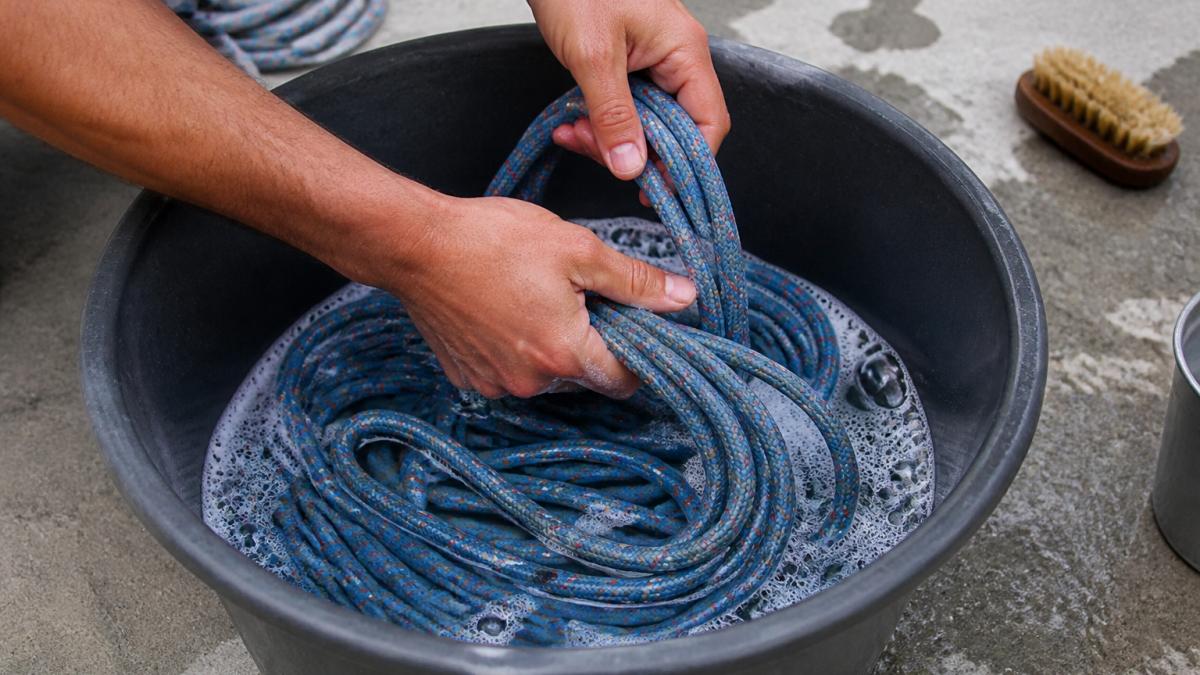
What You'll Need
Gather these items before starting:
- A large bucket, bathtub, or bin (at least 5 gallons)
- Mild soap or rope-specific cleaner
- Cool or lukewarm water
- A rope bag or mesh net (optional, for storage after)
- Clean towels for drying
The Washing Process
Step 1: Prepare your workspace. Fill your bucket or tub with cool to lukewarm water (hot water damages synthetic fibers).
Step 2: Uncoil your rope carefully. Lay it out or loosely coil it near your station. Never force a tight coil into water, as this traps dirt inside.
Step 3: Feed the rope through the water. Start at one end and slowly feed it through the soapy water, letting soap penetrate the fibers for 2-3 minutes.
Step 4: Work the rope with your hands. Gently squeeze and massage it, focusing on areas that contacted rock most directly to remove embedded dirt without aggressive scrubbing.
Step 6: Final inspection. Run the rope through your hands to feel for grit. Repeat rinsing if particles remain until water runs clear.
The entire process takes 15-20 minutes. Proper rinsing prevents recontamination as the rope dries.
Using a Climbing Rope Washing Machine Safely
Machine washing requires care and introduces mechanical stress. If you choose it, use a gentle cycle, cold water, minimal soap, no spin cycle, and a protective mesh bag. Most climbers prefer hand-washing, which gives you complete control over temperature, pressure, and agitation.
Drying and Storage to Prevent Contamination
How you dry your rope matters as much as washing it. Improper drying introduces new problems and allows a clean rope to pick up dirt.
Setting Up a Drying Station
Air dry your rope completely before storage. Choose a location that meets these criteria:
- Well-ventilated but sheltered. A basement corner, garage, or covered porch works well. Avoid foot traffic, pets, and dust-generating activities.
- Shaded. Direct sunlight degrades synthetic fibers through UV exposure.
- Low humidity. Damp environments promote mold and mildew. Use a fan or dehumidifier if needed.
- Away from heat sources. Never dry near heaters, radiators, or heat lamps, which accelerate fiber degradation.
Drying Method
Hang the rope loosely in a coil or lay it in a serpentine pattern on a clean surface for maximum air exposure. Use a rope hanger or loop it over a bar to distribute weight evenly. Never squeeze, wring, or compress the rope while wet. Drying typically takes 24-48 hours depending on diameter, humidity, and air movement.
Test for dryness by untwisting a small section and feeling the core, it should be completely dry to the touch.
Preventing Re-Contamination During Drying
A freshly cleaned rope is vulnerable to picking up dirt during drying. Protect it:
- Use a mesh bag or rope net. Hang the rope inside a mesh laundry bag or specialized rope drying net. This allows air circulation while blocking dust and debris.
- Keep the drying area clean. Sweep or vacuum the space before hanging the rope. Avoid drying near open windows during windy or dusty conditions.
- Don't drape over dirty surfaces. If laying the rope flat, place it on a clean sheet or towel, not directly on a garage floor or shelf.
- Separate from other gear. Don't dry the rope near muddy climbing shoes, dusty backpacks, or other contaminated equipment.
Storage After Drying
Once completely dry, store the rope in a rope bag, mesh net, or coil bag. This keeps it clean and organized. Keep it away from:
- Sharp objects that could snag or cut the sheath
- Extreme temperatures (avoid attics in summer or unheated sheds in winter)
- Damp environments (basements prone to moisture)
- Direct sunlight (UV-protected storage is ideal)
- Oils, solvents, sunscreen, and insect repellent
A cool, dry closet, storage bin, or dedicated gear cabinet works perfectly. Check stored ropes occasionally, every 3-6 months, for any signs of damage, mold, or contamination.
Climbing Rope Inspection and Damage Assessment
Regular inspection catches problems before they become dangerous. Inspect before and after every climb, and during cleaning when wet rope shows damage more clearly.
When to Inspect
- Before every climb. A quick visual and tactile check catches obvious damage.
- During cleaning. Run the rope through your hands slowly; wet rope is easier to inspect.
- After cleaning. Do a thorough full-length inspection using the checklist below.
- After a fall or impact. Inspect the impact zone immediately.
- During storage. Check every 3-6 months for damage, mold, or degradation.
Structured Inspection Checklist
Run your hands along the entire length feeling for texture and firmness changes. Inspect visually under good lighting:
Sheath Condition:
- Cuts, tears, or holes (any opening exposing the core is critical)
- Flat or compressed sections
- Fraying or unraveling
- Abrasion or fuzzing (minor surface wear is normal; deep abrasion is not)
- Discoloration, staining, or bleaching
Core Condition:
- Soft, mushy, or spongy spots (indicates core damage)
- Hard or stiff sections
- Visible separation between sheath and core
- Lumps, bumps, or irregular texture
Overall Structure:
- Kinks or permanent bends
- Twisting or unraveling of the rope's lay
- Uneven diameter
- Odors indicating mold, mildew, or chemical contamination
Understanding What Cleaning Can and Cannot Fix
Cleaning removes dirt, grime, and surface contamination, but it cannot repair structural damage. Understand the limits:
Cleaning CAN fix: Dirt, sand, chalk, mineral buildup, mild discoloration, sticky sections, and loss of grip.
Cleaning CANNOT fix: Cuts, tears, holes, core damage, UV degradation, permanent kinks, or chemical damage.
If you find structural damage during inspection, cleaning will not make the rope safe again. Proceed to retirement assessment.
Retirement Criteria
Retire a rope if any of the following apply:
Immediate retirement (safety-critical):
- Any cut, tear, or hole that exposes the core
- Soft or mushy spots in the core (indicates internal damage)
- Significant separation between sheath and core
- Visible damage from a major fall or impact
- Exposure to harsh chemicals, bleach, or solvents
Retire after assessment (consult manufacturer):
- The rope is 10+ years old, regardless of appearance (synthetic fibers degrade over time)
- Extensive abrasion or fuzzing that has worn through multiple layers of the sheath
- Persistent stiffness or loss of flexibility even after cleaning
- Visible mold or mildew that cannot be cleaned away
- Manufacturer-specific damage thresholds (check your rope's label or manual)
Do not retire (normal wear):
- Minor surface fuzzing or abrasion
- Small discolored areas from dirt or staining
- Slight flattening from storage or use (if the core is intact)
- Cosmetic damage that does not affect structure
Consulting Manufacturer Guidance
Before making a final retirement decision, check your rope's manufacturer label or manual. Different rope constructions and materials have different care and retirement guidelines. Some manufacturers provide specific damage thresholds, lifespan recommendations, or inspection protocols.
For example, some ropes are rated for a specific number of falls or a maximum age; others have detailed guidance on acceptable damage. If you're uncertain whether a rope should be retired, contact the manufacturer with photos or a description of the damage. They can provide authoritative guidance based on the rope's specific construction.
How Long Does a Climbing Rope Last
A climbing rope's lifespan depends on use frequency and maintenance. Well-maintained ropes last longer. Neglected ropes fail faster.
Most climbing ropes stay safe for 5-10 years with regular use and proper care. Lifespan depends on use frequency, climbing type, exposure to harsh conditions, maintenance, and visible wear. Manufacturers often recommend retirement after 10 years regardless of condition, as age degrades synthetic fibers.
Keep records of when you acquired your rope. Check the manufacturer's label for any specific guidance. Some brands provide detailed care instructions and lifespan recommendations.
Common Mistakes to Avoid
Most rope damage comes from preventable mistakes. Knowing what to avoid protects your investment.
Mistake 1: Using hot water. Hot water damages synthetic fibers and accelerates degradation. Stick to cool or lukewarm water always.
Mistake 2: Harsh chemicals and bleach. These destroy the rope's protective coating and weaken the core.
Mistake 3: Machine washing without protection. Washing machines apply forces that hand-washing avoids.
Mistake 4: Storing wet or damp rope. Moisture promotes mold and mildew. Always dry completely before storage.
Mistake 5: Storing in sunlight. UV exposure degrades synthetic materials. Keep your rope in shade.
Mistake 6: Ignoring visible damage. Small cuts can become large tears. Inspect regularly and retire damaged ropes promptly.
Mistake 7: Skipping rinses. Soap residue attracts dirt. Rinse thoroughly and completely.
Mistake 8: Cleaning too infrequently. Regular monthly or quarterly cleaning prevents heavy contamination.
Proper rope care is simple but essential. Regular cleaning removes contamination that weakens fibers.
When you're ready to invest in quality climbing gear, AdventureTrailhead carries climbing ropes built to last. Our Outdoor climbing rope 10M features a polyester sheath with a high-strength core, rated for 1000-5000kg carrying capacity.
Frequently Asked Questions
Can I wash a climbing rope in the washing machine?
You can use a washing machine designed for delicate items, but hand-washing is safer and more effective. If you choose machine washing, use a mesh bag, set it to a gentle cycle with cool water, and skip the dryer. Hand-washing gives you better control over water temperature and detergent strength, reducing the risk of damaging the rope's sheath or core.
What soap is safe to use on a climbing rope?
Use only mild soap or mild detergent specifically labeled as gentle. Avoid bleach, harsh chemicals, acid-based cleaners, and laundry detergents designed for heavy-duty stains. Rope-specific cleaners are ideal if available. Bar soap or baby shampoo diluted in water also work well. Always check your rope's manufacturer instructions for approved cleaning products.
How long should you keep a climbing rope?
Most climbing ropes last 5-10 years with proper care, though frequent use shortens this lifespan. Retire a rope immediately if it shows visible damage, core exposure, flat spots, or loss of elasticity. Even without visible damage, inspect your rope annually.
How should you dry a climbing rope after washing?
Air dry your rope completely in a cool, shaded location away from direct sunlight, heat sources, and humidity. Uncoil it fully or lay it in loose loops to allow water to drain and air to circulate. Avoid using a dryer, radiator, or any high heat. Drying typically takes 24-48 hours depending on humidity. Store only when completely dry to prevent mildew and contamination.