
How to Check Climbing Quickdraws for Wear
Table of Contents
- Why Quickdraw Inspection Matters Before Every Climb
- What You'll Need for a Quickdraw Inspection
- Step 1: Visual Inspection of the Carabiner Gate
- Step 2: Examine Climbing Quickdraw Sling Wear and Stitching
- Step 3: Check for Carabiner Deformation and Corrosion
- When to Retire Climbing Carabiners and Quickdraws
- Common Mistakes to Avoid During Inspection
- Cleaning, Storage, and Maintenance Between Climbs
- Frequently Asked Questions
Last Updated: October 10, 2026
Why Quickdraw Inspection Matters Before Every Climb
Learning how to check climbing quickdraws for wear is one of the most important safety habits you can develop. A damaged quickdraw can fail under load, and that failure happens when you need it most, mid-climb. This guide from AdventureTrailhead covers exactly how to check climbing quickdraws for wear so you can climb with confidence.
Quickdraws endure constant abuse, thousands of clips, rock friction, and impact from falls. Over time, slings fray, gates stick or loosen, and metal develops sharp edges. Most climbers don't inspect carefully enough, and that's where accidents start.
The good news: a thorough inspection takes just a few minutes per quickdraw. You can spot problems before they become dangerous. This article walks you through exactly what to look for, where to look, and when to retire a quickdraw for good.
What You'll Need for a Quickdraw Inspection
Gather good lighting (natural sunlight works best), a magnifying glass (optional), a clean cloth, and a notebook to track wear. The most important tool is your attention, run your fingers over every surface and look for rough spots, discoloration, or anything out of place. A five-minute inspection routine prevents injuries and extends gear life.
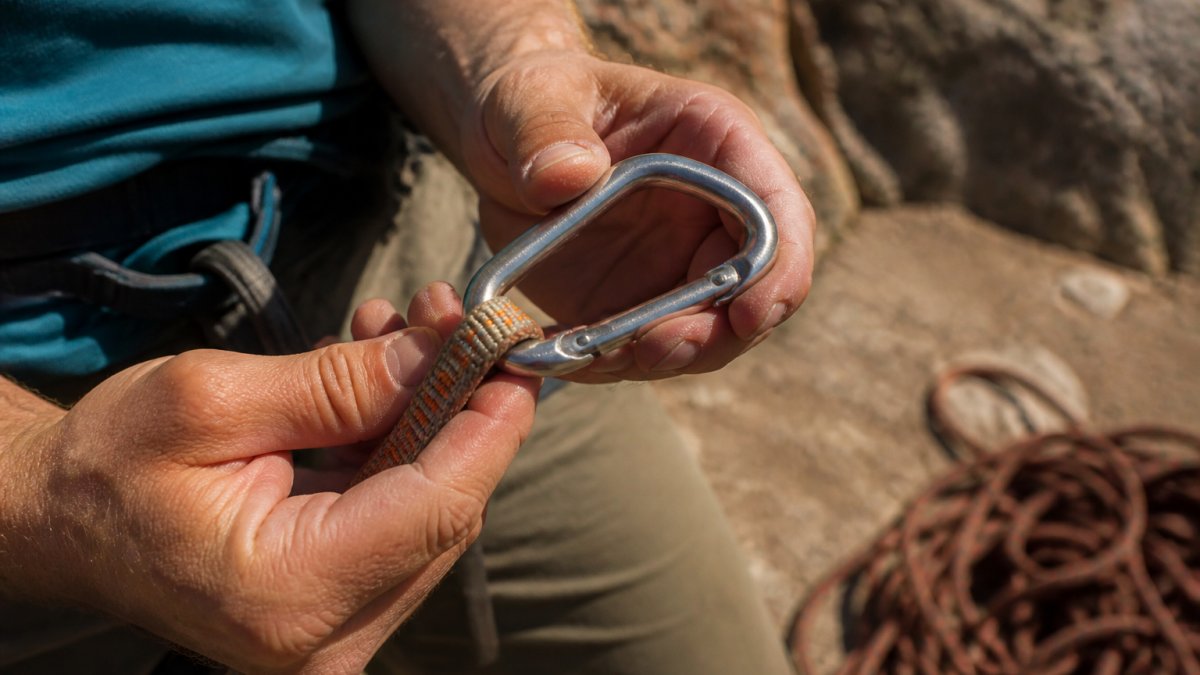
Step 1: Visual Inspection of the Carabiner Gate
Start with the carabiner gate. This is where most problems show up first. Use this systematic checklist to evaluate each carabiner:
Gate Movement and Function
Test the gate snap. Open and release the gate, it should snap shut in under one second with a crisp click. A slow or silent close indicates hinge wear. Check gate alignment. The gap between gate and body should be even and tight (no wider than a credit card). Uneven gaps suggest a bent hinge pin or warped gate. Feel for resistance. Open and close the gate 10 times. It should move smoothly; grinding means dirt or corrosion inside, sticking means deformation or contamination.
Gate Type and Wear Patterns
Wire gates are lighter and open faster but can crack, bend, or develop stress fractures. Look for visible bends, kinks, or hairline cracks; any deformation means retirement. Solid gates are thicker and more durable. Look for stress marks or scratches where the hinge pin enters the body; deep scratches or grooves you can feel indicate hinge wear.
Nose and Edge Inspection
Check the carabiner nose for grooves, dents, or wear marks. Shallow grooves (less than 1/32 inch) are acceptable; deep grooves (deeper than 1/16 inch) warrant retirement. Small dents (less than 1/8 inch) are acceptable if function is normal; large dents (more than 1/4 inch) or dents affecting gate closure require retirement. Run your finger along the hinge edge for burrs or rough spots that could cut rope, if found, mark and reinspect in two weeks; if unchanged or worse, retire the carabiner.
Gate Lock Mechanism (Locking Carabiners)
For locking carabiners, turn the lock barrel smoothly from open to closed without grinding or sticking. The barrel should stop in locked position and not spin freely. Light surface corrosion is cosmetic; deep pitting indicates weakening. Retire if the lock is stiff, corroded, or won't fully engage.
When Gate Wear Requires Retirement
Retire the carabiner immediately if you observe:
- Gate that won't close fully or closes only partway
- Visible cracks, kinks, or permanent bends in a wire gate
- Gate that takes more than 2 seconds to close
- Burrs or sharp edges that you cannot smooth with light sanding
- Deep grooves (deeper than 1/16 inch) in the nose
- Locking mechanism that won't engage or is severely corroded
Step 2: Examine Climbing Quickdraw Sling Wear and Stitching
The sling connects the two carabiners and shows obvious wear first. Run your fingers along every seam, stitching should be tight and even. Loose threads or broken stitches indicate separation risk. Hold the sling to light and look for thin spots, discoloration, or fraying; it should feel solid, not papery. Check connection points to carabiners especially, as these stress points take the most load.
Sling Material Degradation Signs
Nylon slings absorb moisture and can develop mildew; Dyneema is stronger but degrades in sunlight. Faded or bleached slings indicate UV exposure; sticky or musty slings indicate wet storage. Holes or tears mean retirement. Sling wear is progressive, once degradation begins, plan retirement within one to two climbing seasons.
Step 3: Check for Carabiner Deformation and Corrosion
Deformation, bent inward or outward from the smooth oval shape, indicates overload or hard impact and should trigger immediate retirement. Light surface corrosion is cosmetic; deep pitting or rust you can feel indicates metal weakening. Salt water and sweat accelerate corrosion, so rinse and dry thoroughly after climbing in these environments. Locking mechanisms should turn smoothly; stiffness, corrosion, or sticking means retirement.
When to Retire Climbing Carabiners and Quickdraws
There is no universal expiration date for carabiners, but clear retirement criteria exist. Use this framework to make confident retirement decisions.
Immediate Retirement Criteria
Retire the quickdraw immediately if you observe any of these:
- Visible cracks or breaks in the metal, Even a hairline crack means the carabiner has failed structurally. Do not use it again.
- Permanent deformation, If the carabiner shape has changed (bent inward, twisted, or warped) and does not return to its original shape, the metal is stressed and weakened. Retire it.
- Broken or severely bent wire gate, A wire gate that is kinked, cracked, or bent more than 1/8 inch out of true cannot be trusted.
- Stitching completely separated, If the sling is pulling away from the carabiner attachment point, the connection is failing. The sling can separate under load.
- Holes or large tears in the sling, Tears larger than 1/4 inch mean the sling material is compromised. Small tears (less than 1/8 inch) can be monitored but should be retired within one climbing season.
- Carabiner that won't close properly, If the gate will not fully close or stays open, the carabiner cannot lock. It is unsafe.
- Carabiner that opens unexpectedly during use, If the gate pops open while clipped or while you're climbing, the hinge is failing. Retire it immediately.
Conditional Retirement Criteria
These conditions warrant retirement within 1-3 climbing seasons, depending on severity and use frequency:
Corrosion and rust:
- Light surface corrosion (white or light green discoloration that wipes away) is acceptable.
- Moderate corrosion (discoloration that doesn't wipe away, or small pits you can feel) requires retirement within 1-2 seasons.
- Deep pitting (holes deeper than 1/32 inch or flaking corrosion) requires retirement within one season.
- Rust covering more than 25% of the surface requires immediate retirement.
Sling wear:
- Slight fraying at edges is normal and acceptable.
- Loose threads or small separated stitches (less than 1/4 inch) can be monitored; inspect every two weeks and retire if separation grows.
- Thin spots (papery feel or nearly transparent areas) indicate degradation; retire within one season.
- Significant fading signals material aging; retire within 1-2 seasons.
Carabiner wear:
- Shallow grooves in the nose (less than 1/32 inch) are acceptable.
- Deep grooves (1/16 inch or deeper) or growing grooves require retirement within one season.
- Small dents (less than 1/8 inch) that don't affect function are acceptable.
- Large dents (more than 1/4 inch) or dents affecting bolt hanger seating require retirement within one season.
Lifespan and Use Patterns
Quickdraw lifespan depends on use intensity and environment: recreational use (1-2 times per month) lasts 5-10 years; regular use (2-4 times per month) lasts 3-5 years; heavy use (weekly or more) lasts 1-3 years. Harsh environments (salt water, sand, extreme cold, high-altitude UV) reduce lifespan by 30-50% and require monthly inspection. Actual wear depends on climbing style, fall frequency, storage, and route type.
Inspection After a Fall, Impact, or Unusual Event
If any of the following occur, perform a detailed inspection of all affected quickdraws before using them again:
After a significant fall: Inspect the carabiner for dents, deformation, or stress marks; check the sling for damage or separation; test gate function. Retire if you felt hard impact or heard loud noise. After a dropped carabiner: Even shoulder-height drops can cause damage. Inspect nose, edges, and gate; test gate snap. Retire if dropped on rock or concrete unless no visible damage. After chemical exposure: Rinse thoroughly with fresh water and dry completely. Inspect sling for discoloration or stickiness and carabiner for new corrosion. Retire if chemical damage is suspected. After damp storage: Inspect for corrosion and sling for mildew or musty smell. Dry completely and reinspect in one week; retire if corrosion is spreading.
Consulting Manufacturer Guidance
Most manufacturers (Black Diamond, Metolius, Petzl, Wild Country) publish care guides and inspection standards online covering recommended intervals, wear indicators, storage practices, and warranty policies. They don't publish hard expiration dates because wear is variable; instead, they publish inspection standards and leave retirement decisions to the user. Use their guidance as reference, but trust your own inspection.
The Retirement Decision
When in doubt, retire the quickdraw. Replacement cost ($15-$40) is small compared to the risk of mid-climb failure. Keep a simple log noting purchase date, inspection dates, wear, and any falls or impacts to spot trends and make informed decisions. Gear retirement is not a failure, it's a sign your equipment did its job. Retire with confidence and replace with fresh gear.
Common Mistakes to Avoid During Inspection
Common mistakes: not checking the inside of the carabiner gate (wear happens on both sides); ignoring small rough spots that can cut rope over time; not checking sling stitching carefully at connection points; storing wet gear without drying (where corrosion starts); assuming all wear is normal instead of investigating rapid wear or sudden damage; not retiring gear when you should. When in doubt, retire.
Cleaning, Storage, and Maintenance Between Climbs
Good maintenance extends the life of your quickdraws. After every climbing session, rinse your gear with fresh water if you've been in a dusty, sandy, or salty environment.
Store quickdraws in a cool, dry place away from direct sunlight. A closet or gear bag works fine. Don't store them in a hot car or in damp basements.
Keep your quickdraws organized. A carabiner organizer or a simple mesh bag keeps them from tangling and makes inspection easier.
Every few months, take your quickdraws out and do a quick visual check. You don't need a full inspection every time. Just look them over.
Consider rotating your gear. If you have more quickdraws than you use on any single climb, rotate which ones you take.
Keeping detailed records of your gear can help you make smart retirement decisions and plan for replacements.
Checking your climbing quickdraws for wear is a skill that takes a few minutes to learn and a lifetime to practice.
Frequently Asked Questions
How do you inspect a climbing quickdraw for wear?
Start with a visual check of the carabiner gate for cracks, deformation, or corrosion. Next, inspect the sling for abrasion, discolored patches, or torn stitching along the dogbone. Check the carabiner nose for grooves or burrs where the rope contacts it. Finally, test gate action by opening and closing it smoothly several times. If you spot sharp edges, deep grooves, or the gate sticks, retire the quickdraw immediately.
When should you retire a climbing quickdraw?
Retire a quickdraw if the carabiner shows visible cracks, permanent deformation, deep grooves from rope wear, corrosion, or a gate that no longer closes smoothly. Retire the sling if stitching is torn, material is frayed, or abrasion has worn through the nylon or Dyneema. After a significant fall or impact, inspect thoroughly and retire if any damage is found. Most climbers retire quickdraws every 2-5 years depending on frequency of use, though inspection is more critical than calendar dates.
What damage to a quickdraw sling makes it unsafe?
Torn or separated stitching on the dogbone or connection points compromises the sling's integrity. Deep abrasion that exposes core material, large frayed sections, or visible thinning of the nylon or Dyneema indicates the sling has lost strength. Discolored patches suggest heat damage or chemical exposure. Any sling damage that affects the connection between the carabiners or reduces load-bearing capacity requires immediate retirement.
How do you check whether a carabiner gate is working properly?
Open and close the gate at least five times. It should move smoothly without sticking, grinding, or requiring excessive force. Listen for grinding sounds, which suggest corrosion or debris inside. Verify the gate fully closes and latches securely. If the gate feels sluggish, sticky, or won't close completely, the carabiner should be retired. Wire gates should snap shut quickly; solid gates should close firmly. Any hesitation or resistance signals a problem.