
How Long Do Camping Tents Last in Extreme Weather?
Table of Contents
- How Long Do Durable Camping Tents Last in Extreme Weather? The Short Answer
- Tent Fabric UV Degradation: The Silent Killer of Longevity
- Signs of Tent Wear and Tear That Predict Failure
- Maintaining Tent Poles for High Winds and Snow Load
- How Weather Conditions and Frequency of Use Affect Lifespan
- Storage, Cleaning, and Moisture Management for Tent Longevity
- Repair vs. Replace: When a Damaged Tent Is No Longer Safe
- Frequently Asked Questions
Last Updated: September 27, 2026
How Long Do Durable Camping Tents Last in Extreme Weather? The Short Answer
A well-built camping tent in regular extreme weather use typically holds its structural integrity for three to five seasons before meaningful fabric and pole fatigue sets in.

That estimate assumes you're storing it dry, pitching it correctly, and inspecting it after every serious storm. Skip those habits and the same tent can fail in a single season.
This guide from AdventureTrailhead breaks down what kills tents in wind, snow, and UV exposure, plus the inspection routine that tells you when a tent is still trustworthy.
How long do durable camping tents last in extreme weather is really a question about material science and maintenance, not brand loyalty.
Tent Fabric UV Degradation: The Silent Killer of Longevity
Tent fabric UV degradation is the breakdown of synthetic or natural fibers caused by prolonged exposure to ultraviolet radiation, which weakens tensile strength and causes coatings to fail before the fabric visibly tears. It is the only major failure mode that is both cumulative and invisible.
How UV Radiation Breaks Down Polyester, Nylon, and Canvas
Polyester, nylon, and cotton duck canvas each respond to UV radiation differently, and that difference determines how many seasons you get.
Nylon loses tensile strength fastest under sustained UV exposure: its polymer chains absorb ultraviolet energy and break down through hydrolysis, and moisture accelerates it. A nylon tent pitched for a full summer at high altitude can lose a meaningful share of its strength while still looking intact.
Polyester resists UV degradation better than nylon, which is why many expedition tents use it for flysheets. Ripstop polyester with a polyurethane (PU) coating holds up longer, but the coating is the weak point: PU absorbs UV, yellows, and eventually flakes. Once it fails, the fabric is no longer waterproof even though the weave is fine.
Cotton duck canvas is heavier and more abrasion resistant, and its thick weave tolerates UV better than thin synthetics. But it absorbs and holds moisture, making it vulnerable to mildew if packed wet, canvas outlasts synthetics in dry, high-altitude conditions and underperforms badly in humid ones.
UV damage is a function of exposure hours, not calendar years: a tent used 10 nights a year in shaded forest will outlast an identical tent used 40 nights a year above treeline.
UV radiation and material degradation research overview
DWR Coating Breakdown and What It Means for Waterproofing
Durable water repellent (DWR) is a surface treatment applied to tent flysheets that causes water to bead and roll off rather than soak in. When DWR fails, the fabric "wets out," and the tent starts feeling damp even without a leak.
DWR degrades chemically: the fluoropolymer or hydrocarbon chains standing off the fabric surface break down over time from UV exposure, abrasion from packing, and contaminants like hand oils and sunscreen. The result is a fabric that passes a garden-hose test in season one but soaks through in a light drizzle by season three.
The fix is straightforward: clean the flysheet with mild soap, dry it fully, and reapply a spray-on or wash-in DWR treatment. Most people skip this step and assume the tent is finished. It usually isn't.
Night-of-Use Metrics: What the Numbers Actually Look Like
There is no industry-standard "nights of use" rating, but in moderate, shaded conditions a quality synthetic tent can hold up for several hundred nights before coating failure becomes the limiting factor. In high-altitude or high-UV environments, that number drops sharply, often by half or more.
Pop-up Camping Tent for 2-3 People with →
This is why "how long do durable camping tents last in extreme weather" is misleading when answered in years. A tent stored in a garage and used twice a year may look new at year eight; one used 60 nights a year above treeline may be functionally finished at year two. Track nights, not birthdays.
Signs of Tent Wear and Tear That Predict Failure
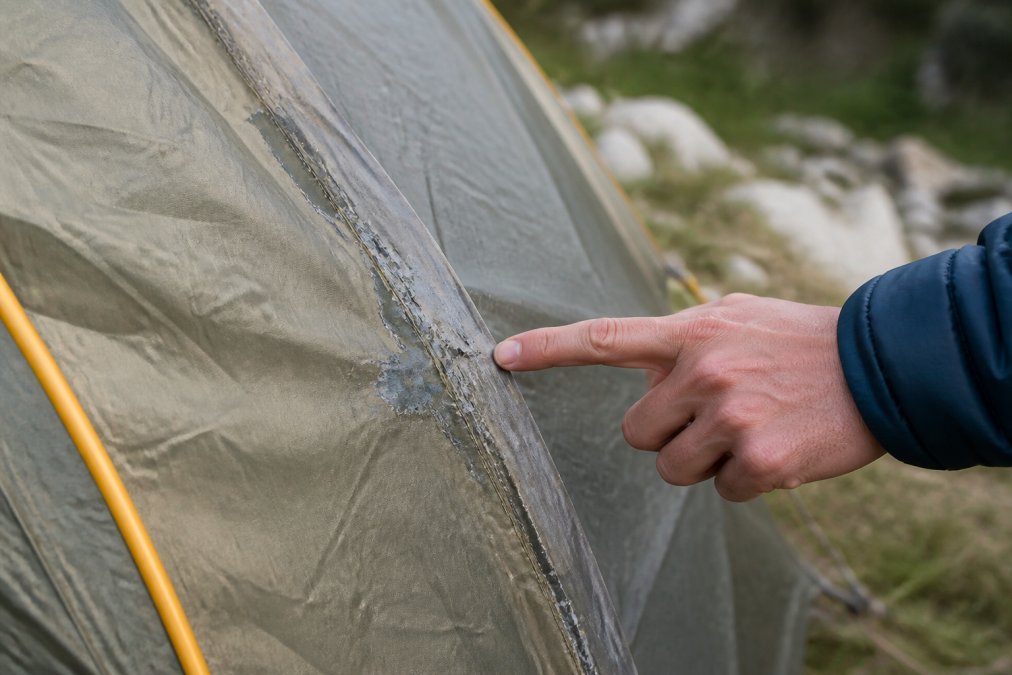
The clearest predictors of tent failure are seam separation, delamination of the waterproof coating, pole splintering, and stretched or frayed guy line attachment points. Catch these early and you extend the tent's life by seasons. Ignore them and you'll discover the problem at 2 a.m. in a windstorm.
Post-Extreme Weather Inspection Checklist
Use this after every storm, high-wind event, or snow load:
- Inspect all seams for lifted tape or visible stitching gaps
- Check pole sections for splintering, cracks, or bent ferrules
- Test guy lines and stake tension points for fraying
- Look for delamination bubbles or peeling on the flysheet coating
- Press a damp cloth against the floor from inside to find pinhole leaks
- Verify zippers still glide smoothly and don't separate under tension
- Confirm the tent pitches taut without sagging panels
- Dry the tent fully before packing, inside and out
Maintaining Tent Poles for High Winds and Snow Load
Maintaining tent poles for high winds comes down to three things: inspecting ferrules, avoiding over-tensioning, and replacing damaged sections before they fail mid-pitch. Under snow load, add a fourth: clearing accumulation before the frame has to carry it.
Why Poles Fail: The Actual Mechanisms
Aluminum poles fail through fatigue, not sudden breakage. Every flex weakens the metal slightly, and the failure point is almost always the ferrule, the swaged sleeve joining one section to the next. Ferrules are thinner-walled than the pole body, so they flex more, and grit in the joint acts like sandpaper on every pitch. Pole fatigue is cumulative.
A Concrete Inspection and Maintenance Protocol
- Never force a pole section that does not seat smoothly. If it sticks, clean the ferrule with a dry cloth and a small brush.
- Don't over-tension guy lines. Tight is good. Drum-tight stresses the pole architecture and transfers gust loads directly to the ferrules.
- Replace any pole section showing splintering, cracking, or a bent ferrule immediately. A bent ferrule will not seat straight and will stress the adjacent section.
- Store poles straight, not compressed in the stuff sack for months. Long-term compression sets a curve that becomes a weak point.
- After any high-wind event, flex each section gently and listen for a creak. A creak is a crack starting.
For high-wind pitching, angle guy lines to create even tension across the frame, and keep stake tension firm but not rigid, the tent needs some give to absorb gusts. In snow, pitch the low end into the wind and clear accumulation every few hours; a wet snow load can add significant weight to the roof, and if the frame isn't designed for it, panels sag and poles bend.
Backcountry camping and weather safety guidance
How Weather Conditions and Frequency of Use Affect Lifespan
Wind, snow, rain, and UV exposure each attack a tent differently, and how long do durable camping tents last in extreme weather depends on which you face most often.
| Condition | Primary Failure Mode | Typical Impact on Lifespan |
|---|---|---|
| Sustained high wind | Pole fatigue, seam stress | Moderate to severe |
| Heavy snow load | Frame bending, panel sag | Severe if uncleared |
| Prolonged UV exposure | Fabric weakening, DWR loss | Gradual, cumulative |
| Packed wet repeatedly | Mildew, coating damage | Severe and often permanent |
| High-frequency use | Abrasion, general wear | Proportional to nights used |
Storage, Cleaning, and Moisture Management for Tent Longevity
Dry storage is the single highest-impact habit for extending tent life. Moisture management beats every other maintenance practice combined.
Repair vs. Replace: When a Damaged Tent Is No Longer Safe
Repair a tent when the damage is localized: a single seam, one pole section, a small floor puncture. Replace it when the damage affects structural integrity across multiple points or the fabric has lost its waterproof coating entirely.
Outdoor recreation safety and equipment guidance
Frequently Asked Questions
What is the average lifespan of a camping tent used in extreme weather?
Ultraviolet radiation, hydrolysis, and repeated wind load are significant factors in how long a tent lasts. Tents stored wet or pitched in direct sun for weeks at a time degrade faster.
Will a tent survive 50 mph winds?
At 50 mph, pole fatigue and stake pull-out can occur unless the tent is pitched with taut guy lines, reinforced stake tension, and a windbreak. Always check the manufacturer's wind rating and inspect poles for bending before heading out.
Does UV exposure significantly shorten tent lifespan?
Yes. Ultraviolet radiation breaks down polyester and nylon fibers over time, reducing tensile strength and causing fabric degradation. A tent pitched in full sun for a full season can lose years of usable life compared to one shaded or pitched mainly at dawn and dusk. Durable water repellent coatings also degrade under UV, leading to delamination and loss of weatherproofing within two to three seasons of heavy exposure.
How do I know when my tent is no longer safe for extreme weather?
Look for these signs of tent wear and tear: thinning or translucent fabric patches, sticky or flaking DWR coating, bent or cracked poles, stretched stake loops, and seams that pull apart under tension. If the tent leaks along seams after resealing, or poles fail to hold shape in moderate wind, it is no longer reliable for extreme conditions. Replace it before your next high-exposure trip.