
Best Hiking Sandals Alternatives for Summer 2026
Table of Contents
- Why Look Beyond Traditional Hiking Sandals?
- Quick Comparison: Top Summer Footwear Alternatives
- Breathable Trail Running Shoes: The Lightweight Alternative
- How to Choose Summer Hiking Shoes for Hot Weather
- Water Shoes and Aqua Footwear for River Crossings
- Best Socks for Hot Weather Hiking: Pairing for Comfort
- Long-Term Repairability and Environmental Impact
- Conclusion
- Frequently Asked Questions
Last Updated: September 29, 2026
Why Look Beyond Traditional Hiking Sandals?
Traditional hiking sandals have a real weakness: they leave your toes and the sides of your feet exposed. On rocky trails, that exposure leads to stubbed toes, scrapes, and the kind of foot fatigue that ends a hike early. For summer, more hikers are trading open sandals for closed-toe and quick-drying alternatives that still breathe.
This guide from AdventureTrailhead covers the best hiking sandals alternatives for summer, from breathable trail runners to purpose-built water shoes. Below, we'll show you exactly which categories work for which terrain, and how to match a shoe to your foot shape and hiking style.

Here's the tension most gear guides ignore: sandals win on airflow, but lose on protection. The fix isn't a better sandal.
Quick Comparison: Top Summer Footwear Alternatives
| Alternative | Best For | Key Feature | Price |
|---|---|---|---|
| Breathable trail runners | Long day hikes, mixed terrain | Cushioned midsole, rubber outsole | Varies by model |
| Closed-toe hiking sandals | Rocky trails, toe protection | Protective rubber toe, adjustable fit | $62.00 |
| Water shoes | River crossings, wet approaches | Quick-drying mesh, drainage | $10.00-$67.80 |
| Water clogs | Camp, beach, short walks | Ventilation holes, slip-resistant sole | $45.99-$52.00 |
The table above maps the four main categories you'll choose between. Each one solves a different problem, so the right pick depends on where you're headed.

Breathable Trail Running Shoes: The Lightweight Alternative
Breathable trail running shoes are the closest thing to a hiking sandal in feel while keeping your foot fully enclosed. They use mesh uppers that move air and drain fast when wet, paired with a rubber outsole for grip on loose rock and dirt.
Top Picks for Breathable Trail Runners
For hikers who want the airflow of a sandal with full coverage, AdventureTrailhead's Breathable Sandals pair a shock-absorbing EVA midsole with a non-slip rubber outsole and a protective rubber toe. That combination handles rocks and cactus without exposing your toes.
How to Choose Summer Hiking Shoes for Hot Weather
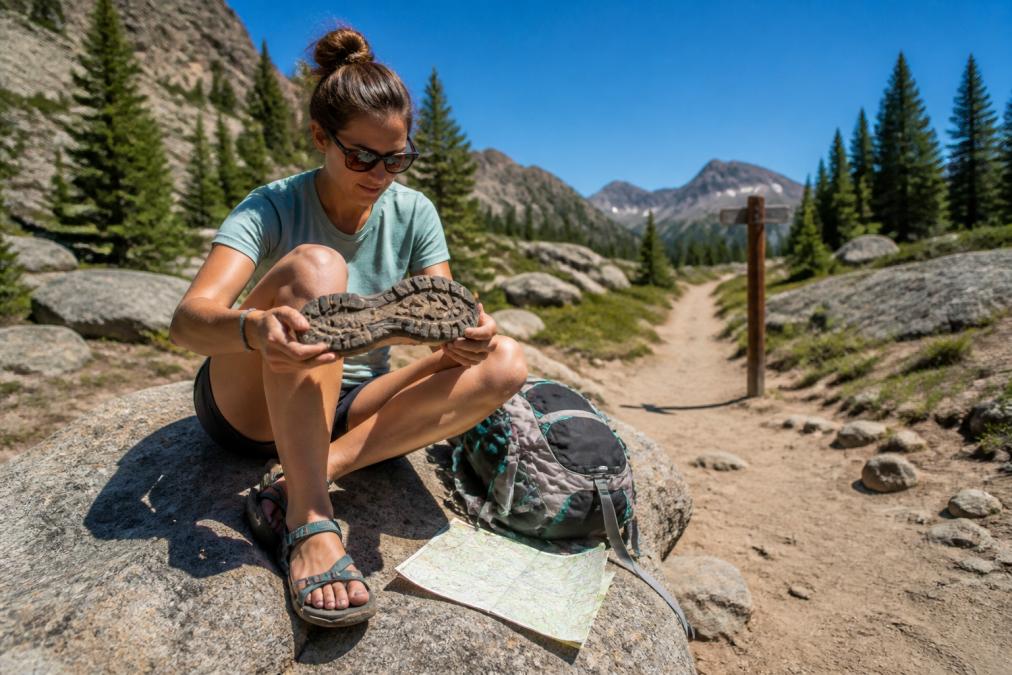
Choosing summer hiking shoes comes down to three variables: terrain, water exposure, and foot shape. Match all three and you'll avoid the two most common summer hiking problems, blisters and overheated feet.
Water Shoes and Aqua Footwear for River Crossings
Water shoes solve a problem sandals handle poorly: staying secure on slick, submerged rock. A rubber outsole with a grippy pattern holds on wet surfaces, while mesh uppers drain and dry fast.
Best Water Shoes for Hiking and Stream Crossings
For crossings, prioritize drainage and grip. AdventureTrailhead's Men's Barefoot Quick-Dry Water Shoes use 14 drainage holes in the sole to push water out fast, with a thicker rubber outsole for anti-slip traction and shock absorption. Adjustable drawstrings keep them locked on in moving water.
Best Socks for Hot Weather Hiking: Pairing for Comfort
The best socks for hot weather hiking are thin, moisture-wicking, and seam-free. Merino wool and synthetic blends move sweat away from skin and dry faster than cotton, which holds water and causes blisters.
Why Sock Choice Matters More With Open Footwear
With a closed shoe, the upper holds the sock against your foot and controls most of the friction. With sandals and open alternatives, the straps, footbed, and exposed skin do that work instead. A sock that bunches, twists, or slides under a webbing strap creates a hot spot. That is why sock fit is a functional decision with sandals.
Sock-to-Footwear Pairing by Condition
- Thin merino crew socks (around 18-20 micron fiber): best under breathable trail runners and closed-toe sandals for warm, dry day hikes. Merino regulates temperature and resists odor across multiple wears.
- Synthetic liner socks: best under water shoes and for stream crossings, where a thin layer reduces chafing against wet mesh and dries in minutes.
- Cushioned wool blends: best for rocky terrain and long descents, where added padding under the arch and heel absorbs impact that a thin sock transmits straight to the footbed.
- Toe socks: best for hikers prone to blisters between the toes, since each toe is separated and cannot rub against its neighbor under a strap.
The Cold-Weather Case Nobody Covers
Most "summer" guides treat sandals as a warm-weather-only tool, but a large share of hikers extend sandals into shoulder seasons and even winter by adding socks. The mechanism is simple: a wool sock traps a layer of insulating air against the foot while the open design still vents moisture, so the foot stays warm without the sweat buildup that soaks a closed boot. The catch is fit.
Summer Men's Breathable Sandals Beach →

Sizing Rule That Prevents Blisters
Size your footwear with the sock you will actually wear. A thick sock changes internal volume enough to shift where your heel sits and where straps contact the foot. A loose fit causes friction; a tight fit causes pressure points. Test the combination on a short walk before a long hike.
Long-Term Repairability and Environmental Impact
Repairability and environmental impact rarely make it into footwear roundups, yet they decide how long a pair actually lasts. Resoleable footwear and replaceable footbeds keep shoes out of landfills and save money over multiple seasons.
What Actually Breaks First
On hiking sandals and their alternatives, failure often starts at the flex points: the strap anchors, the webbing loops, and the midsole foam. EVA and polyurethane midsoles compress and lose rebound over time, and once the foam packs out, the shoe feels dead even if the tread looks fine. Uppers fail at stitching and at the point where webbing meets the footbed.
Repair Options That Extend Lifespan
- Strap and webbing repair: A broken webbing loop or a frayed strap anchor can often be re-stitched by a cobbler or a gear-repair shop.
- Buckle and hardware replacement: Ladder-lock buckles and hook-and-loop closures are the most common failure on adjustable sandals. Many are replaceable with standard hardware, which is far cheaper than a new pair.
- Insole and footbed replacement: If the footbed is removable, swapping in a fresh insole restores cushioning and arch support without touching the outsole.
- Outsole resoling: Full resoling is uncommon on sandals, but some stitched-sole designs and leather uppers can be resoled by a cobbler. Ask before you buy if longevity is a priority.
- Patch repair on uppers: Leather and heavy synthetic uppers tolerate patch repair at abrasion points. Lightweight mesh generally does not.
Care Steps That Prevent Early Failure
Rinsing salt, grit, and trail dust after each hike prevents the abrasion that wears through stitching and foam. Dirt trapped in webbing acts like sandpaper against the strap and the foot. Let footwear air-dry fully in shade rather than in direct sun, which degrades adhesives and foam. Rotate between two pairs if you hike often, since foam needs time to recover its shape between uses.
Why Durability Is the Most Practical Sustainability Metric
Environmental impact follows the same logic as repairability. A pair worn for three seasons has a lower footprint than three cheap pairs worn for one each, because most of a shoe's environmental cost is locked in at manufacturing, not at disposal. Durability is a practical form of sustainability. When comparing options, weight repairability and material longevity alongside weight and breathability, and treat a higher upfront price as a per-season cost rather than a one-time expense.
Conclusion
Picking summer footwear means matching the shoe to your terrain, not chasing a single "best" pair. Breathable trail runners, closed-toe sandals, water shoes, and clogs each win in different conditions, and the right combination covers a full season of hiking.
Frequently Asked Questions
What are the best hiking sandals for summer?
The best hiking sandals for summer feature breathable materials, secure straps, and grippy outsoles. Look for options with adjustable webbing and a protective toe cap. For example, the Summer Men's Breathable Sandals from AdventureTrailhead offer a shock-absorbing EVA midsole and a rubber toe for protection. Consider your terrain and whether you need water-friendly footwear. A secure fit and quick-drying materials are key for hot-weather comfort.
Are trail runners better than hiking sandals for summer?
It depends on your activity. Trail runners offer more toe protection and stability for rocky terrain, while hiking sandals provide superior breathability and quick-drying performance for water crossings. For long hikes on rough trails, breathable trail running shoes may be better. For casual trails and stream fording, sandals or water shoes excel. Many hikers bring both for versatility. Test both to see which suits your hiking style.
How do I choose summer hiking shoes for hot weather?
Focus on breathability, weight, and drainage. Look for mesh uppers or synthetic materials that wick moisture. A quick-drying shoe is essential if you'll cross streams. Ensure the outsole has good traction on loose gravel and wet rocks. Consider the fit: a secure heel strap and adjustable webbing prevent blisters. For hot weather, lighter colors reflect heat. Also, pair with the best socks for hot weather hiking, like merino wool or synthetic blends, to manage sweat.
What are the best socks for hot weather hiking?
Merino wool and synthetic blends are the best socks for hot weather hiking. They wick moisture, regulate temperature, and resist odor. Avoid cotton, which holds sweat and causes blisters. Look for cushioned soles and a snug fit. Some socks have mesh zones for extra breathability. Carry a spare pair to change if your feet get wet. Proper socks enhance comfort and prevent foot issues on long summer hikes.
Can I wear water shoes for hiking?
Water shoes can work for light hiking and stream crossings, but they lack the support and protection needed for rugged trails. They are ideal for wet environments like riverbeds or coastal paths. For example, the Men's Barefoot Quick-Dry Water Shoes from AdventureTrailhead have a rubber sole and drainage holes. However, for rocky terrain, choose a shoe with a thicker outsole and toe protection. Use water shoes as a supplement, not a replacement, for technical hikes.