
Alternatives to Traditional Belay Devices: 2026 Guide
Table of Contents
- Why Climbers Are Moving Beyond Traditional Belay Devices
- Manual vs Auto-Locking Belay Device: Which One Fits Your Climbing
- The Best Belay Device for Lead Climbing: What Actually Matters
- When to Retire a Belay Device: Wear Signs You Should Not Ignore
- Gear That Pairs With Modern Belay Alternatives
- Ergonomics, Weight, and Long-Term Device Care
- Conclusion
- Frequently Asked Questions
Last Updated: September 26, 2026
Why Climbers Are Moving Beyond Traditional Belay Devices
A growing number of climbers are rethinking the gear they trust with their lives. Alternatives to traditional belay devices are now mainstream, driven by better braking technology, lighter hardware, and a clearer understanding of friction under load. This guide breaks down what changed, who each option suits, and how to choose without overspending.
The traditional belay plate still works, but "it works" is a low bar when your partner's fall is on the line.
Manual vs Auto-Locking Belay Device: Which One Fits Your Climbing
The choice between a manual and an auto-locking belay device comes down to how much braking you want the hardware to handle. A manual belay device relies entirely on the belayer's hand position and brake strand control. An auto-locking belay device adds a camming mechanism that grips the rope when a fall loads the system.
How Tube-Style and Camming Mechanisms Differ
A tube-style device routes the rope through a fixed channel. Friction comes from the bend radius and brake strand angle. It is light, cheap, and works with many rope diameters, but the catch depends on you.
| Device Type | Braking Action | Rope Range | Best For |
|---|---|---|---|
| Tube / plate | Belayer only | Wide | Alpine, multi-pitch, rappel |
| Assisted braking | Cam engages rope | Narrower | Sport, gym, lead |
| Figure-8 descender | Friction only | Moderate | Rappelling, descent |
The Best Belay Device for Lead Climbing: What Actually Matters
The best belay device for lead climbing feeds rope smoothly, locks off predictably, and lets you lower a falling partner without fighting the mechanism. That favors assisted-braking designs, but only if you train on them.

The Feed-to-Grab Trade-Off, in Concrete Terms
Every assisted-braking device sits somewhere between "feeds like a tube" and "grabs the instant the leader moves." Three things set that position, and you can evaluate all of them before you buy:
- Cam geometry and spring tension. A stiffer spring and sharper cam face grab earlier, great for top-rope and gym falls, annoying for a leader clipping at their limit.
- Rope path angle. A deeper channel adds friction on the feed side, slowing rope-out but also slowing a fall.
- Pivot point. Where the device rotates on the carabiner changes how much leverage your brake hand has when you lock off.
Real Devices and What They Are Actually For
Rather than rank devices, it helps to group them by how they behave on lead:
| Behavior | Typical Design | Lead-Belay Feel |
|---|---|---|
| Tube / plate | Fixed channel, no moving parts | Fully manual, smoothest feed, zero assist |
| Assisted-braking (camming) | Spring-loaded cam on the brake strand | Assisted catch, feed requires technique |
| Assisted-braking (geometry) | No cam; braking from rope path and body angle | Assisted catch, feed closer to a tube |
| Figure-8 descender | Friction only, no assist | Not a lead belay device; descent and rappel only |
Rope Diameter and Brake Strand Control
Rope diameter changes everything. Assisted-braking devices are typically rated for a specific range, often around 8.9 to 11 millimeters for single ropes. Too thin and the cam may not grip reliably; too thick and the rope drags, making it hard to feed.
Ergonomics for Smaller Hands and Weaker Grip
Device geometry decides whether you can feed rope one-handed all day or your forearm is shot by pitch three.
- Thumb catch and release. Some assisted-braking devices require a firm thumb press to override the cam when paying out slack, the hardest motion to repeat under pump for smaller hands or limited grip strength.
- Body width. A wider body spreads load across more of your palm, easier on the hand but bulkier against the rope.
- Carabiner interface. A device sitting tight against the belay loop gives less leverage to rotate and feed than one with a longer, freer pivot.
When to Retire a Belay Device: Wear Signs You Should Not Ignore
Retire a belay device when the rope channel shows deep grooves, the cam no longer engages smoothly, or any metal part is cracked, bent, or heavily corroded. There is no fixed calendar, wear depends on how often and where you climb.
- Grooves in the rope channel that catch a fingernail
- A cam that sticks or does not spring back cleanly
- Sharp edges on the brake side of the device
- Corrosion or pitting from salt air or long storage
- Any crack in the body, however small
A Maintenance and Inspection Schedule You Can Actually Follow
Most guides say "inspect your gear" without saying when or how. Here is a schedule for a recreational climber logging 30 to 80 pitches a season:
Kong 8 Classic Descender Outdoor →
| Interval | What to Do |
|---|---|
| After every session | Wipe grit off the rope channel and cam face; check that the cam springs back freely |
| Monthly (or every ~20 pitches) | Run a fingernail down the channel and across the cam face; a groove that catches is a warning sign |
| Start of every season | Full teardown inspection: cam action, pivot pin play, body cracks, corrosion, brake-side edges |
| After any hard fall | Inspect before the next use, regardless of the schedule |
| After saltwater or heavy dust exposure | Rinse with fresh water, dry fully, then inspect |
Wear Patterns That Actually Matter
Not all wear is equal. Some marks are cosmetic; others are structural.
- Polished, smooth channel wear, normal. The rope has burnished the metal. Keep using it.
- Grooves deep enough to catch a fingernail, replace. The channel no longer guides the rope as designed.
- A cam face that has flattened or rounded, replace. The cam is the braking surface; once its profile changes, its grip changes.
- Pivot pin play or a cam that wobbles, replace. A loose cam can fail to engage when it matters.
- Any crack, bend, or deep corrosion pit, replace immediately, no exceptions.
Why This Is the Gap Most Guides Leave Open
Search for belay device retirement advice and you will find the same five-bullet checklist with no thresholds and no schedule. The question climbers actually ask is not "what are the signs" but "how do I know when my device has crossed the line." The answer is inspection method, a logging habit, and a clear list of cosmetic versus structural wear patterns.
Gear That Pairs With Modern Belay Alternatives
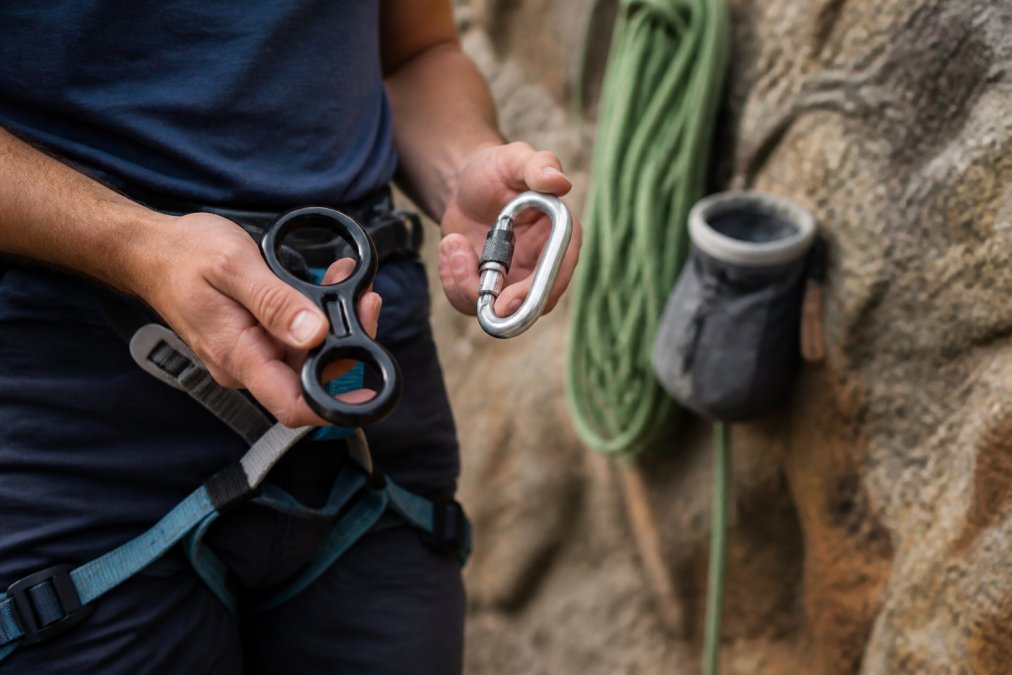
Belay hardware does not work alone. The device connects to a belay loop on your harness and depends on a carabiner that is rated and oriented correctly. Get these wrong and the best device becomes a liability.
Ergonomics, Weight, and Long-Term Device Care
Weight and hand size decide whether a device feels natural or fights you all day. A standard tube device is lightest, often under 100 grams; assisted-braking devices run heavier because of the cam and spring assembly, and on a long alpine route that weight adds up.
Conclusion
Choosing among alternatives to traditional belay devices comes down to where you climb and how much margin you want. Sport and gym climbers benefit most from assisted braking; alpine and multi-pitch climbers often stay with simple, light hardware. The right answer depends on your terrain, rope, and habits.
Frequently Asked Questions
Can you belay without a belay device?
Yes, a hip belay or a munter hitch can control a rope without a mechanical device. A hip belay wraps the rope around your body for friction, while a munter hitch uses a carabiner to create a reversible friction hitch. Both demand solid technique and work best as backup or alpine methods. For regular cragging, a dedicated belay device gives more consistent control and less rope wear.
Is a GriGri safer than an ATC?
An assisted-braking device like a GriGri adds a camming mechanism that helps lock the rope during a fall, but it does not replace a proper brake hand. An ATC relies entirely on the belayer's grip and technique. Studies and accident reports show most belay failures come from human error, not device type. Choose based on your discipline, then practice until handling becomes automatic.
When should a belay device be retired?
Retire a belay device when you see deep grooves, sharp edges, cracks, or heavy wear on the rope path. After any major fall or if the device was dropped from height, inspect it closely. When in doubt, replace it; the cost is small compared to the risk.
Are there lightweight alternatives to traditional belay devices for alpine climbing?
For alpine terrain, many climbers carry a lightweight tube-style device paired with a munter hitch as backup. A figure-eight descender like the Kong 8 Classic Descender offers a compact option for rappelling and rope work. The goal is minimizing weight while keeping reliable friction and the ability to escape the system if needed.
What is the best belay device for lead climbing?
The best belay device for lead climbing depends on your priorities. Assisted-braking devices give extra security when feeding rope quickly, while tube-style devices offer lighter weight and smoother rope management on multi-pitch routes. Test both styles on easy ground, check rope diameter compatibility, and pick the one that matches your climbing style and hand size.