
Best Climbing Gear for Serious Expeditions in 2026
Table of Contents
- What Defines the Best Climbing Gear for Expeditions
- High Altitude Mountaineering Gear List: The Essentials
- Quick Comparison: Core Expedition Hardware
- Top-Rated Harnesses for Load-Bearing Climbs
- Ropes, Ascenders, and Descenders That Perform
- How Long Do Climbing Ropes Last on Expedition?
- Your Climbing Gear Maintenance Checklist for Extreme Environments
- Logistics, Weight Management, and Final Verdict
- Frequently Asked Questions
Last Updated: September 5, 2026
Serious expeditions demand gear that performs flawlessly when the margin for error shrinks to zero. The best climbing gear for serious expeditions balances three non-negotiables: durability under extreme conditions, weight that won't slow your summit push, and reliability you can stake your life on. At AdventureTrailhead, the gear selection process is where most expeditions succeed or fail before they ever leave base camp.
Most guides focus on product specs alone. That misses the real challenge: assembling a system where every piece works together under stress. Below, we'll break down the essential categories, what separates expedition-grade equipment from recreational gear, and how to maintain it when conditions turn hostile.
What Defines the Best Climbing Gear for Expeditions
Expedition climbing gear is defined by its ability to perform reliably after weeks of abuse, not just on a single route. Unlike cragging or bouldering setups where you can swap gear between pitches, expedition equipment must endure constant use, temperature swings, and rough handling without failure. The gear you carry to base camp and beyond gets tested in ways gym equipment never will.
Weight-to-Strength Ratio and Durability
The core tension in expedition gear selection is weight versus strength. Every ounce you carry costs energy at altitude, but shaving weight by compromising durability creates unacceptable risk. The best climbing gear for expeditions uses materials with exceptional weight-to-strength ratios: high-modulus fibers for ropes, aircraft-grade aluminum for carabiners and hardware, and laminated composites for helmets. Field testing matters more than spec sheets. A carabiner rated for 25 kN in a lab can behave differently after weeks of UV exposure, rock abrasion, and sub-zero temperatures.
High Altitude Mountaineering Gear List: The Essentials
A complete high altitude mountaineering gear list extends beyond climbing hardware into survival systems. The categories that matter most: mountaineering boots with compatible technical crampons, an ice axe suited to your route, a layering system for thermal regulation and moisture management, avalanche rescue equipment including a transceiver, probe, and shovel, and a load-bearing pack that distributes weight efficiently on the ascent.
Technical hardware forms the backbone of your safety system. Carabiners, quickdraws, snow anchors, and pitons must all match the demands of your objective. Approach shoes handle the trek to base camp, while expedition boots take over for the summit push. Each piece serves a specific role, and gaps in your system create vulnerabilities.
Quick Comparison: Core Expedition Hardware
| Gear Type | Primary Role | Key Specification | Best For |
|---|---|---|---|
| Climbing Harness | Load distribution and security | Multiple D-rings, breathable waist | Technical ascents and rope work |
| Carabiner | Secure connections | Thread-lock mechanism, O-shape | Critical attachment points |
| Hand Ascender | Rope progression | Secure grip mechanism | Fixed rope sections |
| Descender | Controlled rappelling | Figure-8 design | Long rappels and rescue |
| Climbing Helmet | Impact protection | ABS/PC shell, EPS liner | Rockfall and fall protection |
| Rope System | Lifeline and rappel | 8-10mm diameter, static or dynamic | Route-specific needs |
Top-Rated Harnesses for Load-Bearing Climbs
For serious expedition work, your harness is the interface between you and the rope system. It must distribute load comfortably during hangs, accommodate layers of clothing, and provide multiple attachment points for gear. A full-body harness with D-rings on the back, front, and hips offers the most versatile configuration for technical climbing and rope access scenarios. The Outdoor Climbing Belt Safety Harness Gear Equipment at $104.83 balances lightweight design with durable construction for extended activities, while the Full Body Climbing Harness with Multi D Ring Support at $118.00 provides additional attachment points for professional rope access work.


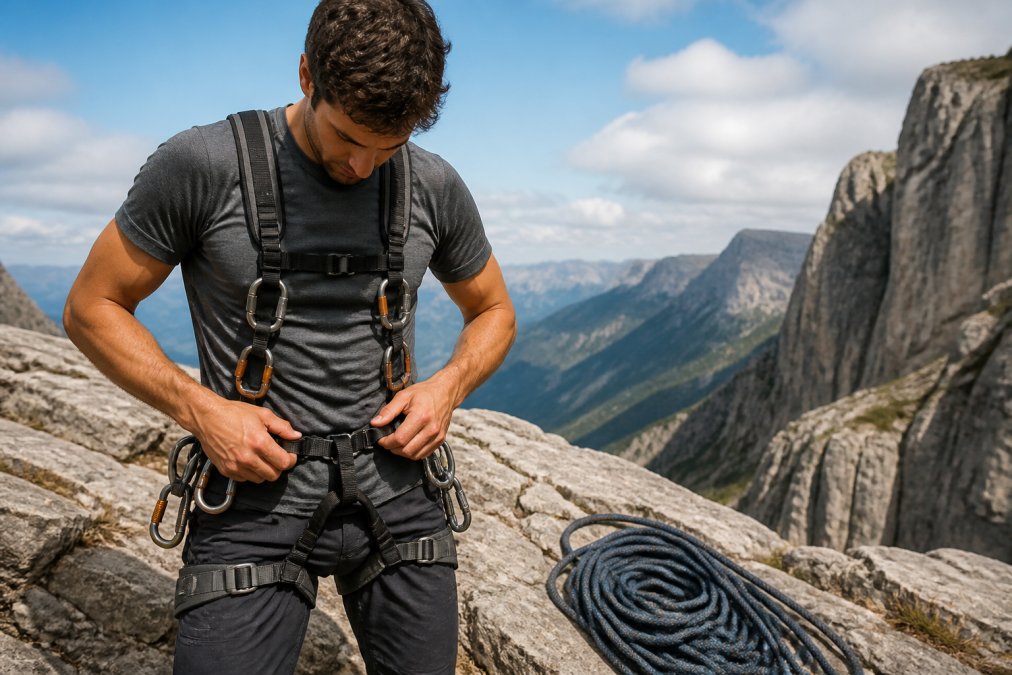
What most guides miss is fit variability. Expedition gear gets worn over bulky layers, so adjustability range matters as much as raw strength. Look for waist belts that accommodate a wide size range and leg loops that won't bind when you're wearing mountaineering boots. The Outdoor Safety Belt Climb Rock Safety Harness at $28.52 uses adjustable buckles and breathable materials for comfort across different body types and layers.

Ropes, Ascenders, and Descenders That Perform
Rope systems for expeditions demand an understanding of static vs dynamic ropes. Dynamic ropes absorb the energy of a fall, making them essential for lead climbing (theuiaa.org). Static ropes, with minimal stretch, serve fixed lines, rappels, and rescue systems. Many expeditions carry both, using dynamic ropes for technical climbing and static lines for fixed rope sections on the ascent.
The Kong Lift Hand Ascender at $80.95 provides secure grip and efficient rope progression for fixed line ascents. For controlled descents, the Kong 8 Classic Descender at $18.95 delivers reliable friction management during rappels. The Predator Standard One Stick Rappel Kit at $137.99 bundles an 8mm rope system into a compact package for climbers who need efficient rappel equipment without excess bulk.
How Long Do Climbing Ropes Last on Expedition?
Climbing rope lifespan depends on usage frequency, environmental exposure, and care, not calendar age alone. On a single expedition, a rope may see more abuse than in years of weekend cragging. The factors that shorten rope life: repeated falls, abrasion against rock, UV degradation, chemical contamination, and improper storage. A rope used for fixed lines on a high-altitude expedition may need retirement after one season, while a lightly used dynamic rope can serve for years with proper maintenance (americanalpineclub.org).
Manufacturer guidance and industry standards recommend retiring any rope that has sustained a significant fall, shows core damage, or exhibits excessive sheath wear (theuiaa.org). The Outdoor climbing rope10M at $39.01 uses a polyester sheath with high-strength silk core rated for substantial loads, while the 8mm Predator Rope offers flexible customization by the foot or spool for expedition-specific needs.
Your Climbing Gear Maintenance Checklist for Extreme Environments
Expedition environments accelerate gear degradation through UV exposure, temperature extremes, moisture, and abrasion. A disciplined maintenance routine extends equipment life and, more importantly, preserves safety margins. Follow this checklist before, during, and after your expedition.
- Inspect all webbing and stitching on harnesses for fraying, cuts, or UV damage
- Check carabiners for gate function, spring tension, and any deformation
- Examine ropes along their full length for sheath wear, core protrusions, or flat spots
- Test ascenders and descenders on a practice rope before committing to the route
- Verify helmet shell integrity and EPS liner condition after any impact
- Clean and lubricate ice axe and crampon attachment mechanisms
- Dry all gear thoroughly before storage to prevent mildew and corrosion
- Document gear age and usage history to track retirement schedules
Logistics, Weight Management, and Final Verdict
Expedition success depends on logistics as much as gear quality. Every item you carry must justify its weight against the demands of the route. Create a gear manifest before packing, weigh every item, and categorize by necessity: critical safety systems, essential climbing hardware, and comfort items. Base camp gear can stay behind during summit pushes, but your technical systems must travel with you.
The best climbing gear for serious expeditions balances durability, weight, and redundancy across every category. AdventureTrailhead carries the Outdoor helmet at $53.20 with an ABS/PC shell and high-density EPS inner liner for impact protection, plus the Rock Climbing O Shape Thread Lock Carabiner at $32.65 for secure connections on critical attachment points.
Frequently Asked Questions
What is the 2PM rule in mountaineering?
The 2PM rule is a safety guideline for high-altitude expeditions. It means you should start your descent from the summit by 2 PM, regardless of how close you are to the top. Weather in mountain ranges typically deteriorates in the afternoon, bringing storms, high winds, and reduced visibility. Turning around at this time ensures you have enough daylight and energy to get back to base camp safely. This rule is a core part of expedition strategy and helps climbers make objective decisions.
How often should you replace your climbing rope for expedition use?
For serious expeditions, replace your climbing rope if it has sustained a major fall, visible damage, or heavy abrasion. Even without visible wear, a rope used for a full expedition season should be retired after one to two years of intensive use. Frequent use, exposure to UV light, and contact with rock and ice degrade the core over time. Check the manufacturer's guidelines and keep a log of your rope's usage history.
What is the difference between alpine and expedition climbing gear?
Alpine gear is designed for speed and lightweight movement in technical, mixed terrain over a day or two. Expedition gear is built for longer durations at high altitude, prioritizing durability, warmth, and load-bearing capacity. An expedition setup includes heavier boots, a larger pack for carrying supplies, and more robust hardware that can withstand weeks of harsh conditions. Choosing between them depends on the length and altitude of your objective.
What are the essential safety items for a serious climbing expedition?
Beyond your standard rack, a serious expedition demands a helmet, a full-body or half-body harness with multiple attachment points, and a reliable belay device. Your kit must also include technical hardware like locking carabiners and ascenders for rope systems. For high-altitude objectives, an avalanche transceiver, probe, and shovel are non-negotiable if you are crossing snow slopes. These items are your primary safety net when you are far from rescue services.
Expedition gear selection comes down to preparation and honesty about your route's demands. Build your system around proven hardware, maintain it relentlessly, and verify every component before you leave. AdventureTrailhead offers the comprehensive selection of climbing and mountaineering equipment you need to gear up with confidence, from harnesses and ropes to helmets and hardware. Get started with AdventureTrailhead and prepare to explore the outdoors with total confidence.
This article was written using GrandRanker