
Best Hiking Boots for Wide Feet Reviews: 2026 Picks
Table of Contents
- Quick Comparison: Wide Feet Hiking Boots at a Glance
- How to Measure Foot Width for Hiking Boots
- Signs Your Hiking Boots Are Too Narrow
- Best Hiking Boots for Wide Feet Reviews: Top Picks for 2026
- Best Hiking Socks for Wide Feet
- Waterproofing, Breathability, and Cushioning for Wide Feet
- How We Evaluated These Wide Feet Hiking Boots
- Frequently Asked Questions
Last Updated: September 19, 2026
Quick Comparison: Wide Feet Hiking Boots at a Glance
Finding the best hiking boots for wide feet reviews starts with one thing: width is not the same as size. Most standard-width boots run narrow through the forefoot, so wide-footed hikers get blisters, pinched toes, and black toenails on long descents, even after sizing up half a size.
| Boot | Price | Width Approach | Best For |
|---|---|---|---|
| Men's Outdoor High-top Breathable Hiking Boots | $78.25 | Size up half a size | Day hikes, warm weather |
| Olive 6-Inch Waterproof Hiking Boots | $80.99 | Suede leather, roomy forefoot | Wet trails, backpacking |
| Men's Waterproof Hiking Boots Lightweight Climbing Shoes | $67.99 | Lightweight, flexible fit | Fast day hikes, travel |
| Hiking High-top Outdoor Climbing Boots Travel Shoes | $134.63 | High-top ankle support | Rough terrain, multi-day trips |
How to Measure Foot Width for Hiking Boots
Foot width is the distance across the widest part of your forefoot, measured while standing with your full weight on the foot. Most people measure length only, which is why they buy boots that squeeze the toes. Width is one of three fit numbers; the others are volume and instep height, and ignoring them is why a boot labeled "wide" can still feel tight.

Step-by-Step: Measuring Your Foot at Home
Grab paper, a pencil, and a ruler. Measure in the evening, when feet are largest.
- Stand on the paper with your heel against a wall.
- Trace the outline of your foot, keeping the pencil vertical.
- Mark the widest point across the ball of your foot.
- Measure that width in inches or centimeters.
- Measure heel-to-toe length for sizing reference.
- Repeat for both feet and use the larger measurement.
Reading Width Charts and Sizing Up
Most hiking boot brands use letter widths, from narrow to extra wide. If your measured width falls at the top of a standard range, go up to the next width or half size. For boots without width options, sizing up half a size is the practical workaround, exactly what we recommend for the Men's Outdoor High-top Breathable Hiking Boots, which fits true to length but benefits from a half-size bump for wide feet.

Wide Toe Box vs. Wide Width: They Are Not the Same Thing
This is the most misunderstood point in wide-foot footwear. A boot built on a wide last can still have a tapered toe box that pinches your little toe, while a standard-width boot can have a roomy, rounded toe box that fits a wide forefoot well.
- Wide width refers to the girth of the boot at the ball of the foot. It is a circumference measurement, expressed in letters.
- Wide toe box refers to the shape of the front of the boot. It is about splay, not girth.
Volume and Instep Height: The Third Dimension
Volume is the internal space above your foot; instep height is how high the top of your foot rises. A wide-footed hiker with a high instep feels pressure across the top even in a wide boot, because it is wide but shallow. A low-volume foot sloshes side to side, because the boot is wide but deep.
Signs Your Hiking Boots Are Too Narrow
The clearest sign of a too-narrow boot is pain or numbness along the outer edge of your foot within the first hour. Pressure on the sides of your toes, or a little toe rubbing the upper, means the boot is too narrow regardless of the size tag.
Watch for these signals:
- Toes feel pinched on descents, when feet slide forward
- Hot spots form on the outside of the big toe or little toe
- Numbness or tingling after 30 to 60 minutes
- Heel slips because you sized up to gain width
- Blisters along the sides, not just the heel
Lacing Techniques That Buy Extra Room
You can reclaim room in a narrow boot with a heel-lock lacing pattern. Lace normally to the top of the foot, then cross the laces and thread each end back through the loop on the same side before tying. This pulls the heel into the pocket and stops your foot sliding into the toe box.
Best Hiking Boots for Wide Feet Reviews: Top Picks for 2026
These four picks cover fast day hikes to loaded backpacking trips. Each handles wide feet differently, so match the boot to how you hike.
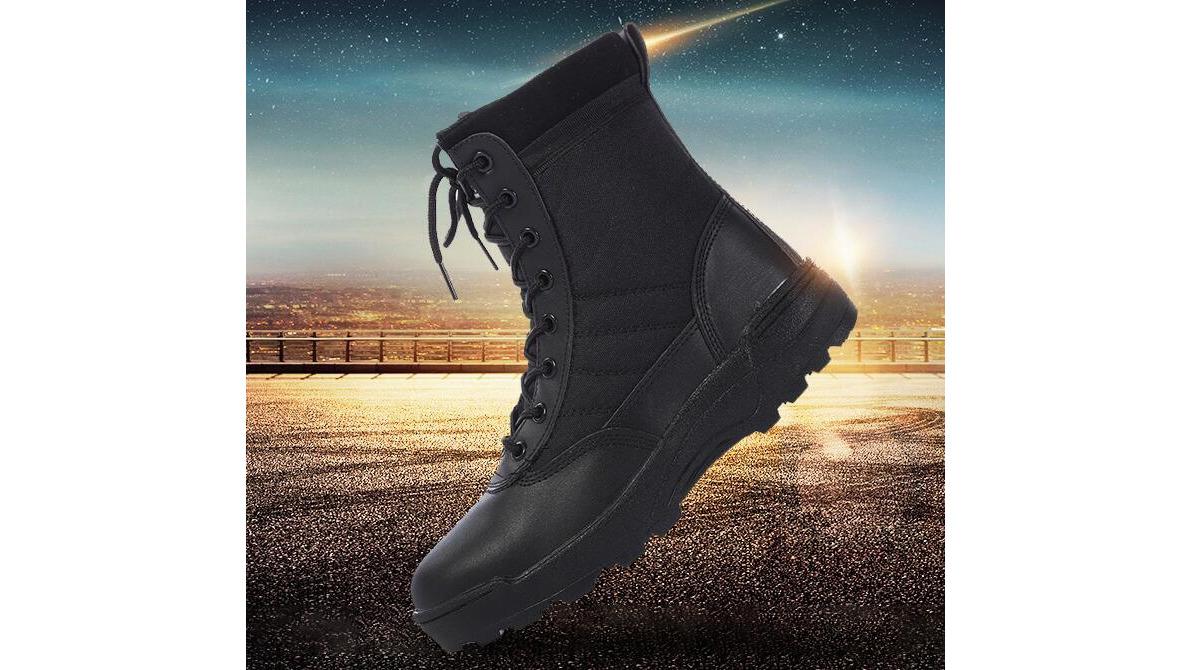
Men's Outdoor High-top Breathable Hiking Boots ($78.25)
This is the best starting point for most wide-footed hikers. The breathable mesh upper with synthetic overlays flexes around a wider forefoot, the EVA midsole cushions without bulk, and the rubber lug outsole grips loose gravel and packed dirt. The high-top collar adds ankle stability on uneven ground.
REI's guide to hiking boot fit and sizing
Olive 6-Inch Waterproof Hiking Boots ($80.99)
When the trail is wet, reach for this boot. The suede leather upper holds its shape around a wide forefoot, and the H2O-Tex waterproof membrane keeps water out while letting moisture escape. The VIBRAM traction lug outsole is the standout, gripping slick rock and muddy switchbacks that cheaper soles cannot match.
Men's Waterproof Hiking Boots Lightweight Climbing Shoes ($67.99)
Weight matters on long days, and this boot keeps it low. The lightweight construction suits fast day hikes, travel, and urban walking as much as trail use. An EVA anti-collision toe protects against rock strikes, and the rubber outsole provides multi-directional traction on rocky trails and packed dirt.
Men's Outdoor High-top Breathable →
Hiking High-top Outdoor Climbing Boots Travel Shoes ($134.63)
This is the premium option, and the price reflects it. The high-top design provides the most ankle support in this group, which matters when carrying a loaded backpack over uneven ground. The durable construction handles extended use, and the fit accommodates wide feet through the forefoot without excessive length.
Best Hiking Socks for Wide Feet
Sock choice changes fit more than most hikers realize. A thick sock can turn a comfortable wide boot into a cramped one, while a thin, seamless sock preserves the room you measured for.
Waterproofing, Breathability, and Cushioning for Wide Feet
Waterproof membranes keep water out but trap heat. For summer hiking, a breathable boot without a membrane often feels better, because sweat has nowhere to go inside a sealed boot. For wet climates and shoulder-season trips, the membrane earns its place. The choice matters more for wide-footed hikers, since a wider foot has more surface area in contact with the boot interior, more friction and more sweat to manage.
How Membranes Interact With a Wide Foot
A waterproof membrane is a thin, sock-like liner bonded inside the boot. On a wide foot, it adds material between your foot and the boot's outer wall, reducing interior volume by a small but noticeable amount. That is why a boot can fit in the store and feel tight after a few miles in the rain: the fit tolerance was already at its limit.
Cushioning and Midsole Geometry for Wide Feet
Cushioning matters more for wide-footed hikers because pressure distributes differently across a broader sole. Look for an EVA or memory foam midsole that absorbs shock without packing out quickly, and a removable footbed so you can swap in a custom orthotic. Shock absorption reduces foot fatigue on long descents, and arch support keeps the foot from sliding forward.
Two midsole details matter specifically for wide feet:
- Width of the midsole platform. A boot with a wide upper but a narrow midsole platform will feel unstable, because your foot overhangs the support structure. Look for a midsole that is visibly wider than the upper at the ball of the foot.
- Heel-to-toe drop. A traditional 8 to 12 mm drop puts more load on the heel and the arch. A lower drop, in the 4 to 6 mm range, distributes load more evenly across the foot. For hikers with flat feet or plantar fasciitis, a moderate drop with firm arch support is often more comfortable than a zero-drop boot, which can overstretch the plantar fascia. For hikers with high arches and no pain history, a lower drop can encourage a more natural stride.
A Podiatric Perspective on Wide Feet
Most guides treat wide feet as a sizing problem. In practice, a wide forefoot is often a symptom of a structural issue a boot can accommodate or aggravate. Three common patterns are worth knowing before you buy:
- Bunions (hallux valgus). A bunion is a bony bump at the base of the big toe that pushes the toe inward. A wide toe box reduces pressure on the bunion, but a stiff leather upper can rub it raw. Look for a soft, flexible upper and a toe box that is widest at the ball, not at the tip.
- Flat feet (pes planus). A collapsed arch lengthens the foot under load, which is why flat-footed hikers often need a half size larger than their measured length. Firm arch support and a stable heel counter reduce the inward roll that causes arch and knee pain.
- Plantar fasciitis. Inflammation of the tissue along the bottom of the foot is aggravated by thin, unsupportive footwear and by excessive heel drop. A cushioned midsole with a moderate drop and a removable footbed that accepts an orthotic is the practical setup.
How We Evaluated These Wide Feet Hiking Boots
We scored each boot on four criteria: forefoot room, support and stability, outsole traction, and value. Forefoot room carried the most weight, since that is the point of this list. Support covered ankle collar height, heel lockdown, and midsole structure; traction covered lug depth and rubber compound; value compared price against what the boot delivers for wide-footed hikers.
| Criterion | What We Checked | Why It Matters |
|---|---|---|
| Forefoot room | Width at the ball, toe splay | Prevents pinching and blisters |
| Support | Ankle collar, heel lock, midsole | Stability on uneven ground |
| Traction | Lug pattern, rubber grip | Safety on wet and loose terrain |
| Value | Price vs. features | Best fit for your budget |
National Park Service trail safety guidance
Frequently Asked Questions
What are the most comfortable hiking boots for wide feet?
Comfort starts with the right fit. Look for boots with a wide toe box, a removable footbed, and a snug heel. The Men's Outdoor High-top Breathable Hiking Boots ($78.25) have a breathable mesh upper and EVA cushioning, and the listing advises wide-footed buyers to size up half a size. The Olive 6-Inch Waterproof Hiking Boots ($80.99) add a memory foam footbed and Vibram traction lug outsole for longer days on uneven ground.
How do I know if I need wide-width hiking boots?
Measure your foot width at the end of the day, when feet are largest. Stand on paper, trace the outline, and measure the widest part of the forefoot in centimeters. Compare that number to the boot maker's width chart. If you are between sizes or your toes feel pinched in standard boots, choose a wide fit. The Men's Outdoor High-top Breathable Hiking Boots listing notes that wide feet should size up half a size.
Are wide-width hiking boots different from standard sizes?
Yes. Wide-width hiking boots add extra volume across the forefoot and midfoot, not just length. That extra room lets toes splay naturally and reduces pinch points on the pinky toe and instep. Many brands use letters like D, EE, or 4E to mark width. When a specific wide width is not offered, sizing up half a size can add room, as noted in the Men's Outdoor High-top Breathable Hiking Boots listing.
What features should wide-footed hikers look for in a boot?
Prioritize a wide toe box, adjustable lacing, a removable insole, and a supportive midsole. A waterproof membrane helps in wet conditions, while breathable mesh keeps feet cooler on summer hikes. The Olive 6-Inch Waterproof Hiking Boots ($80.99) combine a suede leather upper, waterproof membrane, and Vibram traction lug outsole. The Men's Waterproof Hiking Boots Lightweight Climbing Shoes ($67.99) offer a lightweight build with a non-slip rubber outsole for day hikes.
Do I need special socks for wide feet?
Cushioned socks with a seamless toe reduce friction and blister risk, and they fill extra volume inside a wide boot without squeezing. Look for merino wool or synthetic blends that wick moisture. Avoid cotton, which holds sweat and softens the skin. Pair thicker socks with a half-size-up boot like the Men's Outdoor High-top Breathable Hiking Boots ($78.25) to keep the heel locked while giving toes room to spread.